
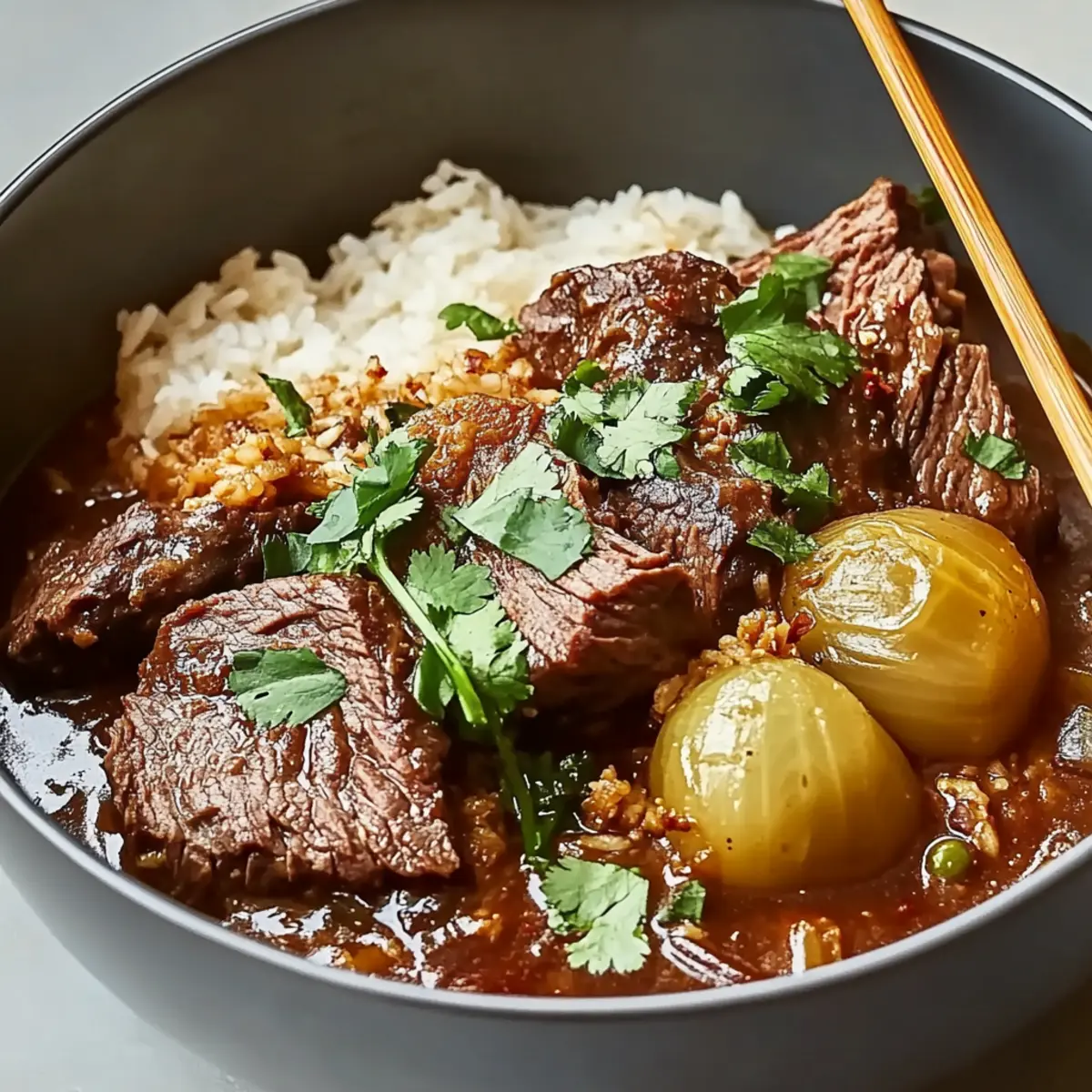
A delectable scent wafts through the kitchen as the beef sizzles in the pot—a sign that comfort is on its way. My Korean Style Pot Roast is more than just a meal; it’s an experience that brings warmth and joy to any dinner table. With its tender chunks of beef infused with garlic, ginger, and a hint of gochujang, this recipe is a sure-fire hit for family gatherings or cozy nights in. One of the best parts? It’s completely customizable, allowing you to use your favorite cuts of beef or even a vegetarian substitute. Plus, it’s a make-ahead dish that you can prepare in advance, freeing up precious time during those hectic weeknights. Are you ready to dive into the flavors of Korea and create a culinary masterpiece at home?
Why is this pot roast a must-try?
Tender, Comforting Goodness: The Best Korean Style Pot Roast is an unforgettable experience, transforming simple ingredients into a rich, flavorful masterpiece.
Customizable for Everyone: Whether you prefer beef chuck, brisket, or even a vegetarian option like tofu, this recipe has you covered.
Bursting with Flavor: The perfect balance of garlic, ginger, and gochujang creates a taste sensation that will dazzle your taste buds.
Make-Ahead Convenience: Prepare it in advance to savor a hearty meal with minimal effort on busy evenings.
Ideal for Gatherings: Impress friends and family at your next get-together with this crowd-pleasing delight, served over rice with a side of kimchi for authenticity!
The Best Korean Style Pot Roast Ingredients
For the Pot Roast
- Beef Chuck Roast – This cut provides rich flavor and tenderness; alternatives like brisket or short ribs work well too.
- Kosher Salt – Enhances flavor and retains moisture; essential for seasoning.
- Vegetable Oil – Used for browning the beef, developing a deeper flavor profile.
- Sweet Onion – Adds a sweet depth; swap with yellow onion if you prefer.
- Garlic Cloves – Fresh garlic is ideal for aromatic flavor; minced for optimal infusion.
- Fresh Ginger – Grated ginger brings essential, authentic flavors to the pot roast.
- Gochujang – Korean chili paste that adds heat; adjust the amount based on your spice tolerance.
- Brown Sugar – Balances the flavors with sweetness; can substitute with honey or coconut sugar if desired.
- Soy Sauce – Infuses umami goodness; low-sodium variants are available for healthier options.
- Beef Broth – Adds moisture and flavor; you can substitute with low-sodium or vegetable broth for a lighter dish.
For Serving
- Cooked Rice – Serves as a hearty base for the pot roast; feel free to use brown or white rice.
- Fresh Cilantro – Optional garnish that adds a bright, fresh touch to your dish.
- Kimchi – The perfect traditional side to complement the savory flavors of the pot roast.
This recipe is a delightful journey into Korean comfort food and is easily customizable to suit your taste—making it a truly fantastic choice for any occasion!
Step‑by‑Step Instructions for The Best Korean Style Pot Roast
Step 1: Preheat the Oven
Start by preheating your oven to 300°F (150°C). This low and slow temperature is crucial for ensuring that the beef becomes fork-tender as it cooks to perfection. Make sure your oven is fully heated before moving onto the next step.
Step 2: Sear the Beef
In an oven-safe pot or Dutch oven, heat a couple of tablespoons of vegetable oil over medium-high heat. Once the oil is shimmering, sear your beef chuck roast for about 4-5 minutes on each side until it develops a rich brown crust. This browning process enhances the flavor of The Best Korean Style Pot Roast.
Step 3: Sauté the Aromatics
Once the beef is browned, remove it from the pot and set it aside. In the same pot, add diced sweet onion, minced garlic, and grated ginger. Sauté these ingredients over medium heat for 3-4 minutes, or until the onions turn translucent and fragrant, filling your kitchen with a warm, inviting aroma.
Step 4: Mix the Sauce
In a mixing bowl, whisk together gochujang, soy sauce, brown sugar, and beef broth until well combined. Pour this vibrant mixture over the sautéed aromatics in the pot, stirring everything together to create a luscious sauce, ensuring the flavors meld beautifully for your pot roast.
Step 5: Combine and Bake
Return the seared beef chuck roast to the pot, making sure it’s nestled well into the aromatic sauce. Cover the pot with a tight-fitting lid and transfer it to your preheated oven. Bake for 3-4 hours, or until the beef becomes extravagantly tender, easily falling apart when tested with a fork.
Step 6: Rest and Serve
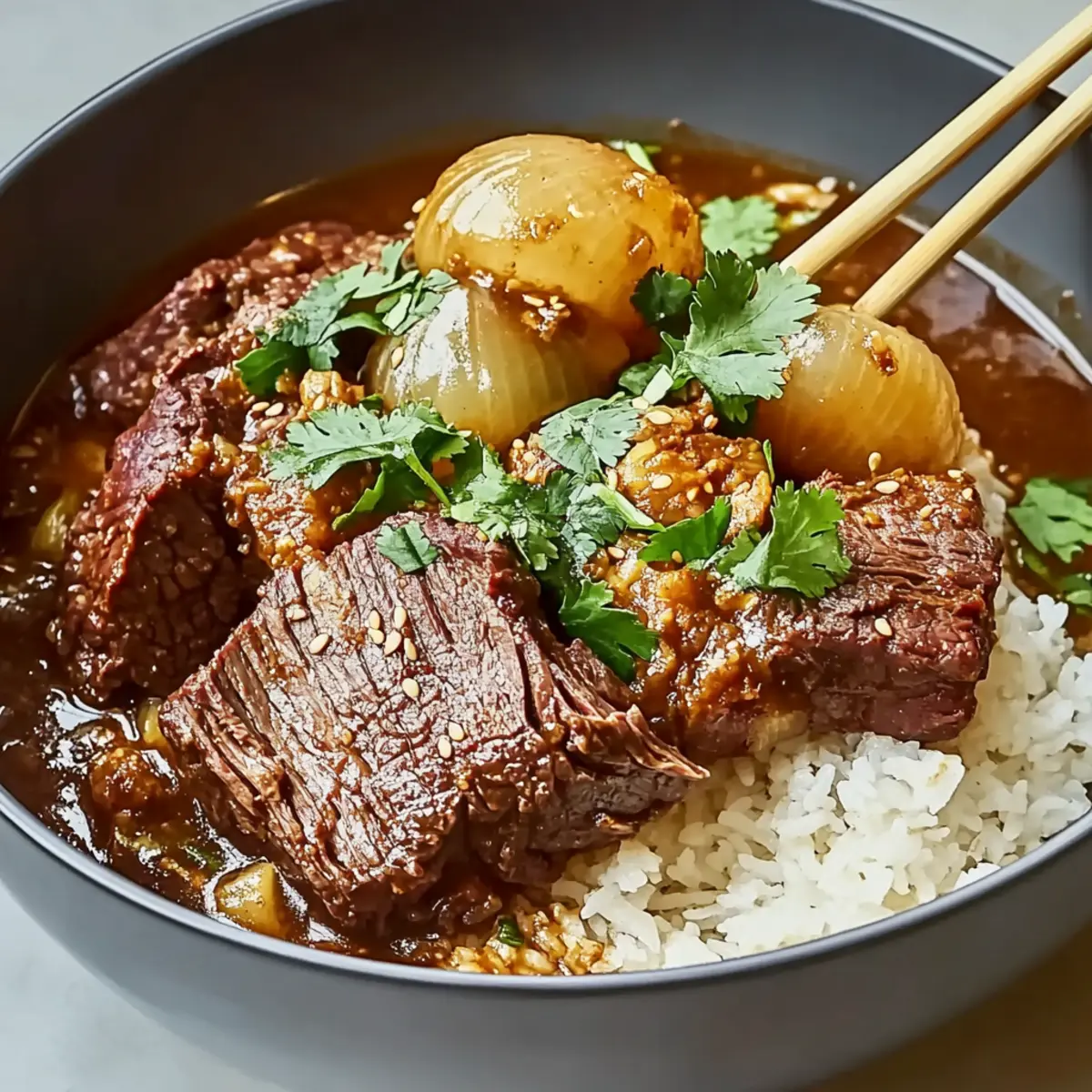
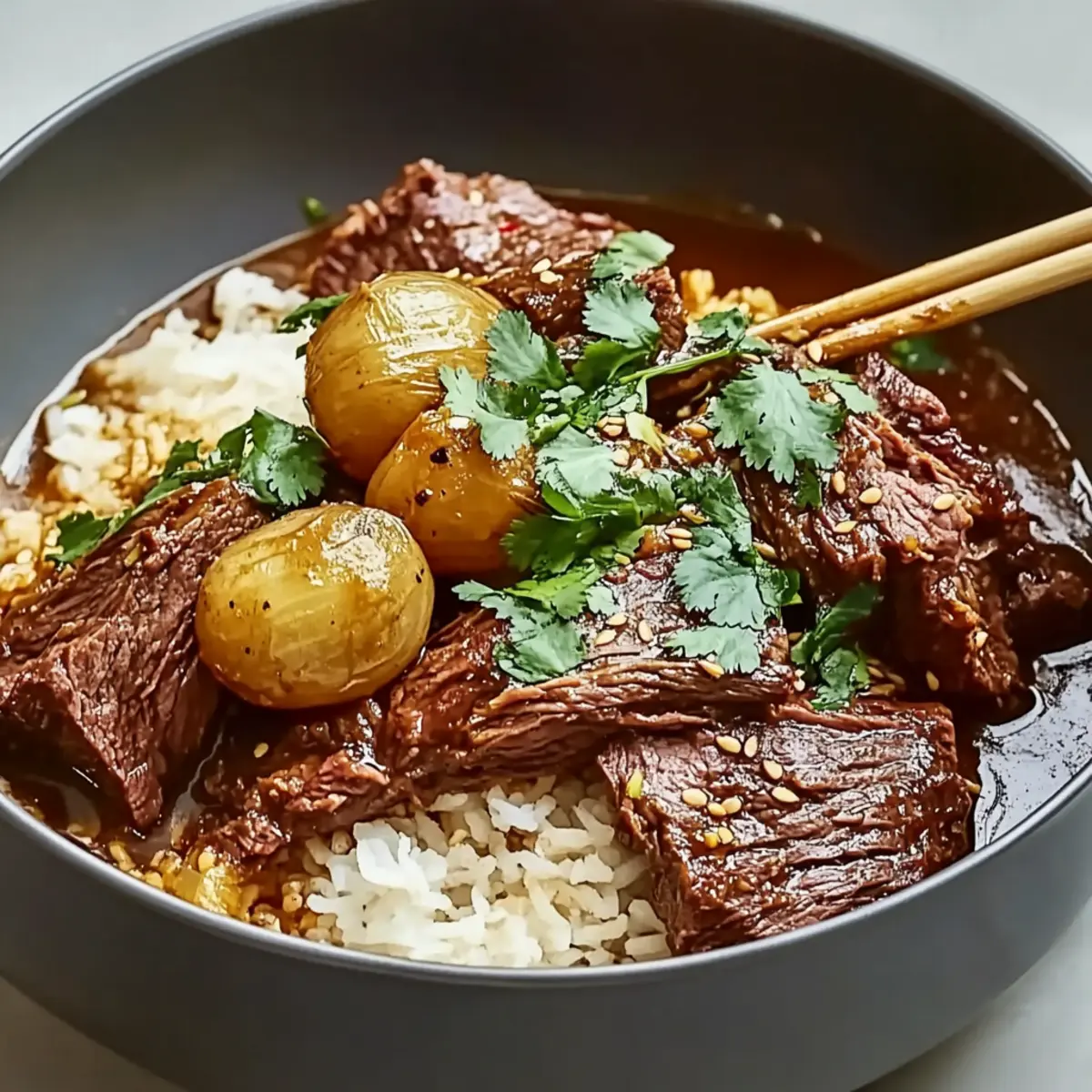
After cooking, carefully remove the pot from the oven and let the pot roast rest for 15 minutes before serving. This resting step allows the juices to redistribute, enhancing the overall flavor and moisture. Serve the tender Korean Style Pot Roast over a bed of cooked rice, garnishing with fresh cilantro, and don’t forget the side of kimchi for an authentic experience!
The Best Korean Style Pot Roast Variations
Feel free to play with the recipe and make it your own—each twist adds a unique touch to this comforting dish!
- Vegetarian Delight: Substitute beef with firm tofu or tempeh for a hearty plant-based option that still packs flavor. The tofu will absorb the delicious sauce beautifully.
- Different Cuts: Try using brisket or short ribs instead of chuck roast for different textures and tastes, resulting in a heartier or more marbled dish.
- Extra Heat: Add more gochujang or toss in a few sliced jalapeños for an intensified spice that will warm your soul.
- Root Veggies: Throw in some chopped carrots or potatoes to the pot for a flavorful medley that elevates the dish and adds texture.
- Sweet Twist: Swap brown sugar for honey or maple syrup to create a delightful contrast to the savory tones, further elevating those Korean flavors.
- Soy Sauce Alternatives: Opt for coconut aminos instead of soy sauce to keep it soy-free while still maintaining that umami goodness, particularly if you’re mindful of allergens.
- Citrus Zing: Add a splash of orange juice or zest to the sauce for a bright flavor that will bring new life to the richness of the dish.
- Herb Infusion: Fresh herbs such as rosemary or thyme can be added during cooking for a fragrant twist that complements the savory aspects beautifully.
Don’t forget, pairing your pot roast with a side of kimchi is essential for an authentic experience! You could also enjoy it alongside my delicious Balsamic Chicken Roasted or to wrap up your meal with a sweet treat like my decadent Lava Cakes Dessert. Enjoy your cooking adventure!
Expert Tips for The Best Korean Style Pot Roast
- Proper Searing: Ensure you achieve a deep brown crust on the beef, as this caramelization enhances the flavors of The Best Korean Style Pot Roast significantly.
- Fresh Ingredients: Use fresh garlic and ginger for maximum flavor; dried alternatives can diminish the dish’s essence.
- Temperature Monitoring: Aim for an internal temperature of about 190°F to ensure the beef is fork-tender.
- Rest the Meat: Allow the roast to rest after baking; this crucial step helps retain moisture and amplify flavor.
- Adjusting Spice Level: Start with a smaller amount of gochujang if you’re unsure about spice tolerance, and adjust up as desired.
Make Ahead Options
These hearty Korean Style Pot Roast preparations are perfect for busy home cooks looking to save time during the week! You can prep the aromatics—sweet onion, garlic, and ginger—up to 3 days in advance, storing them in an airtight container in the refrigerator to maintain their freshness. Additionally, the beef can be seared and marinated in the sauce for up to 24 hours, allowing the flavors to deepen. When it’s time to enjoy your meal, simply preheat your oven, combine the beef and sauce in your pot, and bake according to the recipe instructions. With these make ahead tips, you’ll savor a comforting, homemade meal with minimal effort!
Storage Tips for The Best Korean Style Pot Roast
- Room Temperature: To maintain quality, do not leave the pot roast out at room temperature for more than 2 hours to prevent spoilage.
- Fridge: Store leftovers in an airtight container in the fridge for up to 3 days. Reheat gently on the stove or in the microwave, adding a splash of broth to maintain moisture.
- Freezer: Wrap portions tightly in plastic wrap and foil or place in freezer-safe bags; The Best Korean Style Pot Roast can be frozen for up to 3 months. Thaw overnight in the fridge before reheating.
- Reheating: Heat the roast on low in a saucepan, adding a bit of beef broth to keep it juicy and tender as you warm it through.
What to Serve with Korean Style Pot Roast
Savor the depth of flavors in every bite as you complement this hearty dish with delightful pairings.
- Creamy Mashed Potatoes: Their rich texture beautifully balances the pot roast, soaking up every savory sauce drop.
- Stir-Fried Vegetables: A colorful mix of seasonal veggies adds a fresh crunch while enhancing the meal with nutrition and flavor.
- Pickled Cucumbers: These tangy bites offer a crisp contrast to the tender meat, refreshing the palate with every forkful.
- Sesame Noodles: Tossed in a light sesame oil dressing, they provide a nutty essence that harmonizes well with the roast.
- Steamed Broccoli: Lightly seasoned, this green addition brings an uplifting touch and healthy benefits to your plate.
- Sliced French Bread: Perfect for mopping up the luscious sauce; every bite becomes an indulgent experience.
- Chilled Soju or Makgeolli: These traditional Korean drinks enhance your culinary journey, providing a smooth pairing that compliments the spices beautifully.
- Chocolate Mousse: For dessert, this rich and airy treat rounds off the meal with a touch of indulgence, contrasting the savory flavors nicely.
The Best Korean Style Pot Roast Recipe FAQs
What type of beef is best for pot roast?
Absolutely! Beef chuck roast is the most recommended cut for The Best Korean Style Pot Roast due to its rich flavor and tenderness. However, you can also use brisket or short ribs if you prefer. Just remember that cooking times may vary slightly with different cuts.
How should I store leftovers of the pot roast?
Leftovers should be stored in an airtight container in the fridge for up to 3 days. To keep the flavors intact during reheating, you can add a splash of beef broth to maintain moisture. If you find that’s not enough, you can always cover the dish with a lid or wrap it in foil while reheating.
Can I freeze The Best Korean Style Pot Roast?
Very! You can definitely freeze portions of the pot roast for future meals. Simply wrap the cooled roast tightly in plastic wrap and then foil, or place it in a freezer-safe bag. It will keep well for up to 3 months. Thaw overnight in the fridge before reheating to ensure the best flavor and texture.
How do I troubleshoot tough beef in my pot roast?
If your pot roast ends up tough, it may need more cooking time. Ensure that it reaches an internal temperature of about 190°F (88°C) for optimal tenderness. If the pot roast is still tough after cooking times are complete, continue to bake it, checking every 30 minutes until fork-tender. Adding additional beef broth can help keep the moisture up during this time.
Is there a vegetarian alternative for this recipe?
Certainly! For a vegetarian version of The Best Korean Style Pot Roast, you can substitute the beef with tofu or tempeh. I recommend pressing the tofu to remove excess moisture before cooking. You can also adjust the cooking time; try baking it for about 1.5 to 2 hours at the same temperature, checking for tenderness.
Can I use low-sodium soy sauce in this recipe?
Yes, using low-sodium soy sauce is a fantastic option! It still provides plenty of umami flavor without the extra salt. This way, you can enjoy The Best Korean Style Pot Roast while keeping it lighter and health-conscious without compromising on taste.
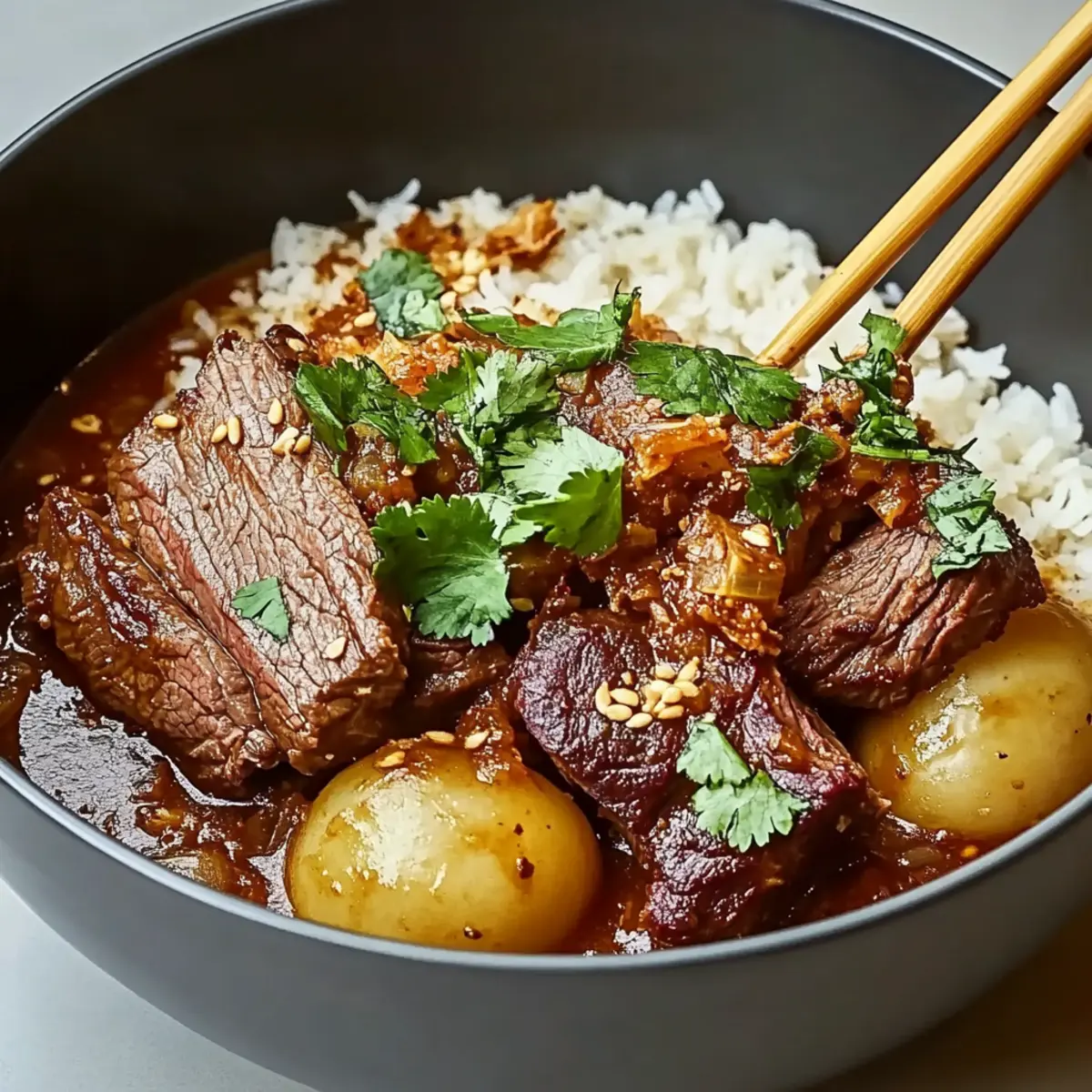
The Best Korean Style Pot Roast: A Flavorful Family Delight
Ingredients
Equipment
Method
- Preheat your oven to 300°F (150°C) to ensure that the beef becomes fork-tender as it cooks.
- In a Dutch oven, heat vegetable oil over medium-high heat. Sear the beef chuck roast for about 4-5 minutes on each side until brown.
- Remove the beef from the pot and sauté diced sweet onion, minced garlic, and grated ginger for 3-4 minutes until onions are translucent.
- In a bowl, whisk together gochujang, soy sauce, brown sugar, and beef broth until well combined. Pour over the sautéed aromatics.
- Return the beef to the pot, cover, and bake for 3-4 hours until fork-tender.
- Let the pot roast rest for 15 minutes before serving over cooked rice, garnished with cilantro and side of kimchi.