
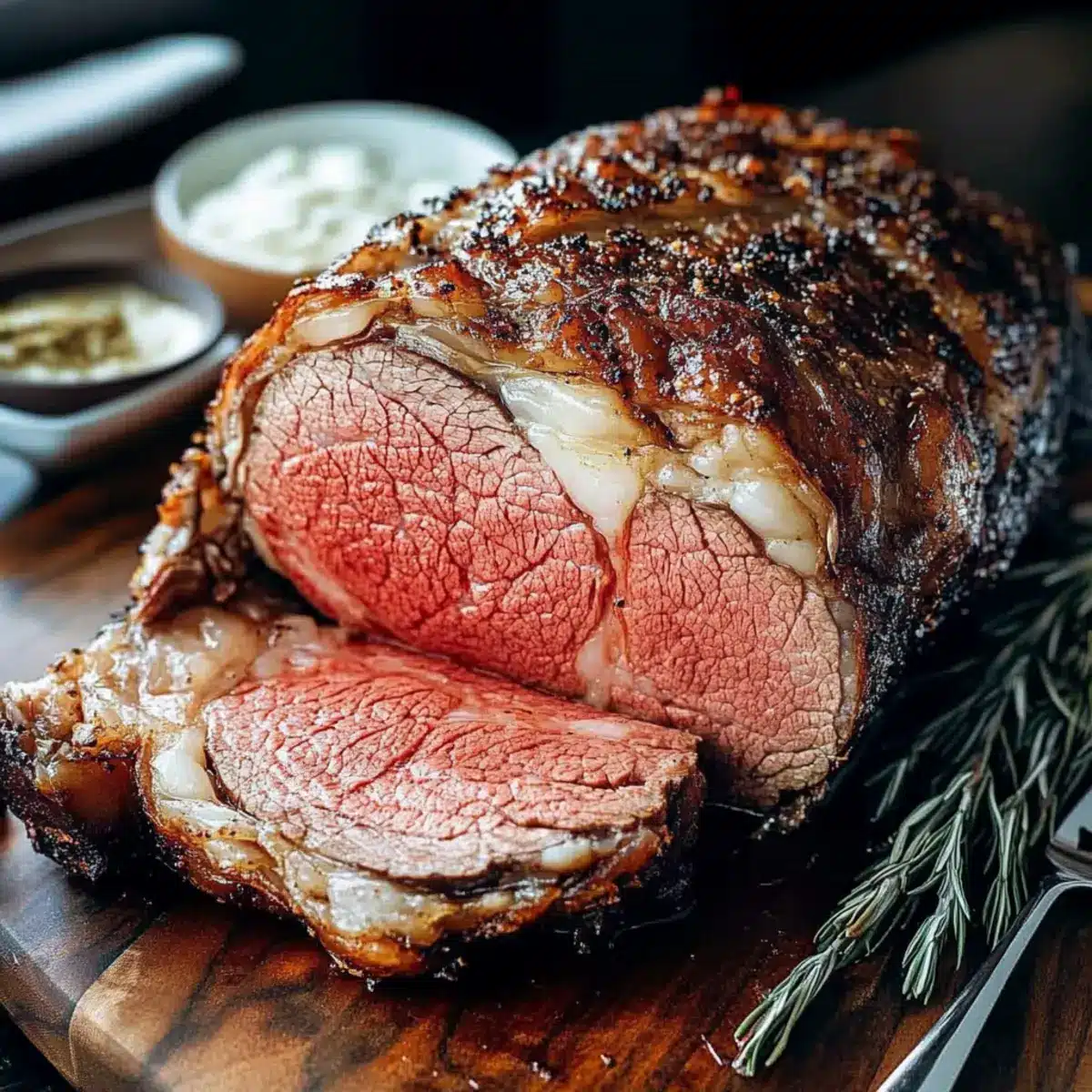
As I slowly walked through my kitchen, the inviting aroma of a perfectly roasted prime rib wafted through the air, instantly transporting me to those unforgettable holiday dinners spent with family and friends. This Slow Roasted Prime Rib is not just a meal; it’s a celebration of flavors and a moment that brings loved ones together. Utilizing the reverse-sear method, this recipe ensures a tender, juicy interior encased with a beautifully crisp exterior—making it the star of any gathering. Plus, it’s surprisingly easy to prepare, offering a luxurious touch without the stress. Whether you’re a seasoned home chef or just beginning your culinary journey, this dish is the key to impressing your guests and making lasting memories. Are you ready to uncover the secrets of this show-stopping centerpiece? Let’s get started!
Why is This Prime Rib Recipe Special?
Luxury at Home: This Slow Roasted Prime Rib elevates your dining experience without the need for fancy restaurants.
Mouthwatering Juiciness: The reverse-sear method ensures every slice is beautifully tender and bursting with flavor.
Easy Preparation: Just season the night before and let the oven work its magic, making it hassle-free!
Crowd-Pleaser: Perfect for holiday dinners, family gatherings, and impressing your guests, it’s a guaranteed favorite.
For another fantastic centerpiece, check out my Balsamic Chicken Roasted recipe that adds a delicious twist to your table!
Slow Roasted Prime Rib Ingredients
• Get ready to elevate your holiday dinner with these prime rib essentials!
For the Roast
- Standing Rib Roast (6 to 12 pounds) – This centerpiece delivers rich beef flavors; opt for bone-in for extra juiciness.
For Seasoning
- Kosher or Sea Salt – Essential for flavor enhancement and moisture retention; table salt can be used in a pinch, though less coarse.
- Freshly-Cracked Black Pepper – Offers a spicy kick; pre-ground pepper works if you’re short on time.
For the Sauce (optional)
- Roasted Garlic Horseradish Cream Sauce – This finishing touch enhances the flavors; you could also use a simple horseradish sauce for a nice zing.
Invite the luxury of a restaurant dining experience into your home with this Slow Roasted Prime Rib recipe—perfect for making lasting memories around the dinner table!
Step‑by‑Step Instructions for Perfectly Tender Slow Roasted Prime Rib with Reverse Sear
Step 1: Preparation
Start by asking your butcher to cut your standing rib roast off the bones and tie it for easy carving later. Once home, place the roast in a large roasting pan, allowing it to rest while you prepare the seasoning. This prime rib will be the star of your holiday dinner, so make sure to handle it carefully.
Step 2: Seasoning
The day before cooking, generously season the roast with kosher salt and freshly-cracked black pepper, ensuring it’s coated evenly on all sides. Refrigerate uncovered overnight to allow the exterior to dry out, which aids in achieving a perfect crust during roasting. This simple step enhances the flavor and texture of your Slow Roasted Prime Rib.
Step 3: Room Temperature
On the day of cooking, remove the prime rib from the refrigerator and let it sit at room temperature for about 2 hours. This step ensures the roast cooks evenly throughout. While it rests, preheat your oven to 250°F, preparing for the slow roasting process that guarantees juicy, tender results.
Step 4: Initial Roasting
Once the oven is preheated, place the rib roast, fat side up, on a v-rack in your roasting pan for optimal air circulation. Roast for 3 to 4 hours, monitoring the internal temperature with an instant-read thermometer. You’re aiming for 120-125°F for a perfect rare finish that showcases the deliciousness of your prime rib.
Step 5: Resting Phase
After reaching the desired temperature, remove the prime rib from the oven and tent it loosely with aluminum foil. Allow it to rest for 30 minutes. This resting period is crucial; it lets the juices redistribute within the meat, resulting in an incredibly moist and flavorful prime rib that will impress your guests.
Step 6: Searing
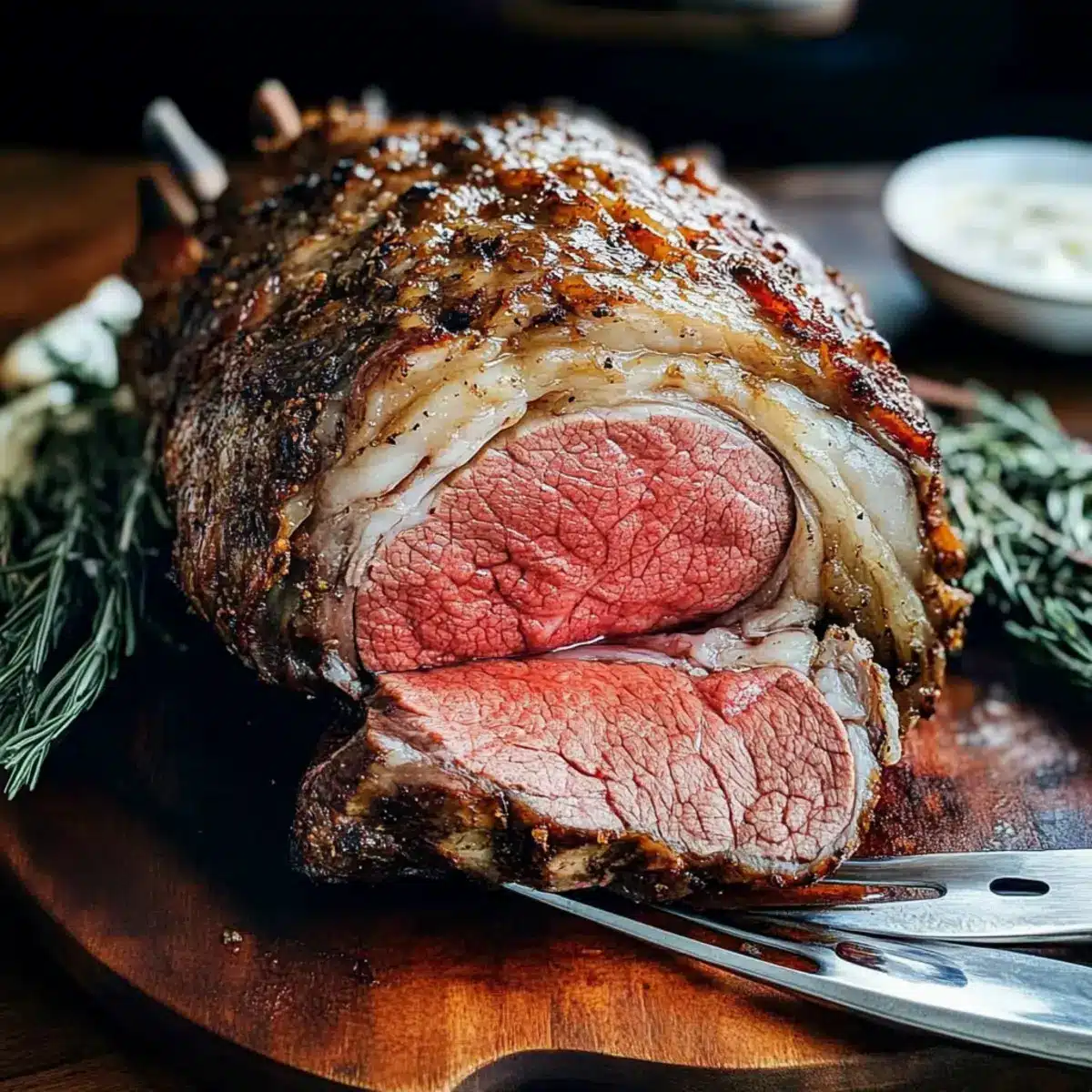
Raise the oven temperature to 500°F. Uncover the prime rib and return it to the oven for a final sear, cooking for about 5-10 minutes until the exterior is beautifully browned and crispy. This reverse sear technique will enhance the flavor and texture, creating a stunning presentation for your Slow Roasted Prime Rib.
Step 7: Serving
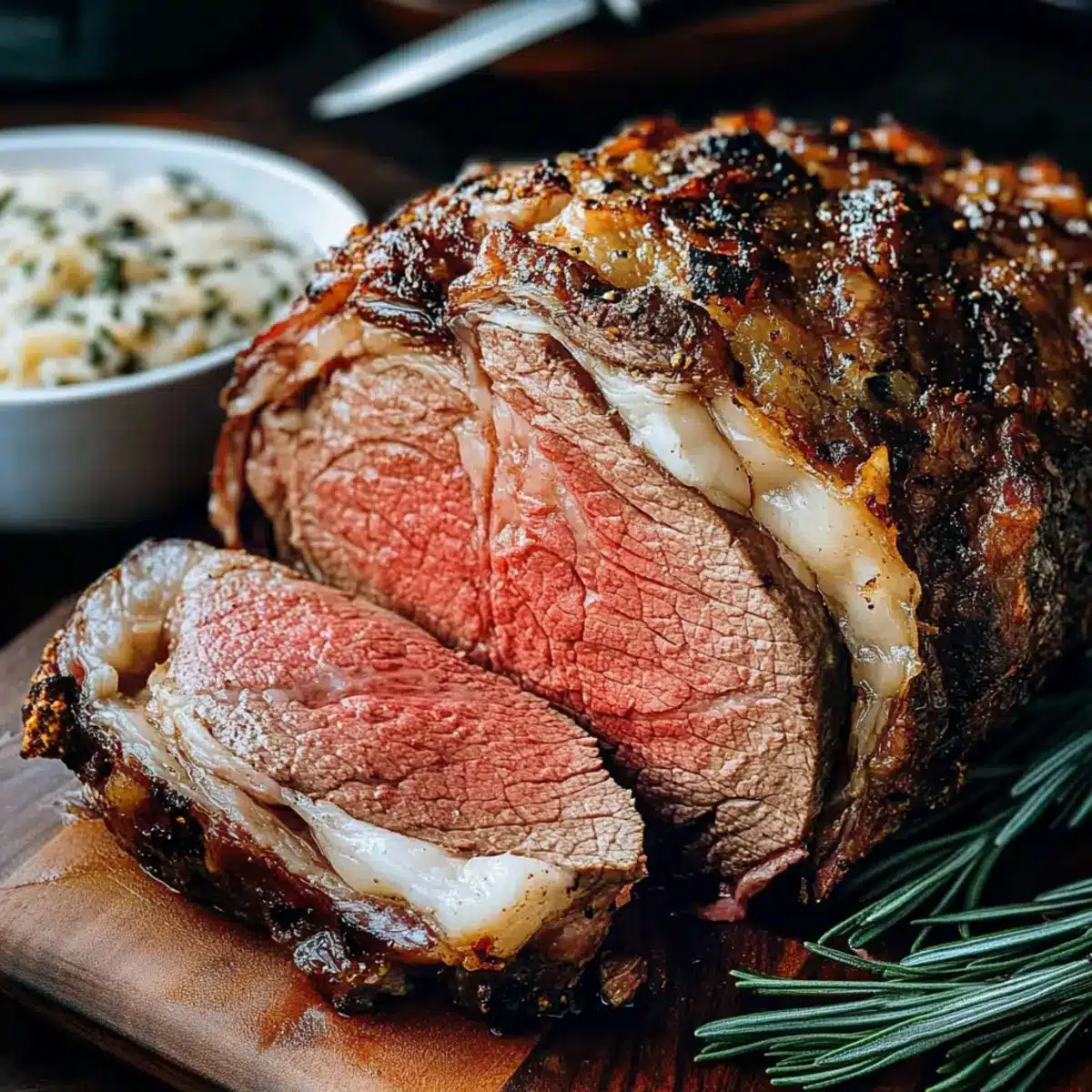
Once seared, remove the roast from the oven and let it rest briefly. Then, carve the prime rib and plate it beautifully. For a delightful finishing touch, serve with the optional Roasted Garlic Horseradish Cream Sauce on the side. This addition perfectly complements the tender, juicy slices, making your holiday dinner unforgettable!
Make Ahead Options
These Slow Roasted Prime Rib options are perfect for busy home cooks looking to save time during the holiday rush! You can season the roast with kosher salt and freshly-cracked black pepper up to 24 hours in advance, allowing it to refrigerate uncovered overnight to dry out the exterior for a perfect crust. Additionally, if you prefer, you can prepare the Roasted Garlic Horseradish Cream Sauce ahead of time and store it in the refrigerator for up to 3 days. Just remember to let the roast sit at room temperature for 2 hours before cooking it to ensure even cooking. When you’re ready to serve, simply follow the cooking instructions, and you’ll impress your guests with minimal last-minute effort!
What to Serve with Perfectly Tender Slow Roasted Prime Rib?
Creating a well-rounded meal that complements your prime rib will elevate your dining experience to new heights of culinary delight.
- Duchess Potatoes: Fluffy and creamy, these piped mashed potatoes add an elegant touch while perfectly balancing the rich flavors of the prime rib.
- Garlic Roasted Asparagus: This vibrant side offers a fresh, crisp contrast to the tender meat, enhancing the meal with a burst of healthy greens.
- Creamy Coleslaw: A cool, crunchy salad provides a refreshing counterpoint to the warm, savory prime rib, making every bite a delightful experience.
Pairing these sides not only complements the hearty prime rib but also creates a colorful, flavorful plate that your family and friends will admire. Enjoy a glass of a full-bodied red wine, such as Cabernet Sauvignon, to enhance the luxurious flavors of your meal. For dessert, a rich chocolate mousse will satisfy any sweet tooth while maintaining the elegance of your gathering.
Slow Roasted Prime Rib Variations & Substitutions
Feel free to get creative with your Slow Roasted Prime Rib, enhancing flavors and making it truly your own!
-
Herb-Infused: Add fresh rosemary and thyme to the seasoning for a fragrant herbaceous twist. These fresh notes elevate the dish, infusing warmth and flavor with every bite.
-
Spicy Kick: Incorporate smoked paprika or cayenne pepper into the seasoning blend for an unexpected heat. If you love a little warmth, this variation adds a delightful kick that’s sure to please adventurous palates.
-
Garlic Lovers: Swap the roasted garlic horseradish cream for a garlic butter drizzle. Simply mix melted butter with minced garlic and pour it over the sliced prime rib right before serving—rich, buttery goodness!
-
Savory Gravy: Instead of the horseradish cream sauce, try serving with a rich red wine reduction or mushroom gravy. A savory sauce not only enhances the meat but creates a luxurious dining experience reminiscent of fine dining.
-
Non-Dairy: For a dairy-free option, serve with a tangy chimichurri instead of the traditional sauce. This herbaceous blend of parsley, garlic, and vinegar offers a fresh contrast to the rich meat.
-
Flavorful Marinade: Marinate the roast overnight with soy sauce, ginger, and garlic for an Asian-inspired flavor. This unexpected twist gives the prime rib a complex, delicious depth.
-
Smoked Flavor: Use a smoker instead of a traditional oven for a smoky finish. The low-and-slow method really transforms the beef’s taste, imparting a rich, deep flavor that impresses every time.
-
Vegetable Companion: Add root vegetables to the roasting pan, like carrots and parsnips, to roast alongside the rib. Their natural sweetness complements the meat beautifully while creating a colorful, hearty side.
For those celebrating special occasions, remember this dish pairs wonderfully with impressive sides like Slow Cooker Savory or a classic Slow Cooker Chicken to complete your luxurious feast.
Storage Tips for Slow Roasted Prime Rib
- Fridge: Store leftovers in an airtight container for up to 3-4 days. This helps retain the flavors and keep the meat moist, perfect for next-day meals.
- Freezer: For longer storage, wrap the prime rib tightly in plastic wrap and aluminum foil before freezing. It will stay fresh for up to 3 months.
- Reheating: When ready to enjoy again, thaw in the refrigerator overnight and reheat in a 250°F oven until warmed through. Avoid using a microwave, as it can dry out the meat.
- Leftover Ideas: Use your leftover Slow Roasted Prime Rib in sandwiches, breakfast hash, or toss it into a rich beef pho for an exciting twist!
Expert Tips for Slow Roasted Prime Rib
- Use Quality Meat: Invest in a high-quality standing rib roast for the best flavors. Prime grade beef yields a tender, juicy Slow Roasted Prime Rib that outshines lesser cuts.
- Time Matters: Allow ample time for seasoning and resting. The 24-hour seasoning process enhances flavor while resting post-roasting locks in juices.
- Monitor Temperature: A precise thermometer ensures perfect doneness. Cooking without checking can lead to an overcooked or undercooked result—definitely a common mistake!
- Don’t Rush the Sear: After resting, increase the oven temperature for the final sear. Rushing this step might result in a less flavorful crust, so be patient!
- Embrace Leftovers: This prime rib is delicious reheated in a variety of dishes, from sandwiches to hash. Store in an airtight container for up to 3-4 days!
Slow Roasted Prime Rib Recipe FAQs
How do I choose the right standing rib roast?
Absolutely! When selecting a standing rib roast, look for one that’s well-marbled with fat, as this intramuscular fat will contribute to its juiciness and flavor. The bone-in option is preferred because it enhances the moisture retention during cooking. Aim for a roast that is around 6 to 12 pounds to serve a crowd adequately.
How should I store leftover Slow Roasted Prime Rib?
Very! To keep your leftovers fresh, place them in an airtight container and store them in the refrigerator for up to 3-4 days. Make sure to slice only the portions you plan to eat; leaving the roast whole will help maintain its moisture.
Can I freeze my leftover prime rib?
Absolutely! Wrap your cooked prime rib tightly in plastic wrap and follow up with aluminum foil to prevent freezer burn. Properly wrapped, it can stay in the freezer for up to 3 months. When you’re ready to enjoy it again, thaw it in the refrigerator overnight before reheating.
What’s the best way to reheat Slow Roasted Prime Rib?
For the best results, preheat your oven to 250°F. Place the prime rib, covered with foil, in a baking dish to retain moisture. Heat until warmed through, which usually takes about 20-30 minutes depending on the size of the portions. Avoid using a microwave, as it can dry out the meat and ruin its tenderness.
Are there dietary considerations I need to keep in mind?
Very! Always check for potential allergies related to beef or any sauces you may plan to use. If you have guests who are gluten-sensitive, ensure that any accompanying sauces are gluten-free. Leftover prime rib can also be repurposed into a rich beef pho, which can be a delicious option for your friends with different dietary needs.
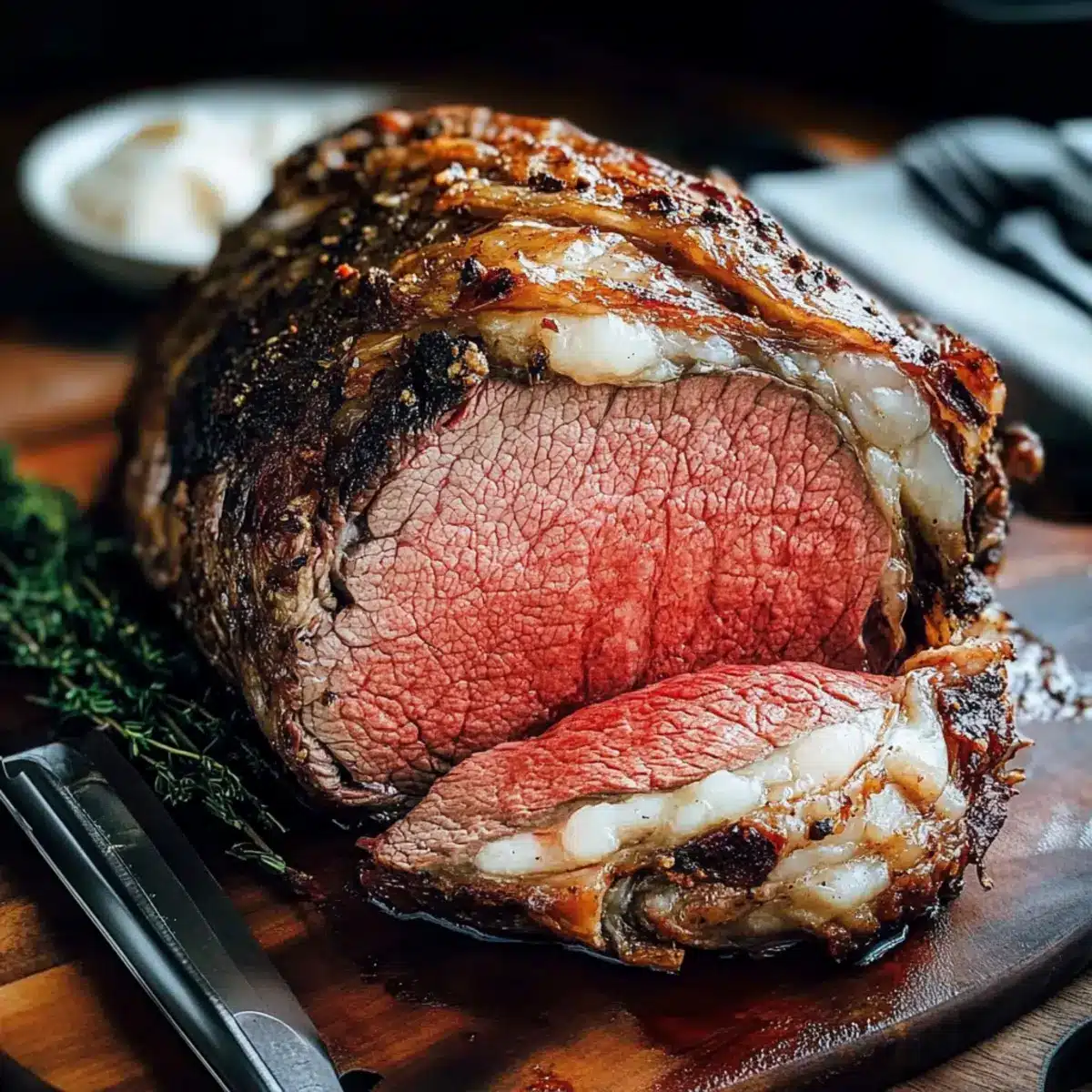
Melt-in-Your-Mouth Slow Roasted Prime Rib Recipe
Ingredients
Equipment
Method
- Start by asking your butcher to cut your standing rib roast off the bones and tie it for easy carving later. Once home, place the roast in a large roasting pan.
- The day before cooking, generously season the roast with kosher salt and freshly-cracked black pepper, ensuring it’s coated evenly.
- Remove the prime rib from the refrigerator and let it sit at room temperature for about 2 hours before cooking.
- Preheat your oven to 250°F, and place the rib roast, fat side up, on a v-rack in your roasting pan.
- Roast for 3 to 4 hours, monitoring the internal temperature aiming for 120-125°F.
- Remove the prime rib from the oven and tent it loosely with aluminum foil. Allow it to rest for 30 minutes.
- Raise the oven temperature to 500°F and return the prime rib for a final sear for about 5-10 minutes.
- Once seared, remove the roast from the oven, carve the prime rib, and serve with the optional sauce on the side.