

As I sat at a bustling Korean restaurant, my gaze fell upon a radiant dish of bibimbap, its vivid colors practically calling my name. This vegetarian bibimbap with gochujang sauce is a delightful twist on a beloved classic, combining fluffy rice with an array of fresh, seasoned vegetables and the richness of a perfectly fried egg. Not only is this meal a feast for the eyes, but it’s also quick to prepare, making it an ideal choice for busy weeknights. Plus, it’s incredibly customizable, allowing you to swap in tofu or mushrooms based on your cravings. If you’re ready to elevate your homemade meals, let’s dive into this harmonious bowl that balances flavors and textures, inviting you to mix and match as you please. What vibrant twists will you sprinkle into yours?
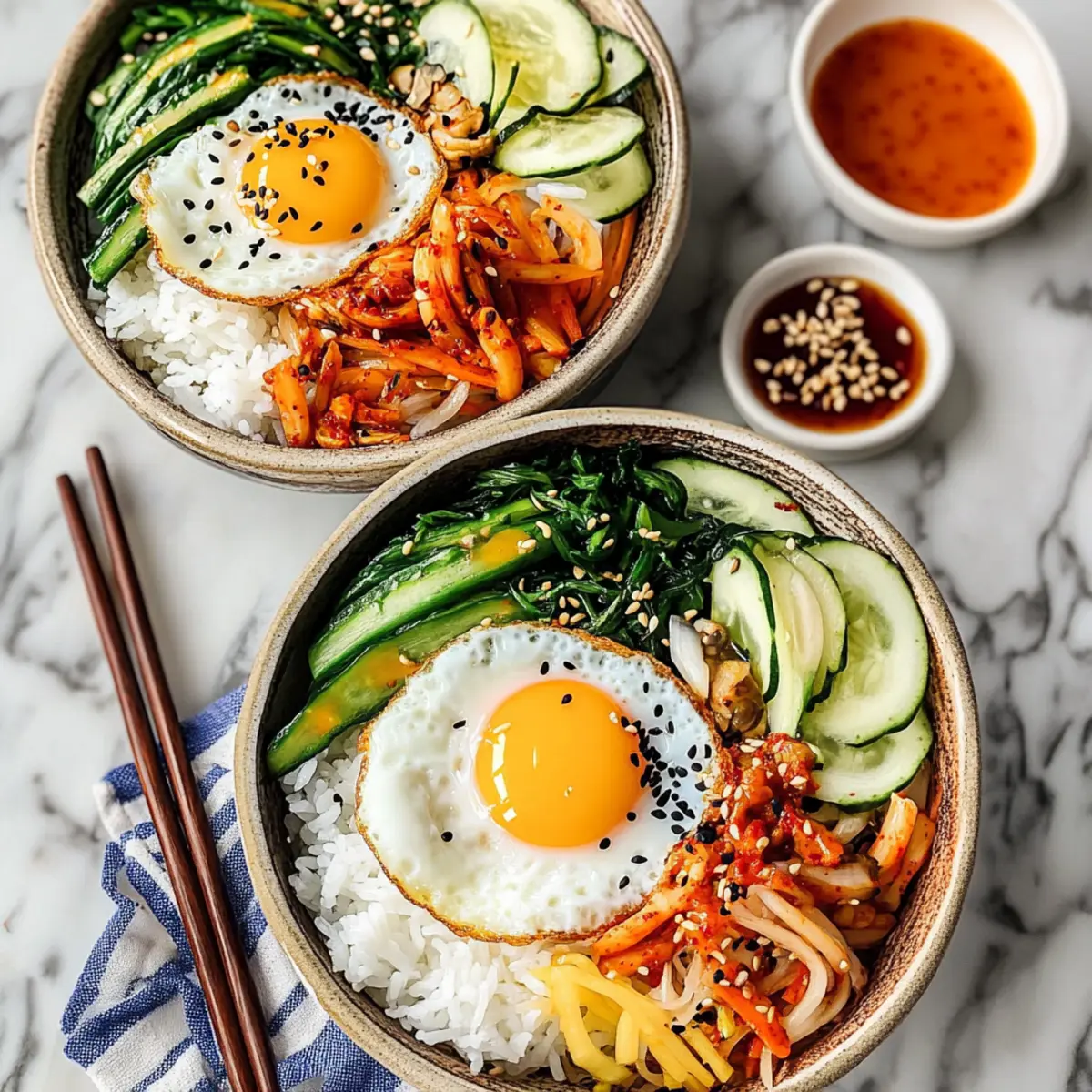
Why is Bibimbap So Popular?
Flavorful, vibrant dish: Bibimbap is not just a meal; it’s a feast for the senses! The color of the assorted veggies adds beauty, while the taste combines sweet, spicy, and umami elements in every bite.
Versatility at its finest: With options like tofu or mushrooms, you can easily adapt this dish to your dietary preferences.
Meal prep-friendly: Perfect for busy days, prepare the veggies and gochujang sauce in advance to create a quick, nutritious meal.
Crowd-pleaser: Whether you’re entertaining guests or cooking for the family, bibimbap satisfies everyone’s palate—a true crowd favorite!
Cultural delight: Experience the essence of Korean cuisine with each bowl, connecting you to the rich traditions through flavors that beckon exploration. Try customizing your bibimbap with other seasonal veggies, and discover your new favorite rice bowl!
Bibimbap Ingredients
Here’s what you’ll need to create your vibrant bibimbap!
For the Base
- Short-grain white rice – The backbone of your bibimbap, providing that delightful sticky texture. Substitution: Brown rice or cauliflower rice for a low-carb option.
For the Sauce
- Gochujang sauce – This fermented chili paste is essential for that sweet and spicy kick. Make it even bolder by adding sesame oil and maple syrup.
For the Vegetables
- English cucumber – Adds crispness and freshness. Substitution: Zucchini or any other crunchy vegetable.
- Mung bean sprouts – Offers a delightful crunch and boosts nutrition. Substitution: Edamame or additional leafy greens will work perfectly.
- Shredded carrots – Brings sweetness and a pop of color. Substitution: Bell peppers or radishes are excellent alternatives.
- Baby spinach – Adds a nutritional punch and greenery. Substitution: Kale or bok choy can also be used.
For the Flavor
- Rice vinegar – Perfect for balancing flavors with its mild acidity. Substitution: Apple cider vinegar or freshly squeezed lemon juice works well.
- Toasted sesame oil – Enhances richness and imparts a nutty flavor. Substitution: Olive oil for cooking or sprinkle with sesame seeds for added texture.
- Tamari or soy sauce – Elevates the umami. Substitution: Coconut aminos for a gluten-free option.
For Protein
- Fried eggs (or baked tofu) – Adds richness and protein to your dish. Substitution: Poached eggs or silken tofu for a vegan-friendly alternative.
- Sautéed shiitake mushrooms (optional) – Contributes depth and umami flavor. Substitution: Any mushrooms or simply omit for a lighter version.
For the Finishing Touch
- Sesame seeds – Sprinkled on top for garnish and extra texture. Substitution: Chopped nuts or omit if desired.
Dive into the delightful world of bibimbap and enjoy each customizable bowl!
Step‑by‑Step Instructions for Flavor-Packed Vegetarian Bibimbap with Gochujang Sauce
Step 1: Cook the Rice
Begin by rinsing 1 cup of short-grain white rice under cold water until the water runs clear. In a rice cooker or a pot, combine the rinsed rice with 1 1/4 cups of water and a pinch of salt. Cook according to your rice cooker instructions or bring to a boil, then cover and simmer on low heat for 18-20 minutes until tender and fluffy. Let it sit covered for an additional 5 minutes to achieve perfect texture.
Step 2: Prepare the Cucumber
While the rice is cooking, slice half an English cucumber into thin rounds. In a small bowl, toss the cucumber slices with 1 tablespoon of rice vinegar, 1 teaspoon of toasted sesame oil, and a pinch of salt. Allow this mixture to sit for about 10 minutes, which will soften the cucumber and enhance its flavor, creating a refreshing component for your bibimbap.
Step 3: Blanch the Mung Bean Sprouts
Fill a pot with water and bring it to a rolling boil. Add 1 cup of mung bean sprouts and blanch for exactly 1 minute, then quickly drain and rinse under cold water to stop the cooking process. This will keep the sprouts crisp and vibrant, adding a crunchy texture to your bibimbap that contrasts beautifully with the other ingredients.
Step 4: Sauté the Carrots
In a skillet over medium heat, drizzle 1 teaspoon of sesame oil. Add 1 cup of shredded carrots and sauté for 1-2 minutes until they are vibrant and slightly softened but still crunchy. Remove the carrots from the skillet and set them aside. This quick sauté will enhance their natural sweetness, making your bibimbap even more delicious.
Step 5: Wilt the Spinach
Using the same skillet, return to medium heat and add another teaspoon of sesame oil. Toss in 2 cups of baby spinach along with 1 tablespoon of tamari or soy sauce. Cook for about 30 seconds, stirring until the spinach is just wilted, yet bright green. Once cooked, drain any excess liquid. This step not only flavors the spinach but also retains its nutrients and beautiful color.
Step 6: Assemble the Bowls
Begin assembling your bibimbap by scooping the cooked rice into bowls as the base. Neatly layer on the seasoned cucumber, blanched mung bean sprouts, sautéed carrots, and wilted spinach, creating a rainbow of textures and colors. Top each bowl with a fried egg or cubed baked tofu to provide a satisfying protein source, harmonizing all the elements beautifully in this vegetarian bibimbap.
Step 7: Add the Finishing Touches
Drizzle generous amounts of gochujang sauce over the arranged vegetables and protein, adjusting to your desired spice level. For an extra crunch, sprinkle sesame seeds on top. Serve your vibrant bibimbap bowls immediately, and consider adding a side of kimchi and sliced scallions for an authentic touch, enhancing the flavors and making this meal truly unforgettable.
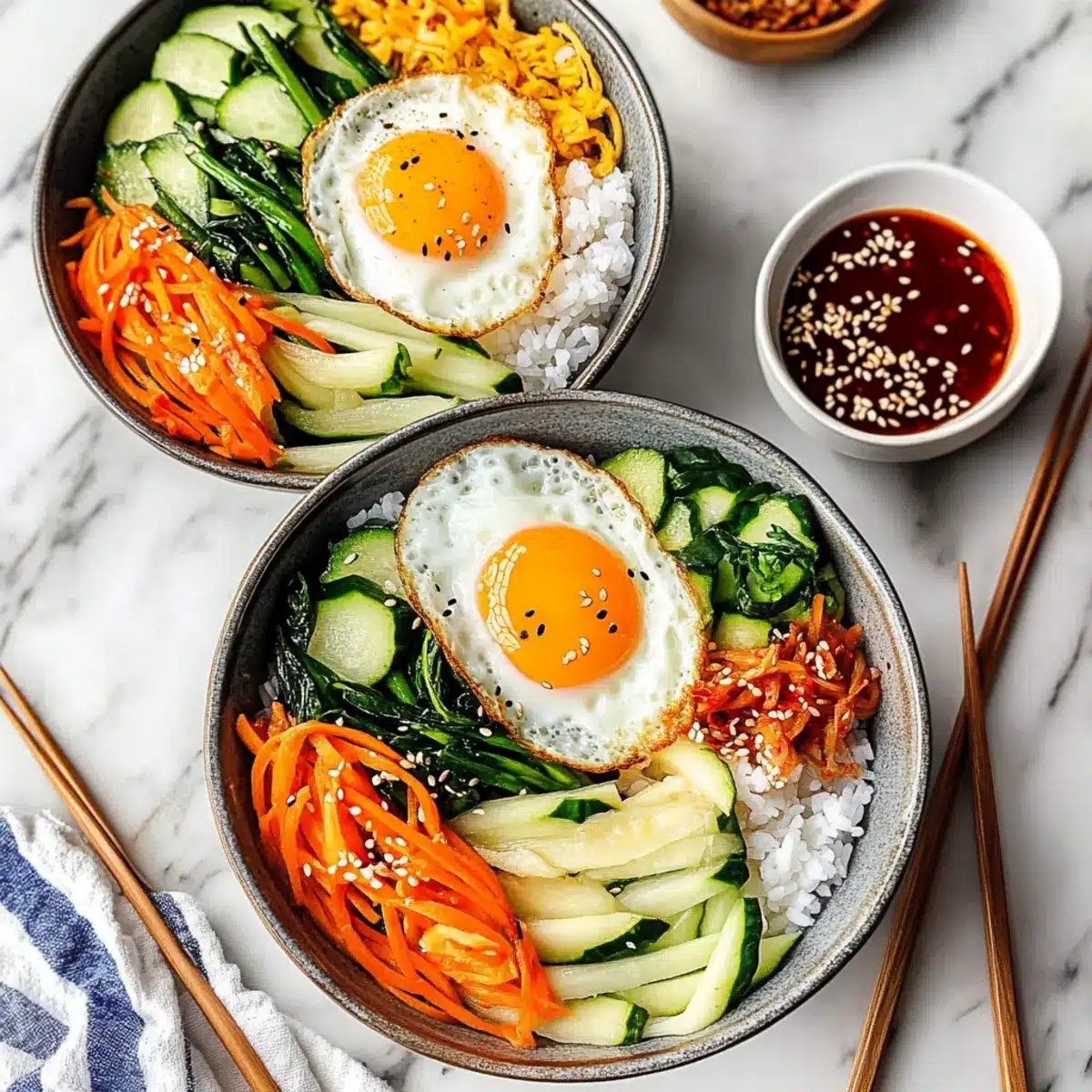
What to Serve with Flavor-Packed Vegetarian Bibimbap with Gochujang Sauce
Savor the balanced flavors of bibimbap by complementing it with a few delightful sides and beverages.
- Kimchi: A staple in Korean cuisine, this fermented vegetable dish adds tang and spice, perfectly accentuating the flavors of the bibimbap.
- Pickled Radishes: These crunchy, sweet-sour bites offer a refreshing contrast that cuts through the richness of the gochujang sauce.
- Miso Soup: Warm, umami-rich miso soup provides a comforting touch and helps round out the meal, making it cozy and fulfilling.
- Spicy Tofu Nuggets: Crispy on the outside and tender on the inside, these nuggets mirror the bibimbap’s textures and add a kick of flavor.
- Cucumber Salad: This light and refreshing salad enhances the meal with its crispness and acidity, balancing the hearty rice and vegetables.
- Green Tea: A hot cup of green tea cleanses the palate and highlights the vibrant flavors of your bibimbap, creating a harmonious dining experience.
- Sesame Spinach Salad: With its nutty dressing, this salad echoes the flavors of the bibimbap while adding another layer of texture and health benefits.
- Mocha Brownies: For dessert, indulge in these fudgy brownies with a hint of coffee, providing a bittersweet end to your vibrant meal.
- Sparkling Water with Lime: A refreshing drink that offers a light sparkle, showcasing an invigorating zest that pairs well with the robust flavors of bibimbap.
How to Store and Freeze Bibimbap
Fridge: Store any leftover bibimbap in an airtight container for up to 3 days. It’s best to keep the components separate (like the rice and veggies) to maintain texture.
Freezer: For longer storage, freeze the cooked rice and sautéed vegetables individually in freezer-safe containers for up to 2 months. Avoid freezing the fried egg or tofu for best results.
Reheating: When ready to enjoy, thaw overnight in the fridge, then reheat the rice and vegetables in the microwave or on the stove until warmed through. A little splash of water helps keep the rice moist.
Preparation: For easy meal prep, prepare vegetables and gochujang sauce in advance and store them separately; they’ll stay fresh in the fridge for up to 3 days.
Expert Tips for the Best Bibimbap
-
Prep Ahead: Prepare your vegetables and gochujang sauce in advance; they keep well for up to 3 days, streamlining meal prep for quick bibimbap assembly.
-
Tasteful Substitutions: Don’t hesitate to experiment! You can easily swap in seasonal veggies or proteins like tofu to make your bibimbap uniquely yours.
-
Watch the Spinach: Avoid overcooking the spinach; just a quick wilt retains its vibrant color, texture, and nutrients, essential for an appealing dish.
-
Customize the Spice: Adjust the level of gochujang to suit your palate. Combine it with more sweeteners or vinegar to balance the heat for a personalized touch.
-
Garnish for Greatness: Enhance your bibimbap with toppings like sesame seeds or sliced scallions, which add delightful texture and flavor that truly elevate the dish.
Make Ahead Options
These flavorful bibimbap bowls are perfect for meal prep enthusiasts! You can prepare the vegetables and gochujang sauce up to 3 days in advance—simply chop your cucumbers, carrots, and blanched mung bean sprouts, then store them in airtight containers in the refrigerator. To maintain their vibrant textures, remember to drain excess moisture from the spinach after wilting. On the day you’re ready to serve, cook the rice and reheat the vegetables gently if desired. Top with a fried egg or tofu and drizzle with the gochujang sauce just before serving, ensuring that your homemade bibimbap remains as delicious as when freshly made!
Bibimbap Variations & Substitutions
Feel free to let your creativity shine and customize your bibimbap with these delightful twists and substitutes!
- Dairy-Free: Replace the fried egg with an additional serving of cubed baked tofu for a vegan protein boost.
- Heat Adjustments: To tame the spice level, mix in a touch of honey or maple syrup into the gochujang sauce, balancing the heat perfectly.
- Crunchy Alternatives: Swap mung bean sprouts for crispy edamame or fresh snap peas to amplify the crunch factor.
- Veggie Swaps: Use seasonal vegetables like bok choy or sautéed zucchini for a fresh twist that celebrates local produce.
- Protein Options: If you prefer mushrooms, sautéed shiitake or oyster mushrooms can add a delightful umami depth as a substitute for tofu.
- Rice Alternatives: Go for fluffy brown rice or even cauliflower rice for a low-carb alternative, giving your bibimbap a unique flavor profile.
- Garnish Galore: Enhance with toasted nori strips or chopped nuts instead of sesame seeds for unexpected texture and flavor inspirations.
- Flavor Experimentation: Add a splash of lime juice to the mixture for a zesty freshness or try incorporating a dash of kimchi for an added kick.
Remember, with bibimbap, the possibilities are endless! Don’t hesitate to explore and discover what combinations you love best. For more insights, check out fun Recipes to Transform Your Meals or visit our guide on customizing your favorite dishes!
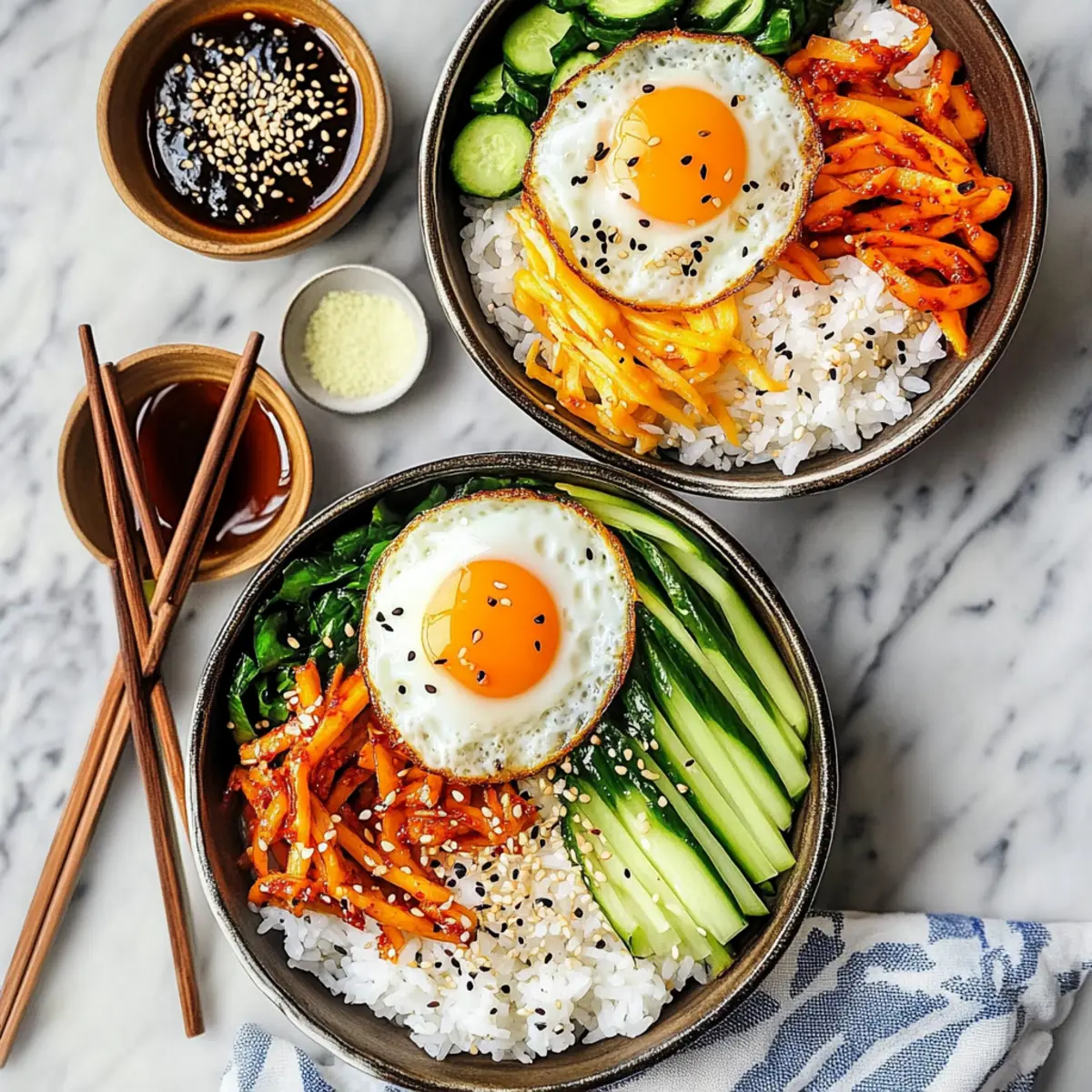
Bibimbap Recipe FAQs
What type of rice should I use for bibimbap?
For the best texture, I recommend using short-grain white rice, which offers that delightful stickiness perfect for holding everything together. If you’re looking for a healthier option, brown rice or cauliflower rice can be great substitutes, providing different flavors and nutrition profiles.
How do I store leftover bibimbap?
Leftover bibimbap can be stored in an airtight container in the fridge for up to 3 days. To maintain the freshness of the components, it’s best to keep the rice and vegetables separate. This way, they won’t lose their individual textures!
Can I freeze bibimbap?
Absolutely! To freeze bibimbap, separately pack cooked rice and sautéed vegetables in freezer-safe containers for up to 2 months. When you’re ready to enjoy, simply thaw overnight in the fridge and reheat in the microwave, adding a splash of water to keep the rice moist.
What can I do if the gochujang sauce is too spicy?
If the gochujang sauce turns out too spicy for your liking, no worries! You can tone it down by mixing in a teaspoon of maple syrup or honey to balance the heat. Start with small amounts, tasting as you go, until you achieve the desired flavor.
Are there any dietary considerations for bibimbap?
Bibimbap is quite customizable! For a vegetarian version, include the fried egg or swap in tofu for vegan options. If you have allergies, be mindful of the soy sauce and gochujang as they can contain gluten; you can use tamari or coconut aminos for gluten-free alternatives. Always check labels to ensure safety!
How can I enhance the presentation of my bibimbap?
Presentation can make a big difference! You can enhance your bibimbap by arranging the ingredients in separate sections over the rice, creating a colorful rainbow effect. Top with toasted sesame seeds and sliced scallions for added visual and textural appeal. Enjoy the process of mixing and matching!
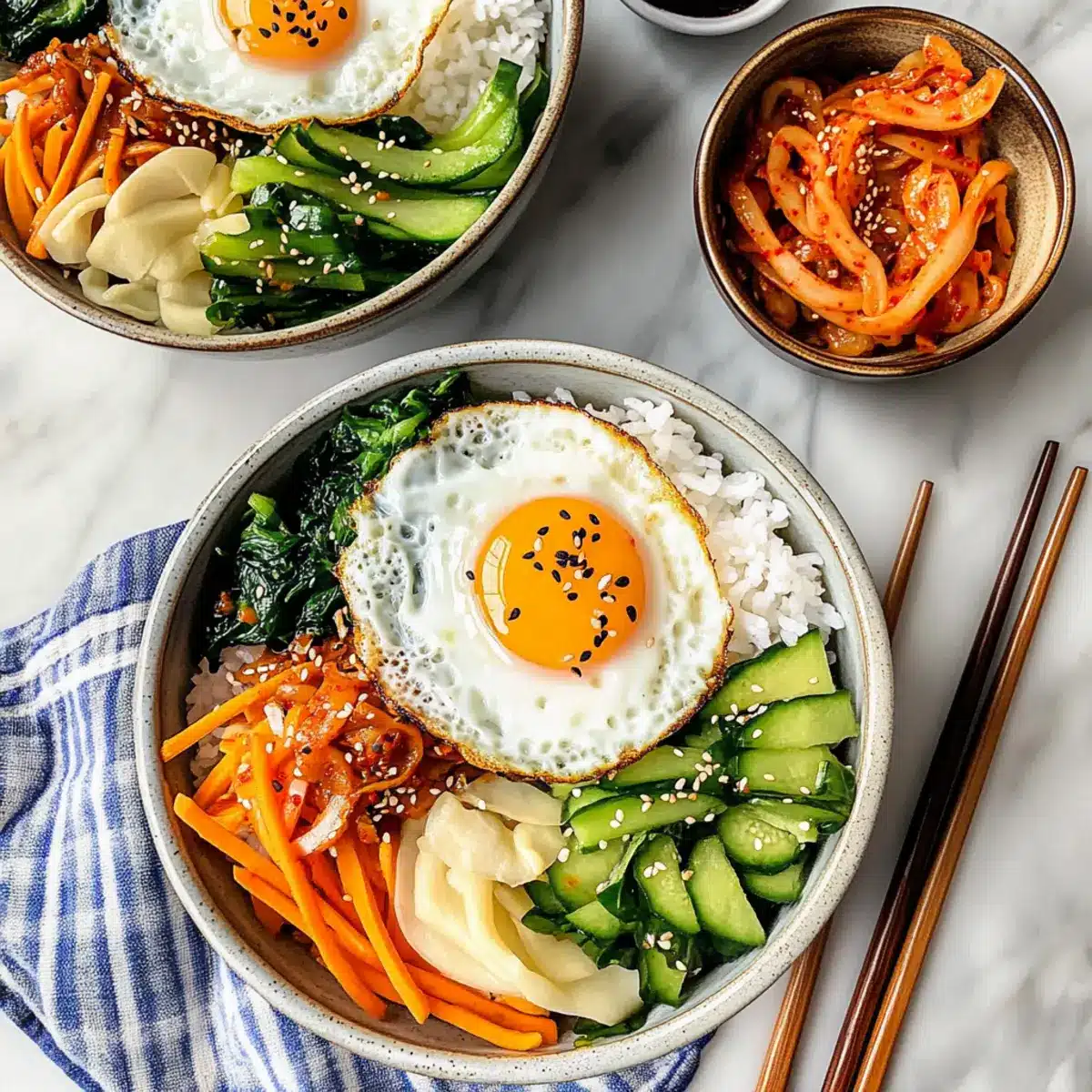
Ultimate Bibimbap: A Flavor Adventure in Every Bite
Ingredients
Equipment
Method
- Rinse 1 cup of short-grain white rice under cold water until the water runs clear. Combine the rinsed rice with 1 1/4 cups of water and a pinch of salt, then cook according to your rice cooker instructions or simmer on low heat for 18-20 minutes until tender. Let it sit covered for 5 minutes.
- Slice half an English cucumber into thin rounds and toss with 1 tablespoon of rice vinegar, 1 teaspoon of toasted sesame oil, and a pinch of salt. Let it sit for about 10 minutes.
- Blanch 1 cup of mung bean sprouts in boiling water for 1 minute, then drain and rinse under cold water.
- In a skillet, heat 1 teaspoon of sesame oil over medium heat, add 1 cup of shredded carrots, and sauté for 1-2 minutes until vibrant and slightly softened. Set aside.
- Return to the skillet, add another teaspoon of sesame oil, toss in 2 cups of baby spinach and 1 tablespoon of tamari or soy sauce. Cook for about 30 seconds until just wilted.
- Assemble your bibimbap by scooping the rice into bowls. Layer on the cucumber, mung bean sprouts, sautéed carrots, and wilted spinach. Top with a fried egg or baked tofu.
- Drizzle gochujang sauce over the bowls and sprinkle with sesame seeds. Serve immediately.