
As I rolled up the first batch of Vegetable Gimbap in my kitchen, the aroma of toasted sesame oil filled the air, prompting a rush of nostalgia for summer picnics in Korea. These delightful Korean rice rolls are not just a feast for the eyes; they’re vibrant bundles of fresh produce designed to brighten up any meal. Quick to prepare and highly adaptable, gimbap is perfect for using up leftover veggies while also becoming a healthy snack or light meal that the whole family will love. Made with a plant-based egg omelette, they offer the satisfying texture of sushi but with a unique twist. Curious about how to make these delicious rolls and discover your own favorite filling combinations? Let’s dive into this simple recipe!
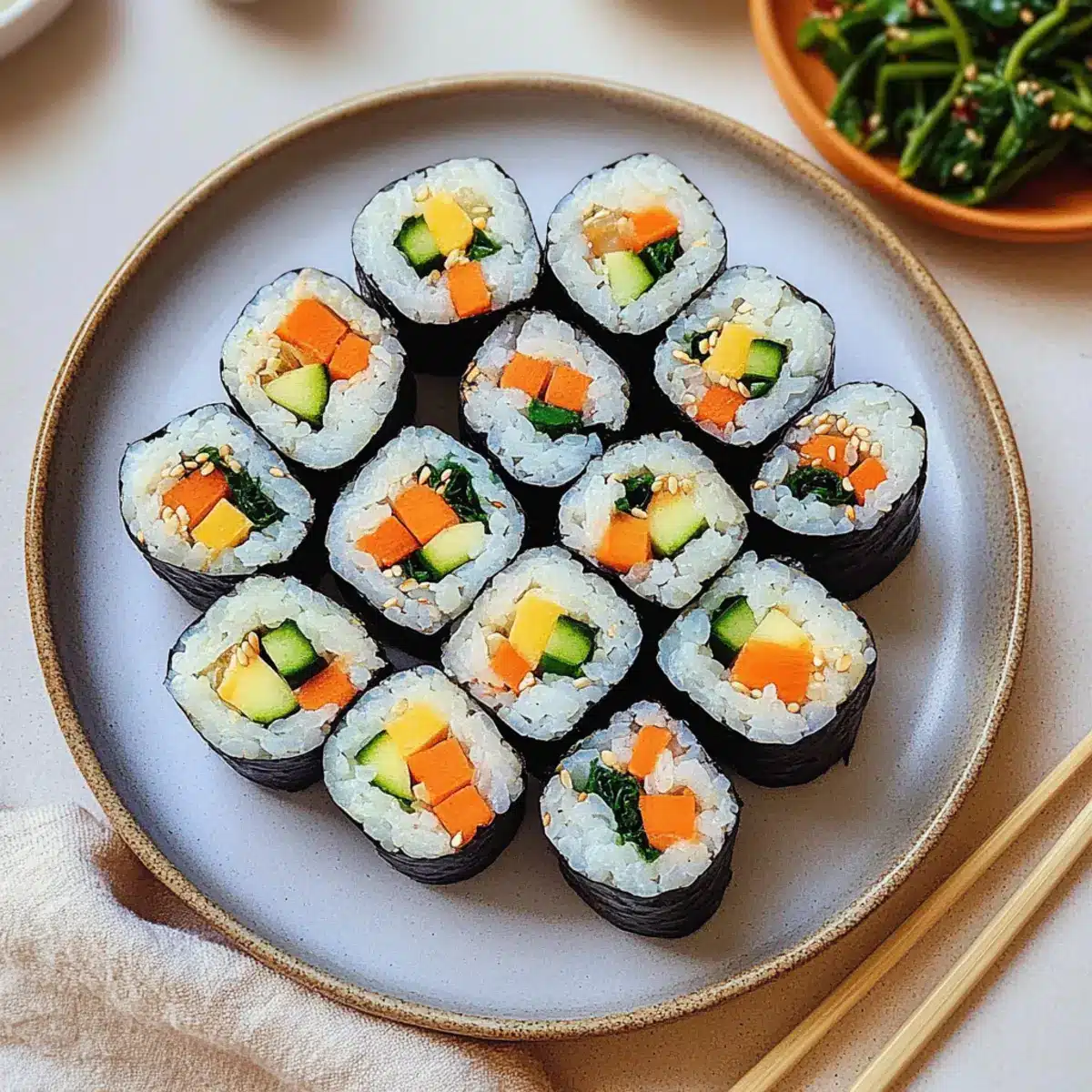
Why Try Vegetable Gimbap Today?
Simplicity Made Delicious: This quick recipe lets you whip up fresh gimbap in no time, even on busy days.
Endless Filling Options: Customize your rolls with whatever veggies you have on hand, making this dish incredibly versatile for any palate.
Nutritious & Vibrant: Packed with fresh produce, Vegetable Gimbap is not only a feast for the eyes but also a fantastic way to stay healthy.
Perfect for Sharing: These colorful rolls are a hit at gatherings, making them a great option for parties or picnics.
Elevate your meal prep by trying Chicken Roasted Vegetables alongside this recipe for a complete experience!
Vegetable Gimbap Ingredients
Ready to embark on your Vegetable Gimbap journey? Here’s what you need!
For the Gimbap
• Sticky Rice – Essential for holding your rolls together; ensure it’s cooked to perfection.
• Seaweed Paper (Nori) – Wraps your vibrant fillings, providing a delightful flavor and texture.
• Sesame Oil – Adds a nutty richness; key for that authentic taste of Vegetable Gimbap.
For the Filling
• Carrot – Brightens up your gimbap with crunch; swap for bell pepper for a sweeter taste.
• Swiss Chard Stalks – Bring unique flavors and nutrients; feel free to substitute with cucumber or celery sticks.
• Persian Cucumber – Offers a refreshing, crisp bite; any cucumber variety works in a pinch.
• Spinach – Adds gorgeous color and nutrition; kale or arugula can also do the job well!
• Plant-Based Egg Omelette – Gives protein and a hearty texture; scrambled eggs or tofu are great alternatives.
With these ingredients, you’re ready to create delicious Vegetable Gimbap that impresses and satisfies! Happy rolling!
Step‑by‑Step Instructions for Vegetable Gimbap
Step 1: Cook the Rice
Begin by cooking sticky rice in a rice cooker according to the manufacturer’s instructions. Once cooked, let it sit for about 10 minutes. Then, transfer the rice to a large bowl, and gently fold in a splash of sesame oil and a pinch of salt while the rice is still warm. This enhances flavor and helps keep the rice sticky, essential for a perfect Vegetable Gimbap.
Step 2: Prepare the Fillings
While the rice cools, it’s time to prepare your tasty fillings. Cut your carrots and Swiss chard stalks into long, thin strips, and slice the cucumber and the plant-based egg omelette into similar lengths. Having everything ready will ensure your Vegetable Gimbap rolls are colorful and evenly filled, making for an appealing presentation when served.
Step 3: Sauté the Vegetables
Heat a tablespoon of olive oil in a pan over medium heat. Sauté the carrot strips for about 3-4 minutes until they begin to soften slightly; then set them aside. Repeat the process with the spinach, cooking it for just 2-3 minutes until wilted. This adds a lovely richness to your Vegetable Gimbap, providing a nice texture contrast against the crunchy fillings.
Step 4: Assemble the Gimbap
Lay out a bamboo mat on your countertop and place a sheet of seaweed on it, shiny side down. Spread a thin layer of the seasoned rice across the bottom 80% of the seaweed, leaving space at the edge. This step sets the foundation for your Vegetable Gimbap, ensuring each roll holds together deliciously well after rolling.
Step 5: Roll Up the Gimbap
Arrange the sautéed vegetables and raw cucumber strips along the edge of the rice closest to you. Using the bamboo mat, carefully roll the gimbap away from you while gently tucking the fillings inside, pressing firmly yet not too hard to avoid squeezing out the contents. Aim for a tight roll to keep your Vegetable Gimbap intact and beautiful.
Step 6: Slice the Rolls
Once your rolls are tightly secured, rub a little sesame oil on the outside to enhance flavor and prevent sticking. With a sharp, wet knife, slice the roll into 8-10 equal pieces, ensuring clean cuts for a pleasing presentation. Wetting the knife between cuts will prevent the rice from sticking, revealing the vibrant contents of your beautiful Vegetable Gimbap.
Step 7: Garnish and Serve
To finish, sprinkle sesame seeds over the sliced pieces for a touch of crunch and visual appeal. Your colorful Vegetable Gimbap is now ready to be served! Pair it with soy sauce or pickled ginger for an extra burst of flavor. These delightful rolls will bring a smile to anyone’s face, making them perfect for sharing at gatherings or enjoying as a light snack.
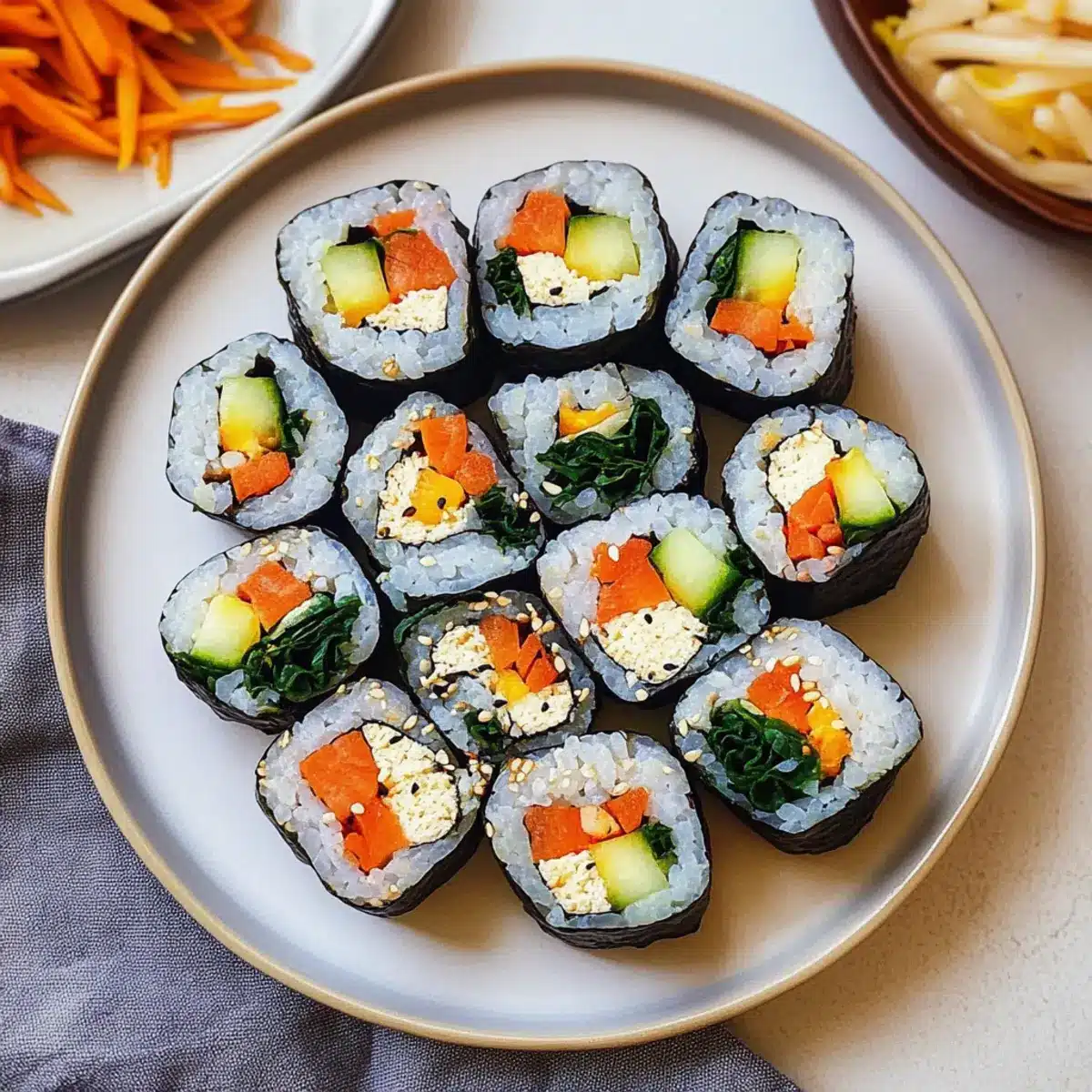
What to Serve with Fresh Vegetable Gimbap?
Set the stage for an unforgettable meal with vibrant accompaniments that perfectly complement these delicious Korean rice rolls.
- Soy Sauce Dipping: A classic pairing that enhances each roll’s flavor, giving a salty, umami kick that balances the freshness.
- Pickled Ginger: This tangy and slightly sweet garnish cleanses the palate between bites, elevating your gimbap experience.
- Miso Soup: A warm, comforting bowl of miso soup pairs wonderfully with gimbap, offering deep flavors that harmonize with the freshness of the rolls.
- Sesame Salad: A light and crunchy salad with sesame dressing adds a refreshing contrast to the chewy rolls, making each meal satisfying.
- Korean Kimchi: This classic spicy pickled vegetable side adds a zesty kick, introducing vibrant flavors and probiotics for a healthy boost.
- Fruit Skewers: For a sweet finish, consider skewers of fresh fruit like mango or pineapple, which provide a delightful contrast to the savory gimbap.
- Iced Green Tea: A refreshing drink that cools the palate while enhancing the meal’s lightness – perfect for warm days or picnics.
With these delightful options by your side, your Vegetable Gimbap becomes the centerpiece of a vibrant and satisfying meal!
How to Store and Freeze Vegetable Gimbap
Room Temperature: Enjoy your Vegetable Gimbap fresh for the best flavor; consume within 2 hours of preparation to avoid spoilage.
Fridge: Store leftover gimbap in an airtight container in the refrigerator for up to 1 day. Cover tightly with plastic wrap to prevent drying out.
Freezer: For longer storage, freeze gimbap tightly wrapped in plastic wrap and aluminum foil for up to 2 months. Thaw in the fridge before enjoying.
Reheating: Gimbap is best eaten cold or at room temperature, but if you desire warmth, microwave it briefly to prevent drying, ensuring to cover it.
Make Ahead Options
These Vegetable Gimbap rolls are perfect for meal prep enthusiasts! You can prepare the rice and sautéed fillings up to 24 hours in advance; simply refrigerate them in airtight containers to maintain freshness. When you’re ready to enjoy, roll the rice and fillings in nori, slice, and serve! Additionally, if you’d like to make the rolls even earlier, you can assemble them completely and refrigerate them for up to 3 days; just remember to cover tightly to prevent drying. To keep the rolls from getting soggy, it’s best to add any cucumber or fresh greens just before serving. This way, you’ll still have delicious, crunchy Vegetable Gimbap with minimal effort on busy weeknights!
Vegetable Gimbap Variations & Substitutions
Feel free to get creative with your Vegetable Gimbap by swapping in your favorite ingredients to match your taste and pantry!
-
Vegan Twist: Use tofu scramble instead of the plant-based egg for a protein boost without compromising on flavor.
-
Crunchy Addition: Add thinly sliced radishes or zucchini for an extra crunch that complements the veggies beautifully.
-
Herb-Infused: Incorporate fresh herbs like cilantro or mint into the filling for a refreshing spin on the classic flavor profile.
-
Spicy Kick: Layer in some sliced jalapeños or a spread of spicy gochujang for those who crave a little heat.
-
Colorful Variety: Swap in bell peppers or even purple cabbage for a vibrant pop of color and added nutrients.
-
Nutrient Boost: Toss in some avocado slices for creaminess; they pair wonderfully with the crisp veggies and are packed with healthy fats.
-
Pickled Perfection: Use pickled vegetables, such as kimchi or pickled radish, for a tangy burst that elevates every bite.
-
Dipping Delight: Serve your gimbap with a savory soy-based dipping sauce or a tangy sesame vinaigrette for added flavor.
By customizing your filling options, you’ll discover endless ways to enjoy these delightful rolls. For more delicious ideas, try pairing your gimbap with Chicken Roasted Vegetables for a complete meal experience!
Expert Tips for Vegetable Gimbap
• Perfect Rice Consistency: Ensure your sticky rice is cooked just right—too dry can lead to crumbling, while too wet may cause your rolls to fall apart.
• Even Vegetable Cuts: Cut all filling ingredients into similar lengths to ensure uniform rolling and a beautiful presentation in your Vegetable Gimbap.
• Sauté for Flavor: Lightly sautéing veggies enhances their flavor and texture; don’t skip this step for that contrast everyone loves!
• Wet Knife Trick: Always use a wet knife to slice your rolls—it prevents sticking and ensures clean, attractive cuts.
• Experiment with Fillings: Feel free to try different vegetables or proteins, like marinated tofu, for a personalized twist on your Vegetable Gimbap!
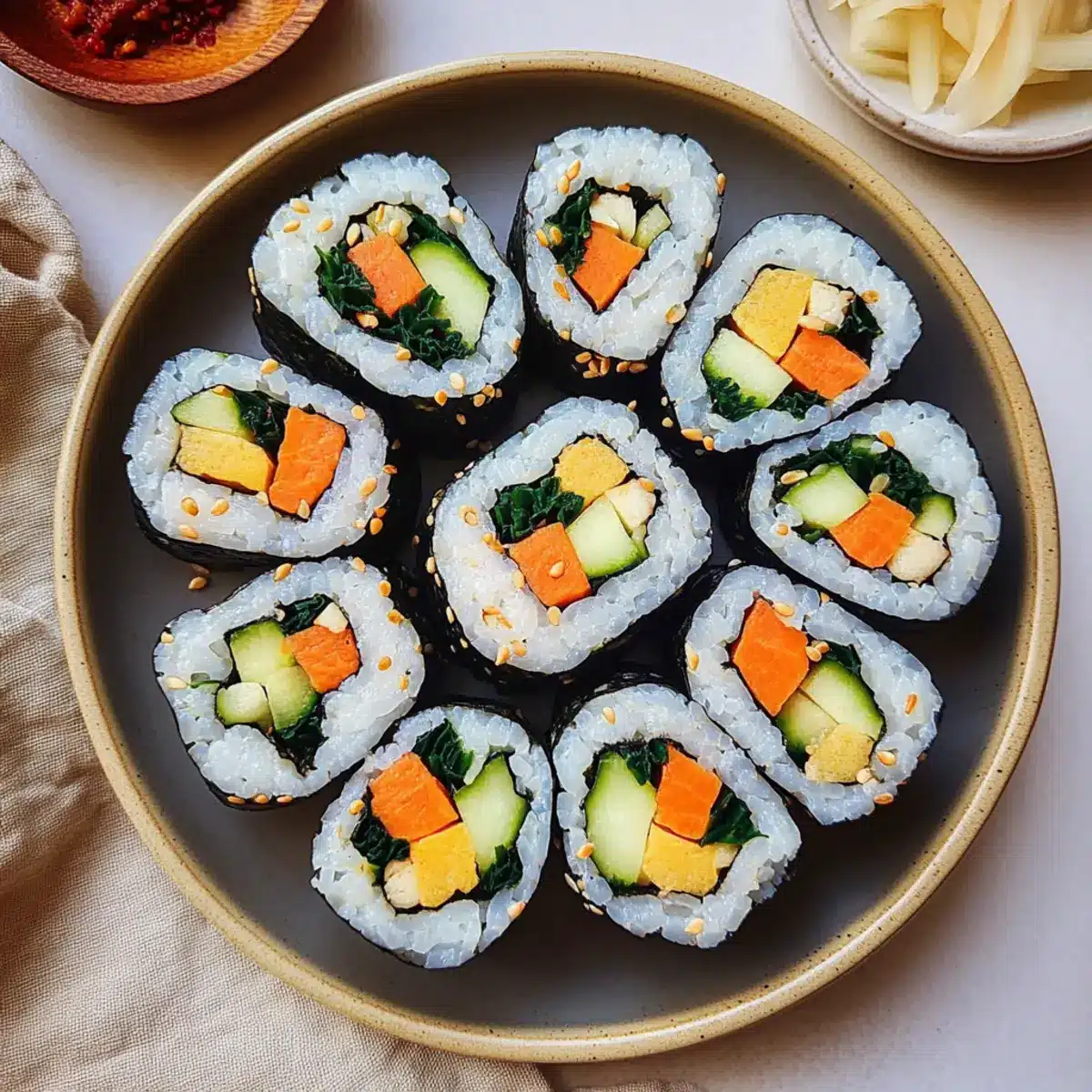
Vegetable Gimbap Recipe FAQs
What kind of rice is best for Gimbap?
Sticky rice is crucial for holding your Vegetable Gimbap together. Using short-grain sushi rice is recommended as it provides the right amount of stickiness to ensure your rolls maintain their shape. It’s essential to cook it according to your rice cooker’s instructions for the best texture.
How do I store leftover Vegetable Gimbap?
To store leftover Vegetable Gimbap, place it in an airtight container in the refrigerator. It is best consumed within 1 day to maintain its freshness, so cover it tightly with plastic wrap to prevent drying out. If you’re feeling creative, think about making a fresh batch for special occasions after the first day!
Can I freeze Vegetable Gimbap and, if so, how?
Absolutely! You can freeze your Vegetable Gimbap for up to 2 months. To do this, tightly wrap each roll in plastic wrap, followed by aluminum foil for extra protection. When you’re ready to enjoy, simply thaw the rolls overnight in the fridge. For a quick snack, you can enjoy them cold, or if you prefer them warm, briefly microwave until heated through but be careful to avoid drying them out.
What should I do if my Gimbap rolls are falling apart?
If your rolls are falling apart, the most common culprit may be the rice’s consistency. Ensure that your sticky rice is cooked properly: not too dry and not too wet. Additionally, cutting your vegetables into similar-sized strips will help with even distribution & rolling. When assembling the rolls, make sure to compress them slightly as you roll to create tighter and more secure rolls.
Is Vegetable Gimbap suitable for people with allergies?
While Vegetable Gimbap is generally vegan-friendly and made from fresh produce, it’s important to consider individual allergies. If you’re allergic to gluten, ensure you use gluten-free soy sauce for dipping. Always check ingredient labels for cross-contamination, especially for sesame oil, which can cause allergies in some people. Feel free to customize fillings to meet dietary restrictions, ensuring that your Vegetable Gimbap is safe and enjoyable for everyone.
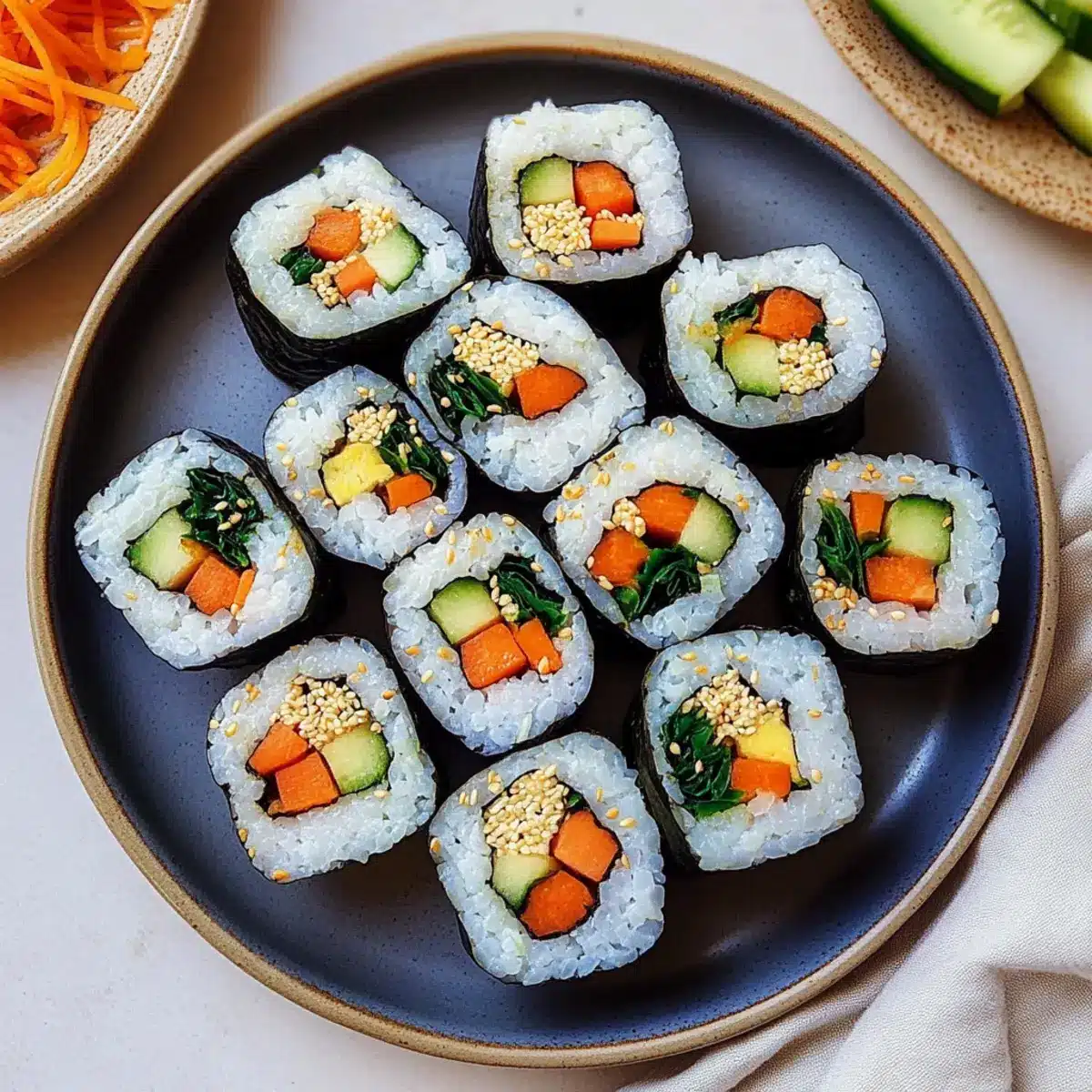
Delicious Vegetable Gimbap: Fun, Fresh Rolls You’ll Love
Ingredients
Equipment
Method
- Cook sticky rice in a rice cooker according to the manufacturer’s instructions, then let it sit for about 10 minutes.
- Transfer the rice to a large bowl and fold in sesame oil and a pinch of salt while still warm.
- Prepare fillings by cutting carrots, Swiss chard, cucumber, and plant-based egg omelette into long, thin strips.
- Sauté carrot strips in a pan with olive oil for 3-4 minutes, followed by sautéing spinach for 2-3 minutes until wilted.
- Lay out a bamboo mat and place a seaweed sheet on it. Spread a layer of seasoned rice over the bottom 80% of the seaweed.
- Arrange sautéed vegetables and raw cucumber strips along the edge of the rice, then roll the gimbap tightly using the bamboo mat.
- Rub sesame oil on the outside, slice the roll into 8-10 equal pieces with a wet knife.
- Sprinkle sesame seeds over the sliced gimbap and serve with soy sauce or pickled ginger.