

The moment I stepped into that cozy taverna on a sun-drenched Greek island, the tantalizing aroma of garlic and simmering tomatoes wrapped around me like a warm hug. It was here that I discovered Shrimp Saganaki, a dish that brilliantly marries tender shrimp with a rich, tangy tomato sauce and creamy feta cheese. This quick one-pot wonder is not only a feast for the senses, but it’s also a versatile option for a bustling weeknight meal or an inviting appetizer for friends. With just a handful of ingredients and under 30 minutes of prep, you can effortlessly transport your taste buds straight to the Mediterranean. Are you ready to dive into this flavorful seafood delight?
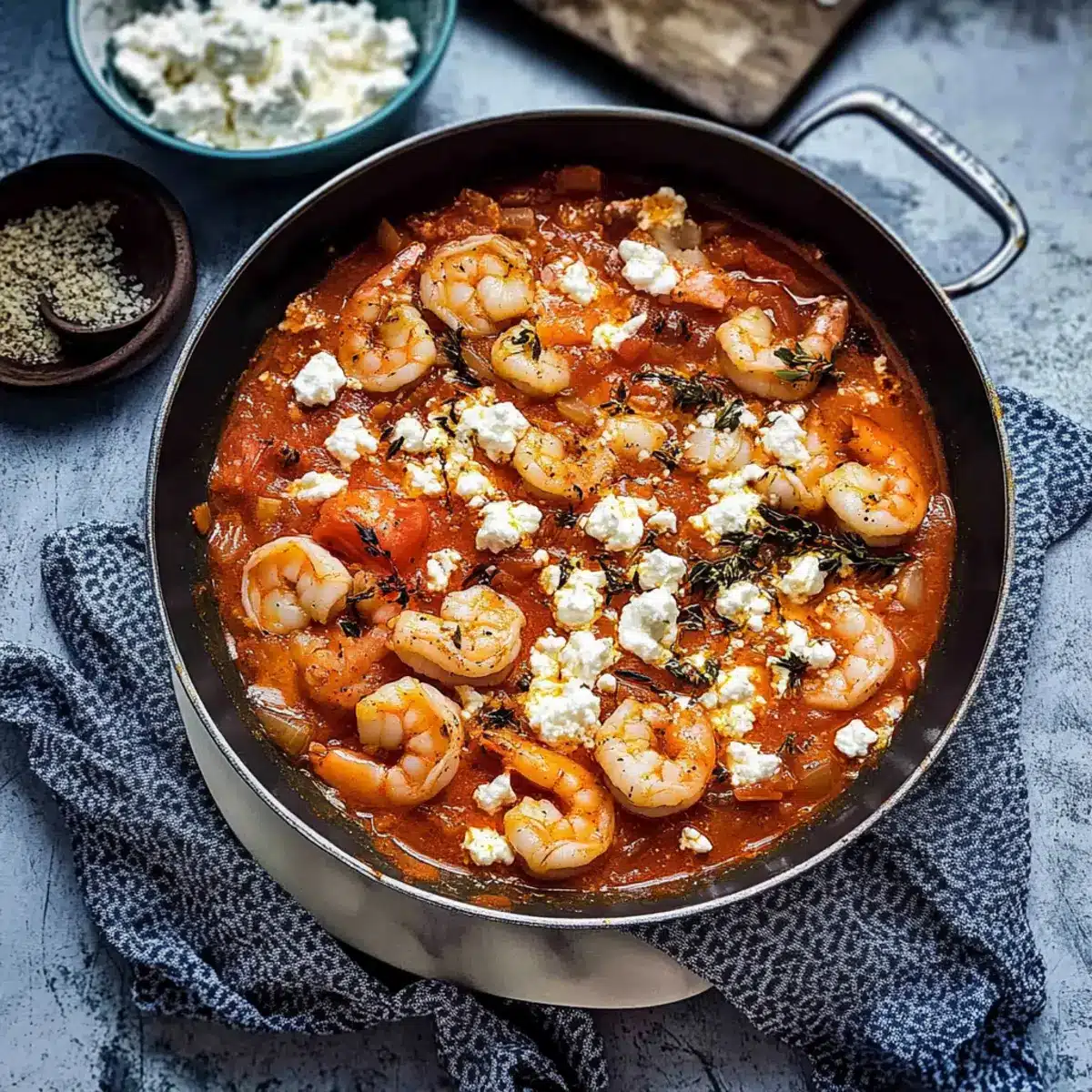
What Makes Shrimp Saganaki So Irresistible?
Flavorful Fusion: This dish beautifully combines juicy shrimp with a luscious tomato sauce, ensuring every bite bursts with zest.
Quick and Easy: Perfect for those busy weeknights, Shrimp Saganaki can be whipped up in under 30 minutes without sacrificing flavor.
Versatile Serving Options: Pair it with crusty bread for a delightful dipping experience, or serve over rice for a heartier meal.
Crowd-Pleasing Delight: Whether you’re impressing guests or enjoying a cozy night in, this dish is sure to please everyone at the table.
Healthy and Nutritious: Packed with protein and healthy fats, it’s a great way to indulge without the guilt. Give this Mediterranean dish a try and watch it become a family favorite!
Shrimp Saganaki Ingredients
For the Sauce
• Olive Oil – Adds richness and helps sauté vegetables; any neutral oil can be used as a substitute.
• Onion (1 large, finely diced) – Offers sweetness and depth to the sauce.
• Garlic (3 cloves, minced) – Provides the essential aromatic flavor that elevates the dish.
• Sugar (1 tsp, optional) – Balances the acidity of the tomatoes; omit for a strictly savory taste.
• Dried Thyme (1 tsp) – Adds herbal notes; consider substituting with fresh thyme for a stronger flavor.
• Salt (1/2 tsp) and Pepper – Enhances the overall flavor; adjust according to your taste.
• Red Pepper Flakes (1/4 tsp) – Introduces a subtle heat; feel free to adjust based on your spice preference.
• Bay Leaves (2) – Infuses the sauce with flavor during cooking; remember to discard them before serving.
• Tomato Paste (2 tbsp) – Thickens the sauce and intensifies tomato flavor.
• Strained Tomatoes (1 cup or 250g, passata) – Serves as the base; if unavailable, you can use crushed tomatoes.
• Crushed Tomatoes (14 oz or 400g) – Provides body to the sauce.
For the Shrimp
• Dry White Wine (1/2 can or 125ml) – Adds depth and complexity to the dish; vegetable stock is a non-alcoholic alternative.
• Jumbo Shrimp or Prawns (2 lb or 900g, peeled and deveined) – The main protein source; can be substituted with fish for a different texture.
• Feta Cheese (7 oz or 200g, crumbled) – Adds a creamy, salty richness; swap with dairy-free cheese for variations.
For Garnish
• Fresh Parsley or Thyme – Enhances presentation and adds a fresh touch.
Step‑by‑Step Instructions for Shrimp Saganaki
Step 1: Sauté Onions
In a large oven-safe pan, heat 2 tablespoons of olive oil over medium-low heat. Add 1 large finely diced onion and sauté for about 5 minutes, stirring occasionally, until the onions are softened and translucent. This will form the flavorful base of your Shrimp Saganaki.
Step 2: Add Aromatics
Stir in 3 minced garlic cloves, 1/2 teaspoon of salt, 1 teaspoon of sugar (if using), 1 teaspoon dried thyme, and 1/4 teaspoon red pepper flakes. Add 2 bay leaves for extra flavor, and continue cooking for around 2 minutes until the garlic becomes fragrant and lightly golden, filling your kitchen with delightful aromas.
Step 3: Prepare Sauce
Now, incorporate 2 tablespoons of tomato paste, 1 cup of strained tomatoes, and 14 oz of crushed tomatoes into the pan. Pour in 125 ml of dry white wine, stirring well to combine all ingredients. Increase the heat slightly, bringing the mixture to a gentle simmer. Let it cook for about 20-30 minutes, stirring occasionally, until the sauce thickens and the flavors meld beautifully.
Step 4: Cook Shrimp
Once the sauce has thickened, add 2 pounds of peeled and deveined jumbo shrimp, stirring to coat them in the rich tomato sauce. Cook the shrimp for about 2-3 minutes, or until they turn pink and opaque. Keep an eye on them to avoid overcooking, as perfectly tender shrimp are key in your Shrimp Saganaki.
Step 5: Top with Feta
Sprinkle 7 oz of crumbled feta cheese evenly over the shrimp and sauce mixture. Set your broiler to high and place the pan in the oven, broiling for approximately 2-4 minutes. Watch closely until the feta melts and develops a golden-brown color, creating a delightful contrast in texture.
Step 6: Final Seasoning
Remove the bay leaves from the Shrimp Saganaki and check the seasoning. Adjust with additional salt and pepper to taste, giving everything a final gentle stir. Garnish with fresh parsley or thyme before serving, allowing your guests to enjoy the vibrant colors and fragrances of this comforting Mediterranean dish.
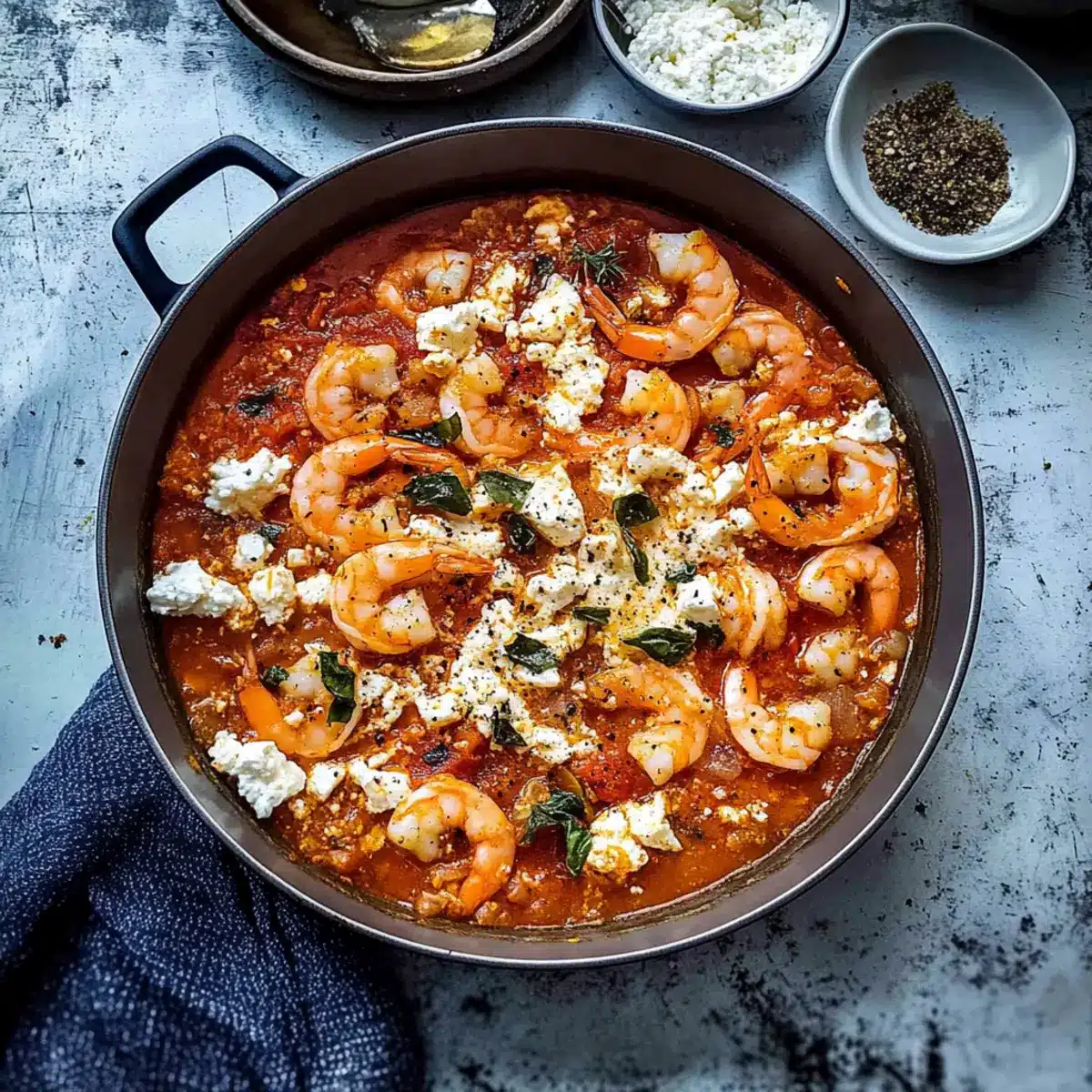
How to Store and Freeze Shrimp Saganaki
Fridge: Store leftover Shrimp Saganaki in an airtight container for up to 3 days. Be sure to let it cool completely before sealing to maintain freshness.
Freezer: If you wish to freeze, place the cooled dish in a freezer-safe container and enjoy within 2 months for the best quality.
Reheating: When ready to consume, gently reheat the shrimp in a skillet over low heat, stirring occasionally until warmed through. This helps prevent the shrimp from becoming rubbery.
Avoiding Overcooking: If reheating from frozen, it’s best to thaw overnight in the fridge before reheating to maintain the ideal texture of your Shrimp Saganaki.
Expert Tips for Shrimp Saganaki
• Use Fresh Ingredients: Fresh shrimp and ripe tomatoes elevate the dish’s flavor remarkably. Avoid using frozen shrimp if possible for the best taste.
• Perfectly Cooked Shrimp: Cook shrimp just until they turn pink and opaque—about 2-3 minutes. Overcooking will yield rubbery shrimp in your Shrimp Saganaki.
• Quality Wine Matters: Use a good quality dry white wine for depth; if not available, vegetable stock can be a suitable substitute without adding acidity.
• Don’t Skip the Feta: The creamy, salty feta is essential for balancing the dish’s flavors. If dairy-free, opt for a plant-based feta alternative that melts well.
• Serve Immediately: For the best flavor and texture, serve your Shrimp Saganaki immediately after broiling. This way, the feta remains warm and soft, inviting guests to dig in.
Shrimp Saganaki: Creative Variations Await!
Feel free to sprinkle a little magic on your Shrimp Saganaki by exploring these delightful twists!
-
Seafood Mix: Swap shrimp for a mix of scallops, mussels, and calamari for a heartier seafood medley. The blend of textures will elevate your dish to new seafood heights.
-
Spicy Kick: Add a splash of hot sauce or extra red pepper flakes to give your dish a fiery twist. The heat will beautifully contrast the creamy feta and tangy tomatoes.
-
Zesty Citrus: Squeeze some fresh lemon juice or add lemon zest just before serving for a burst of bright flavor. This uplift will make every bite feel refreshingly light.
-
Herb Variations: Instead of thyme, try using fresh basil or oregano for a different herbal note. Each herb will lend its own personality, inviting a unique aromatic profile to the dish.
-
Vegan Option: Omit feta altogether and swap shrimp for grilled zucchini or eggplant. Drizzle with olive oil and herbs for a satisfying vegan alternative that still celebrates Mediterranean flavors.
-
Umami Boost: Stir in a tablespoon of capers or olives while simmering for a savory kick. This addition can enhance depth and introduce a delightful briny contrast.
-
Cheesy Delight: Mix in a blend of cheeses such as mozzarella or a sharp cheddar for added gooeyness. The melting cheese will create a comforting and savory layer to the traditional flavors of Saganaki.
-
Roasted Veggies: Toss in some oven-roasted bell peppers or eggplant to enrich the dish with sweetness and texture. This not only brightens the flavors but also brings in vibrant colors that are so inviting.
No matter how you decide to customize your Shrimp Saganaki, each variation promises to be a delicious adventure, just waiting for you to try!
Make Ahead Options
These Shrimp Saganaki are perfect for busy home cooks looking to save time during the week! You can prepare the tomato sauce (steps 1-3) up to 24 hours in advance; simply cool it completely before transferring it to an airtight container in the refrigerator. The cooked shrimp should ideally be added just before serving to maintain their tenderness and prevent rubberiness. When ready to enjoy, gently reheat the sauce on the stovetop and add the shrimp, cooking until they turn pink (2-3 minutes). Then, top with feta and broil for that signature melty goodness! This way, you’ll have a delicious meal ready with minimal last-minute work!
What to Serve with Shrimp Saganaki?
The vibrant flavors of this Greek delight call for accompaniments that are equally delightful and satisfying.
- Crusty Bread: The perfect vessel for dipping and soaking up the rich tomato sauce, adding a comforting crunch.
- Mediterranean Orzo: Lightly seasoned orzo provides a nutty flavor and chewy texture, complementing the shrimp beautifully.
- Greek Salad: This crisp, refreshing dish balances the warmth of the Saganaki, with its tangy feta and crunch from cucumbers.
- Roasted Vegetables: A medley of seasonal veggies adds varied textures and a splash of color to your table.
- Garlic Rice: Infused with garlic and herbs, this quick side enriches the dining experience, enhancing the dish’s Mediterranean roots.
- Chardonnay: A chilled glass pairs wonderfully, its fruity notes echoing the tomatoes and balancing the rich feta.
- Tzatziki Sauce: This creamy, cool dip adds a refreshing contrast to the warm Saganaki and can be enjoyed with bread or veggies.
- Baklava: For dessert, this sweet, flaky pastry brings a perfect end to your meal, harmonizing the meal’s Mediterranean theme.
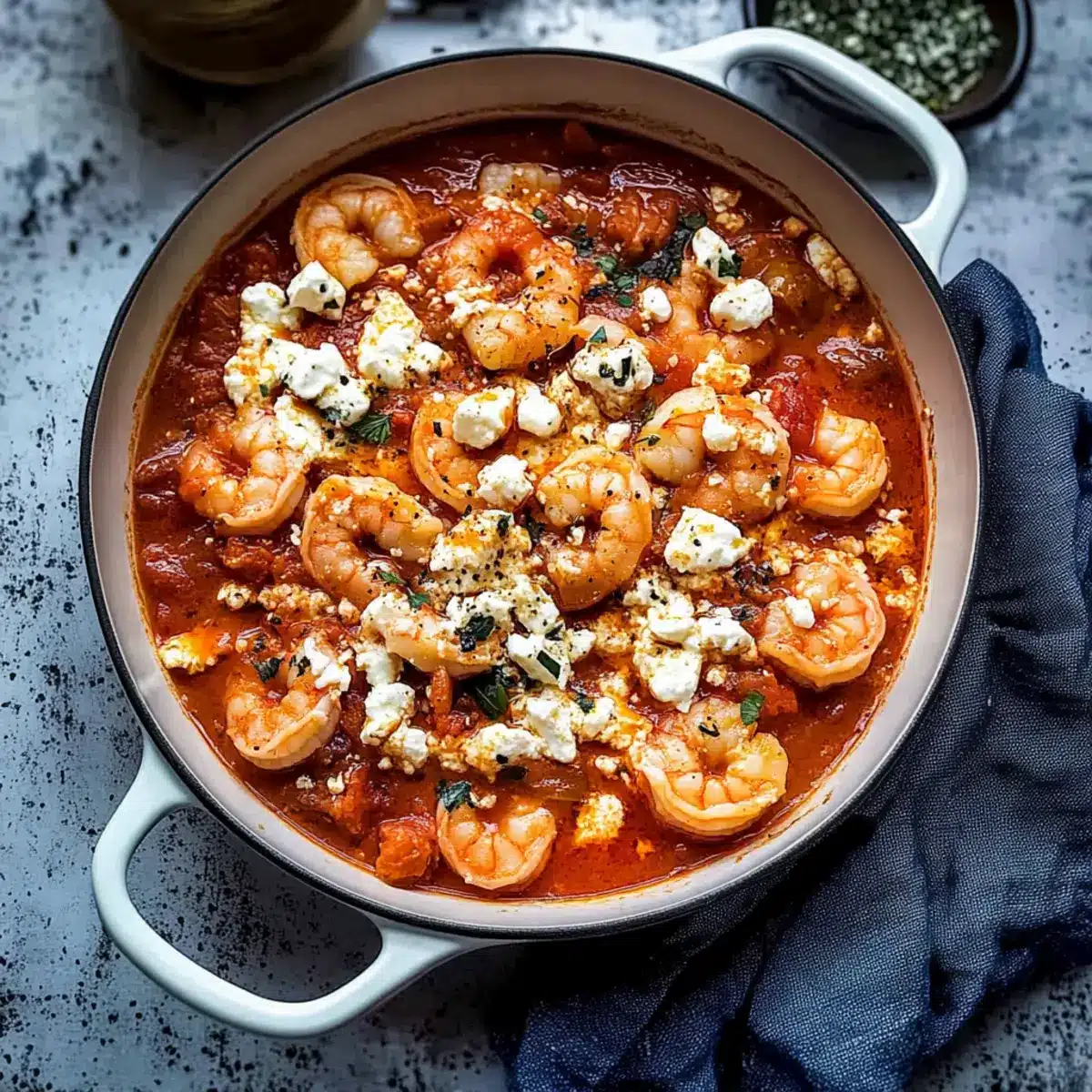
Shrimp Saganaki Recipe FAQs
How do I select the best shrimp for my Saganaki?
Absolutely! When choosing shrimp, look for ones that are plump and firm to the touch. If buying fresh, they should have a clean, briny smell. If opting for frozen, ensure they have no dark spots or signs of freezer burn. Jumbo shrimp (16-20 count per pound) are ideal, but feel free to use smaller sizes based on your preference!
What is the best way to store leftover Shrimp Saganaki?
Very! To store leftover Shrimp Saganaki, allow it to cool completely and then transfer it to an airtight container. It can be stored in the refrigerator for up to 3 days. I recommend reheating it gently on the stovetop to maintain the shrimp’s tenderness and the dish’s overall flavor.
Can I freeze Shrimp Saganaki?
Of course! If you want to freeze your Shrimp Saganaki, place the cooled dish in a freezer-safe container or bag, ensuring you remove as much air as possible. It can be stored in the freezer for up to 2 months. When you’re ready to enjoy it, thaw it overnight in the fridge and then reheat on low heat in a skillet to prevent overcooking the shrimp.
What if my sauce is too watery when making Shrimp Saganaki?
Very! If your sauce turns out too watery, don’t worry! Simply continue simmering it on medium heat, stirring occasionally, until it reduces and thickens to your desired consistency. This usually takes about 5-10 minutes. Adding a bit more tomato paste can also help thicken the sauce while enhancing that rich flavor.
Are there any dietary considerations I should keep in mind for Shrimp Saganaki?
The more the merrier! Shrimp Saganaki is naturally gluten-free and can be made dairy-free by substituting regular feta with a plant-based alternative. It’s also a great option for those looking to enjoy a protein-packed meal. However, keep an eye out for any shellfish allergies among your guests, and if needed, you can use fish as a substitute for shrimp for a similar dish!
How can I enhance the flavor of my Shrimp Saganaki?
Absolutely! To elevate the dish, consider adding a splash of ouzo or a hint of lemon juice just before serving. Fresh herbs like basil or oregano can also add a delightful twist to the classic flavors. Experimenting with different types of wine or even a bit of vegetable stock can help you discover the perfect balance for your palate.
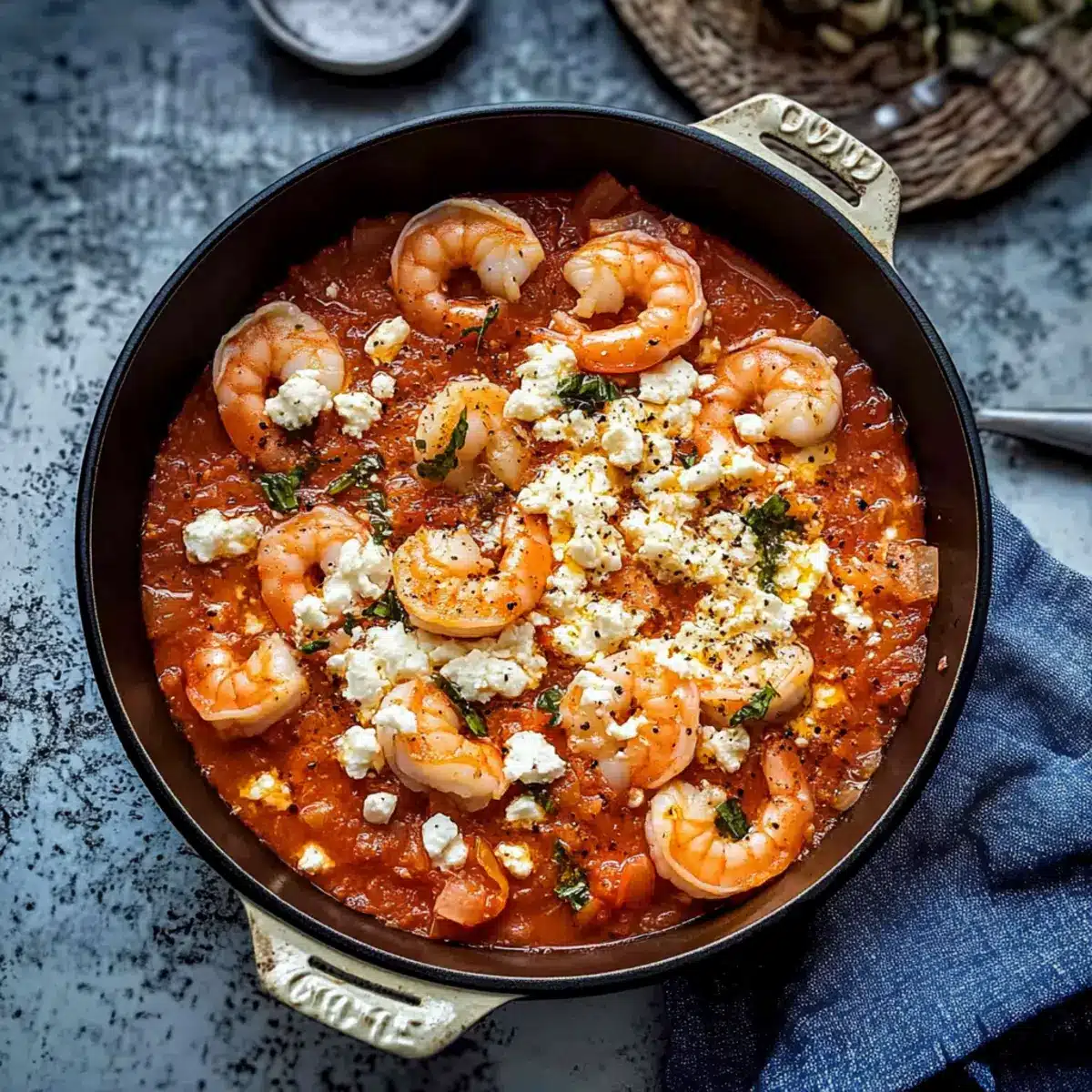
Savory Shrimp Saganaki: A Quick Greek Delight to Savor
Ingredients
Equipment
Method
- In a large oven-safe pan, heat 2 tablespoons of olive oil over medium-low heat. Add 1 large finely diced onion and sauté for about 5 minutes until softened.
- Stir in 3 minced garlic cloves, 1/2 teaspoon of salt, 1 teaspoon of sugar, 1 teaspoon dried thyme, and 1/4 teaspoon red pepper flakes. Add 2 bay leaves and cook for around 2 minutes.
- Incorporate 2 tablespoons of tomato paste, 1 cup of strained tomatoes, and 14 oz of crushed tomatoes into the pan. Pour in 125 ml of dry white wine, stirring well. Bring to a gentle simmer.
- Add 2 pounds of peeled and deveined jumbo shrimp, stirring to coat them in the sauce. Cook for about 2-3 minutes, or until the shrimp turn pink and opaque.
- Sprinkle 7 oz of crumbled feta cheese evenly over the shrimp and sauce mixture. Broil for approximately 2-4 minutes until the feta melts.
- Remove the bay leaves and check the seasoning. Adjust with additional salt and pepper to taste. Garnish with fresh parsley or thyme before serving.