

As the savory scent of onions and bacon fills the air, I can’t help but feel transported to a cozy German kitchen. Today, I’m excited to share my take on Rouladen, a traditional German dish that’s more than just a hearty meal—it’s comfort food at its finest. This recipe features tender beef rolls filled with flavorful ingredients, and it’s perfect for those who enjoy a satisfying home-cooked dinner. Not only is it a crowd-pleaser that brings family and friends together, but it also makes an impressive dish for special occasions or a cozy Sunday dinner. Ready to discover how to craft these delightful, mouth-watering beef bundles? Let’s dive into this culinary journey!
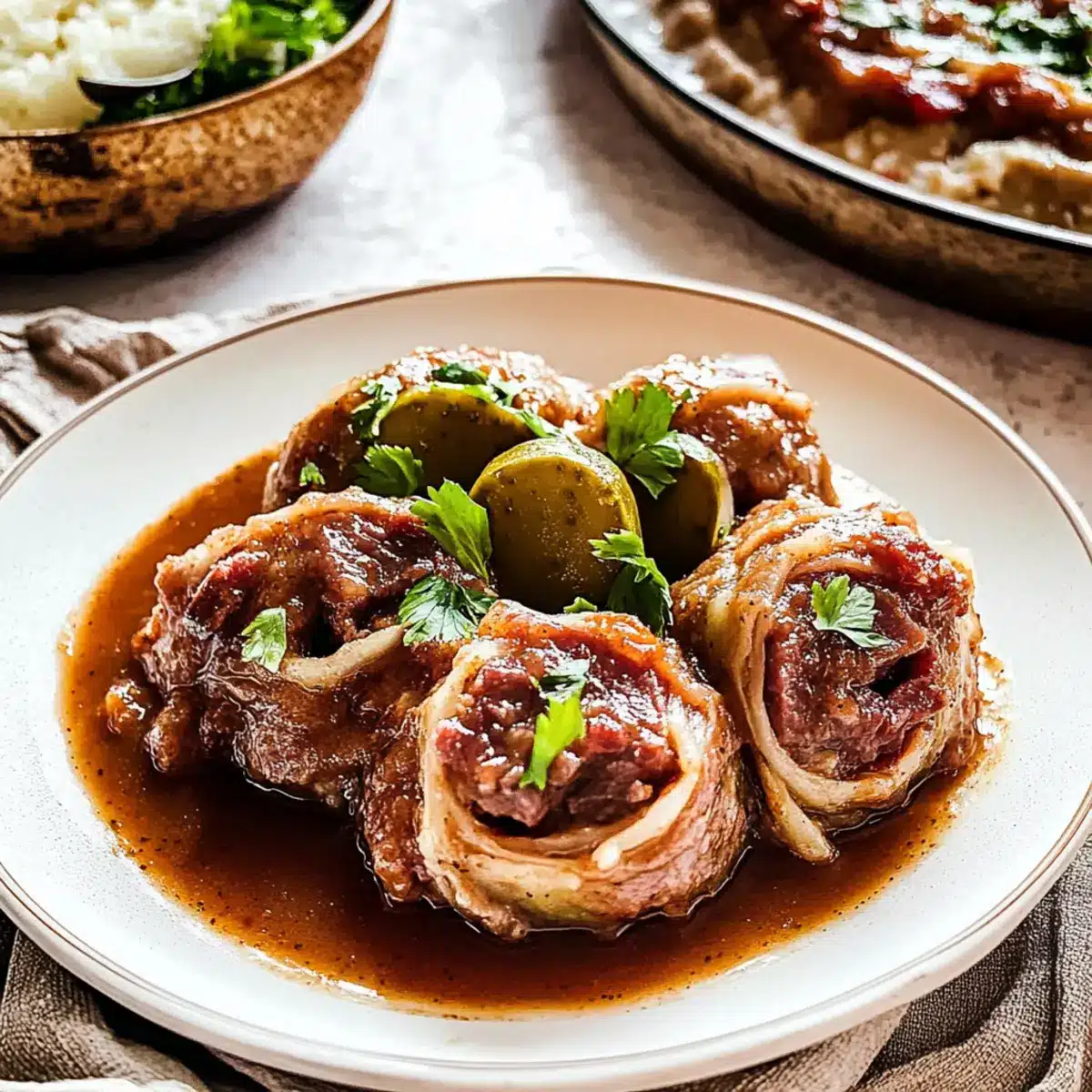
Why is Rouladen a Must-Try?
Irresistible Flavor: Each bite of Rouladen delivers a delightful blend of savory beef, smoky bacon, and tangy pickles that will have you coming back for more. Comforting Texture: The fork-tender meat rolls fall apart beautifully in your mouth, making every meal feel like a warm hug. Entertaining Made Easy: Impress your dinner guests with a dish that’s not only stunning but also easy to prepare, leaving you time to enjoy the company. Plus, check out how to make it ahead of time for an effortless gathering. Perfect Pairings: Serve with spaetzle or creamy mashed potatoes for a complete meal that satisfies everyone. Cultural Charm: This dish isn’t just food; it tells a story of comforting family traditions and hearty German cuisine.
Rouladen Ingredients
For the Beef
• Top Round Beef Steak – Provide protein and a sturdy base; slice about ¼ inch thick for best results.
• Kosher Salt – Enhances flavor; adjust to your taste preference.
• Freshly Ground Black Pepper – Adds just the right touch of seasoning; use to your liking.
• Yellow German Mustard – Infuses tangy flavor; can substitute with Dijon if desired.
For the Filling
• Bacon – Introduces savory richness; feel free to use smoked or unsmoked based on your preference.
• Dill Pickles – Offers a crunchy tang; can be swapped with gherkins for a different twist.
• Yellow Onion – Brings sweetness and depth; use again when making the gravy.
For Cooking
• Unsalted Butter – Essential for browning the rouladen and creating rich gravy; substitute with salted butter if necessary.
• Olive Oil – Aids in browning the meat; use vegetable oil if olive oil isn’t available.
For the Gravy
• Carrot, Celery, Garlic – Aromatics that elevate the gravy’s flavor; can be switched with leeks or shallots if you prefer.
• Soy Sauce – Introduces umami; use tamari for a gluten-free alternative.
• Low-Sodium Beef Broth – Forms the gravy’s base; homemade or store-bought works well.
• Tomato Paste – Adds richness; crushed tomatoes can also be a good substitute.
• Cornstarch – Thickens the gravy beautifully; arrowroot powder is a valid alternative if you wish.
Step‑by‑Step Instructions for Rouladen
Step 1: Prepare the Beef
Pound the top round beef steak slices to about ¼-inch thickness using a meat mallet, ensuring even thickness for uniform cooking. Season both sides generously with kosher salt and freshly ground black pepper. Spread a thin layer of yellow German mustard over each slice for a flavorful kick.
Step 2: Layer Ingredients
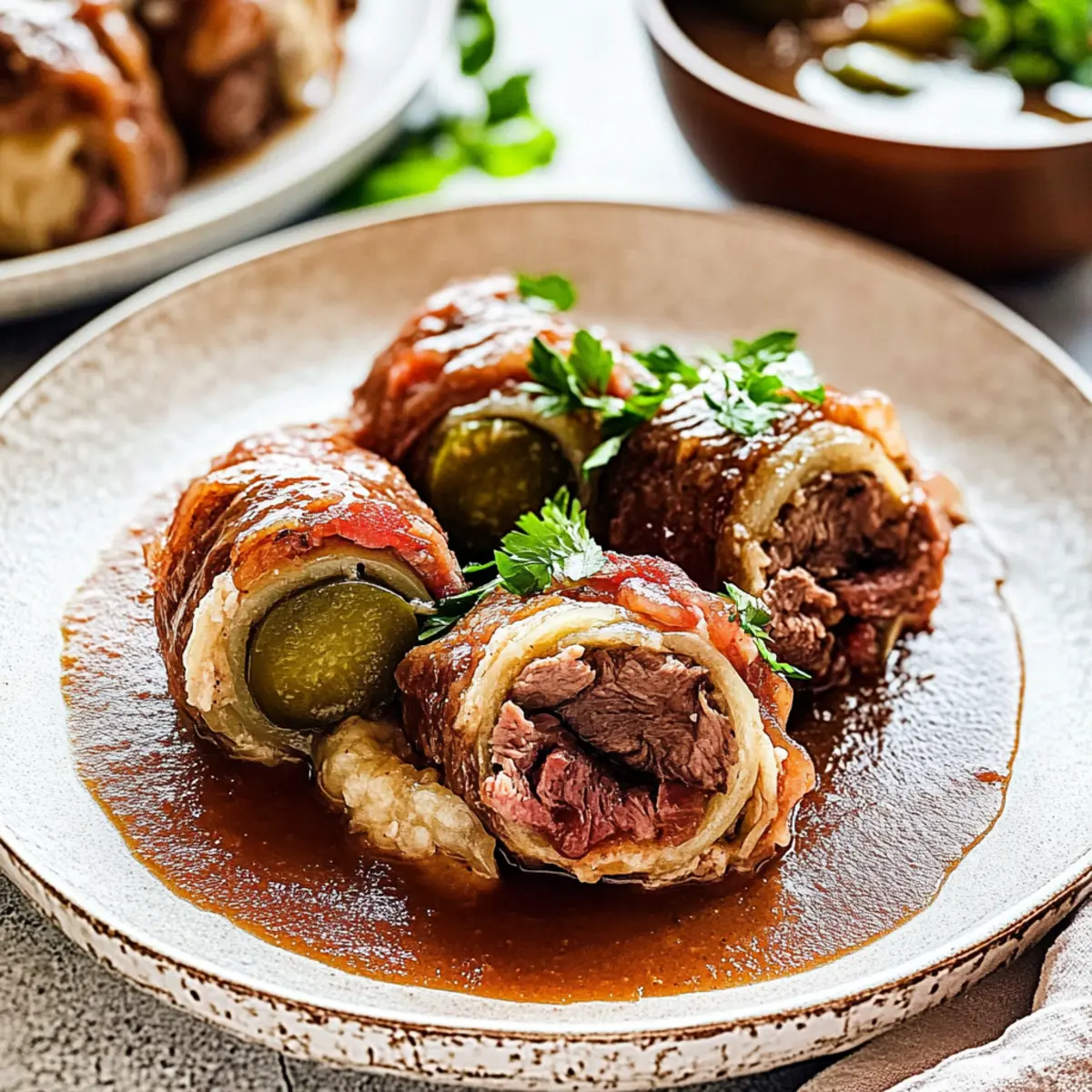
On each mustard-coated beef slice, layer a slice of bacon, a few dill pickles, and some finely chopped yellow onion. These fillings will add a delightful savory taste and crunch to your rouladen. Ensure the layers are evenly distributed, covering the mustard well for maximum flavor.
Step 3: Roll the Beef
Starting from one end, tightly roll each beef slice around the fillings, securing everything inside. Use toothpicks or kitchen twine to secure the rolls, ensuring they keep their shape during cooking. This step is crucial for achieving the classic rouladen shape and maintaining the delicious filling.
Step 4: Brown the Rouladen
In a large Dutch oven, heat a combination of 2 tablespoons of unsalted butter and 1 tablespoon of olive oil over medium-high heat. Once hot, add the rouladen, browning each roll for about 3-4 minutes per side until they’re beautifully golden brown. This step creates a rich base for your gravy.
Step 5: Sauté Aromatics
After browning the rouladen, remove them from the pot and set aside. In the remaining fat, add finely chopped onions, diced carrots, celery, and minced garlic. Sauté for about 5-7 minutes, stirring frequently until the vegetables are tender and fragrant, enhancing the flavor profile of the dish.
Step 6: Simmer the Rouladen
Return the browned rouladen to the pot, then pour in 2 cups of low-sodium beef broth along with 2 tablespoons of soy sauce and 1 tablespoon of tomato paste. Bring everything to a gentle simmer, cover, and reduce the heat to low. Let it simmer for 1.5 to 2 hours, or until the beef is fork-tender and infused with rich flavors.
Step 7: Strain the Gravy
Once the rouladen is done cooking, carefully remove them from the pot and set them aside. Strain the broth through a fine-mesh sieve back into the Dutch oven to remove any solids, leaving you with a smooth, flavorful liquid for your gravy.
Step 8: Thicken the Gravy
In a small bowl, mix 2 tablespoons of cornstarch with 2 tablespoons of water until smooth. Gradually whisk this mixture into the strained broth over medium heat. Stir continuously until the gravy thickens, about 3-5 minutes, and season with additional salt and pepper if needed to enhance the flavor.
Step 9: Serve and Garnish
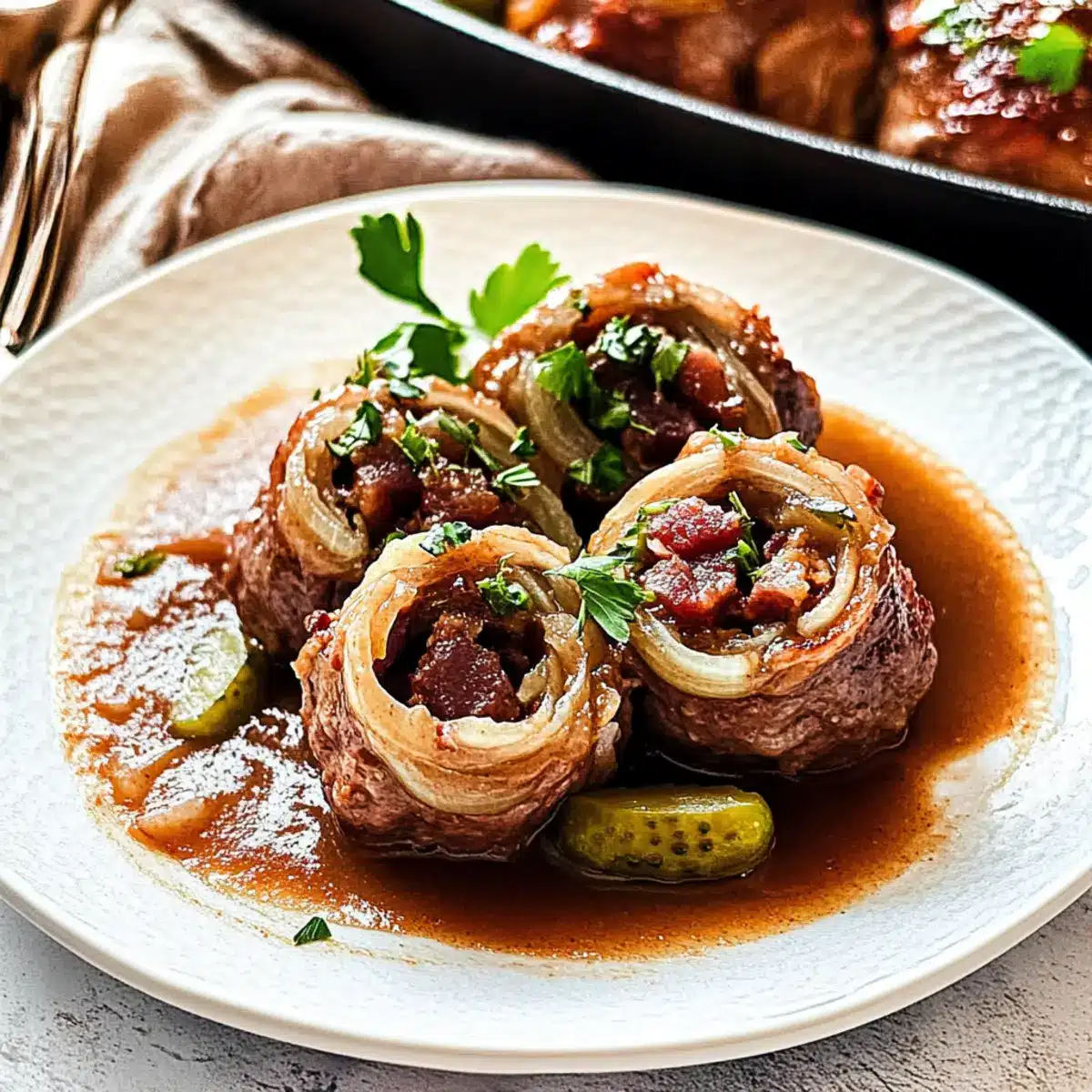
To serve, slice the rouladen into rounds and arrange them on a platter. Generously spoon the rich gravy over the top, adding a sprinkle of fresh parsley for a pop of color. These savory Rouladen will surely impress your family and friends at the dinner table!
Expert Tips for Rouladen
-
Even Thickness: Ensure your beef slices are uniformly pounded to ¼-inch thickness. This helps the rouladen cook evenly and prevents tough spots.
-
Flavor Layering: Don’t skimp on the filling. Each layer of bacon, pickles, and onions adds crucial flavor to your rouladen, making every bite delightful.
-
Secure Properly: Use toothpicks or kitchen twine to hold the rolls together, ensuring they maintain their shape while cooking and keep the savory filling inside.
-
Browning Matters: Properly browning the rouladen creates a deep, rich base for your gravy. Don’t rush this step; it adds essential flavor.
-
Taste as You Go: Always taste the gravy as you thicken it. Adjust the seasoning as needed to enhance the overall flavor of the dish.
-
Rest Before Serving: Let the rouladen rest a few minutes after cooking. This helps the juices redistribute, ensuring juicy meat when sliced.
Make Ahead Options
These Rouladen are perfect for busy home cooks looking to save time during the week! You can prepare the filling—bacon, pickles, and onions—up to 24 hours in advance, refrigerating it in an airtight container to keep the flavors fresh. Additionally, the rolled beef can be assembled and kept in the refrigerator for up to 3 days before cooking, just be sure to wrap them tightly to prevent drying out. When you’re ready to serve, follow the browning and simmering instructions as usual; the resulting dish will be just as delicious and tender, saving you time without sacrificing flavor on those hectic nights.
What to Serve with Traditional German Beef Rouladen
As you savor each bite of this rich and comforting dish, it’s time to elevate your family feast with the perfect accompaniments.
-
Creamy Mashed Potatoes: These velvety potatoes soak up the luscious gravy beautifully, creating a comforting harmony with the rouladen.
-
Steamed Green Beans: Their crisp texture and fresh flavor provide a delightful contrast to the hearty meat, adding a vibrant touch to your plate.
-
Classic Spaetzle: This traditional German noodle is a must-try alongside rouladen, offering a chewy texture that perfectly complements the dish’s rich sauce.
-
Cucumber Salad: A tangy, refreshing cucumber salad adds a zingy crunch that balances the savory flavors, making it a delightful palate cleanser.
-
Roasted Carrots: Sweet, caramelized carrots bring earthy sweetness to the meal, acting as a lovely counterpoint to the rich, savory meat.
-
Red Wine: A glass of red wine, like a German Spätburgunder, pairs beautifully, enhancing the flavors of the rouladen while adding a touch of elegance to the meal.
-
Apfelstrudel: For dessert, serve this traditional apple strudel; its warm spices and flaky crust create the perfect sweet ending to your hearty main course.
Rouladen Variations & Substitutions
Feel free to mix things up and make this Rouladen recipe uniquely yours with these creative variations!
- Different Cuts: Swap top round beef with flank or sirloin for varying textures and flavors. Each cut will give a unique bite, keeping dinner exciting.
- Herb Infusion: Add fresh herbs like thyme, rosemary, or bay leaves during simmering for an aromatic twist. Fresh herbs brighten the flavors, making each bite more vibrant.
- Spicy Kick: Incorporate a touch of crushed red pepper flakes in the filling or gravy for a mild heat that complements the rich flavors beautifully.
- Vegetarian Option: For a meatless version, use thinly sliced portobello mushrooms as a filling. Their umami character delivers a hearty substitute, perfect for plant lovers.
- Creamy Gravy: For a lighter variation, create a sauce blending broth with a touch of light cream instead of a heavy gravy. This twist adds a delightful richness without overwhelming the dish.
- Gherkin Glorification: Experiment with other pickled vegetables, like pickled red onions or jalapeños, for a different tang and zing that can elevate the flavor profile.
- Mustard Madness: Substitute yellow mustard with spicy brown or whole-grain mustard for added texture and flavor depth, offering a delightful twist on the traditional taste.
- Add Cheese: A sprinkle of grated Gruyère or Swiss cheese over the rouladen towards the end of cooking brings a creamy, indulgent touch that melts perfectly into the dish.
Don’t forget to experiment with sides, too! For a complete meal, try serving your Rouladen with homemade spaetzle or creamy mashed potatoes—the combinations are endless!
Storage Tips for Rouladen
Fridge: Store leftover Rouladen in an airtight container for up to 3 days, keeping the gravy separate to maintain the meat’s tenderness.
Freezer: You can freeze cooked Rouladen for up to 3 months. Wrap tightly in plastic wrap before placing in a freezer bag to prevent freezer burn.
Reheating: Thaw frozen Rouladen in the refrigerator overnight. Reheat gently on the stovetop over low heat with a splash of broth or water to maintain moisture and enhance flavors.
Make-Ahead: Rouladen can be prepared a day in advance. Assemble and store in the fridge before cooking for a hassle-free dinner option.
Rouladen Recipe FAQs
What type of beef is best for Rouladen?
I recommend using top round beef steak for the best results. It should be sliced about ¼ inch thick, which allows for easier rolling and retains tenderness as it cooks.
How long can I store leftover Rouladen?
Leftover rouladen can be stored in an airtight container in the fridge for up to 3 days. It’s best to keep the gravy separate in another container to help maintain the beef’s tenderness and prevent it from becoming too soggy.
Can Rouladen be frozen? How?
Absolutely! You can freeze cooked rouladen for up to 3 months. Make sure to wrap each roll tightly in plastic wrap and place it in a freezer bag to avoid freezer burn. When you’re ready to enjoy, thaw it in the refrigerator overnight before reheating.
What if my Rouladen is tough after cooking?
If the rouladen turns out tough, it may not have simmered long enough. For perfectly tender beef, always ensure to simmer it covered for 1.5 to 2 hours, giving it time to break down the connective tissue. If it’s still tough, you could slice the rouladen into smaller pieces and simmer them longer in the gravy to help them tenderize.
Are there any dietary considerations with Rouladen?
Yes! Rouladen contains beef and bacon, so it’s not suitable for vegetarians or vegans. If you have dietary restrictions, consider using plant-based alternatives, such as seitan or mushrooms, and creating a vegetable-based filling. Always check labels on condiments like soy sauce for gluten or allergy concerns.
What’s a good alternative to dill pickles in Rouladen?
If you’re not a fan of dill pickles, you can substitute them with gherkins for a sweeter flavor. Alternatively, for a milder taste, you can simply omit the pickles altogether and add more onions or even some fresh herbs for a different profile.
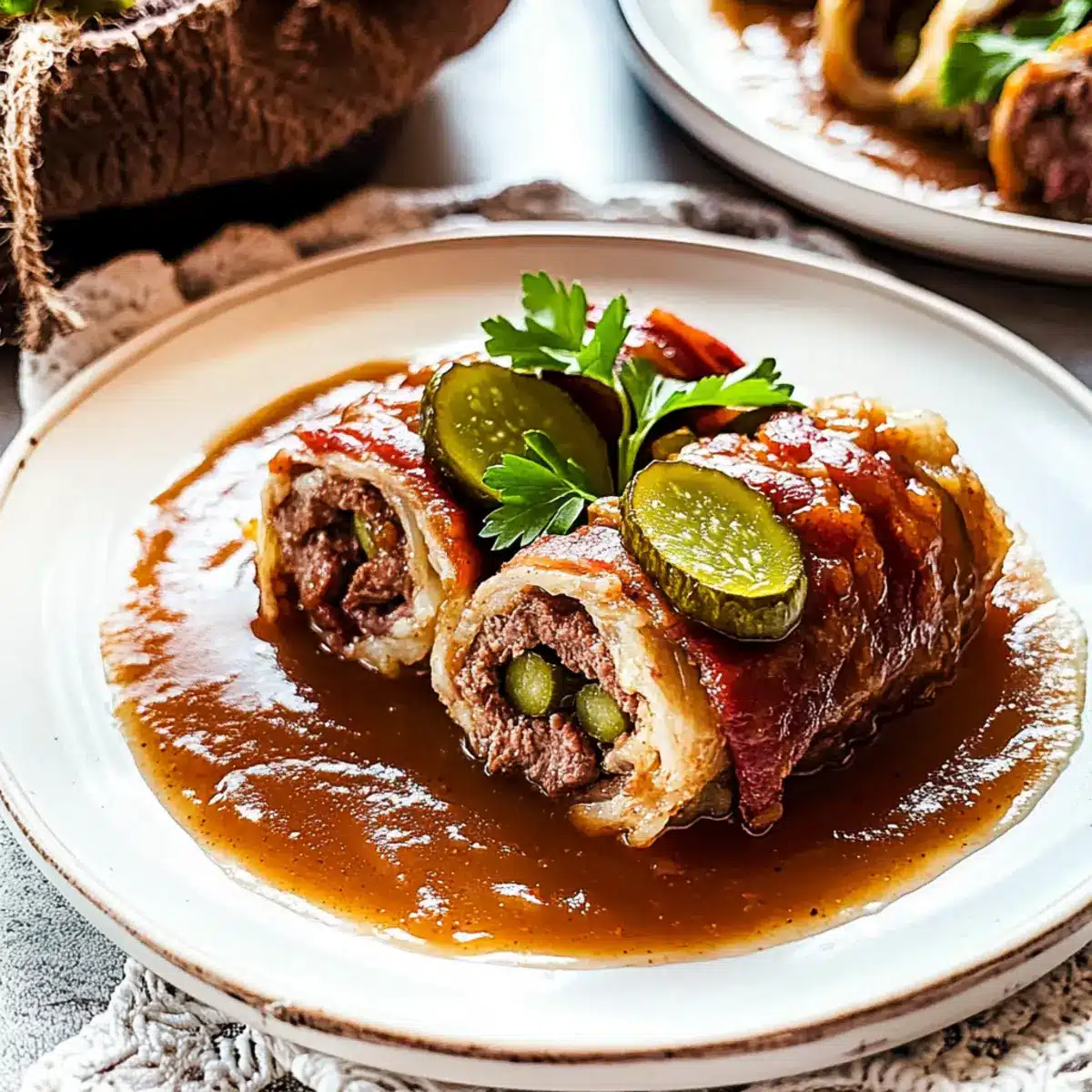
Rouladen: Hearty German Comfort Food for Your Family Feasts
Ingredients
Equipment
Method
- Pound the top round beef steak slices to about ¼-inch thickness using a meat mallet, then season both sides with kosher salt and freshly ground black pepper. Spread a thin layer of yellow German mustard over each slice.
- On each mustard-coated beef slice, layer a slice of bacon, a few dill pickles, and finely chopped yellow onion.
- Starting from one end, tightly roll each beef slice around the fillings, securing everything inside with toothpicks or kitchen twine.
- In a large Dutch oven, heat 2 tablespoons of unsalted butter and 1 tablespoon of olive oil over medium-high heat. Add the rouladen, browning each roll for about 3-4 minutes per side.
- Remove the rouladen and add chopped onions, diced carrots, celery, and minced garlic to the remaining fat. Sauté for 5-7 minutes until the vegetables are tender.
- Return the rouladen to the pot, then pour in 2 cups of low-sodium beef broth, 2 tablespoons of soy sauce, and 1 tablespoon of tomato paste. Simmer for 1.5 to 2 hours until tender.
- Carefully remove the rouladen and strain the broth through a fine-mesh sieve back into the Dutch oven.
- Mix 2 tablespoons of cornstarch with 2 tablespoons of water until smooth. Whisk this mixture into the strained broth over medium heat until thickened, about 3-5 minutes.
- Slice the rouladen and arrange them on a platter. Spoon the rich gravy over the top, garnishing with fresh parsley.