
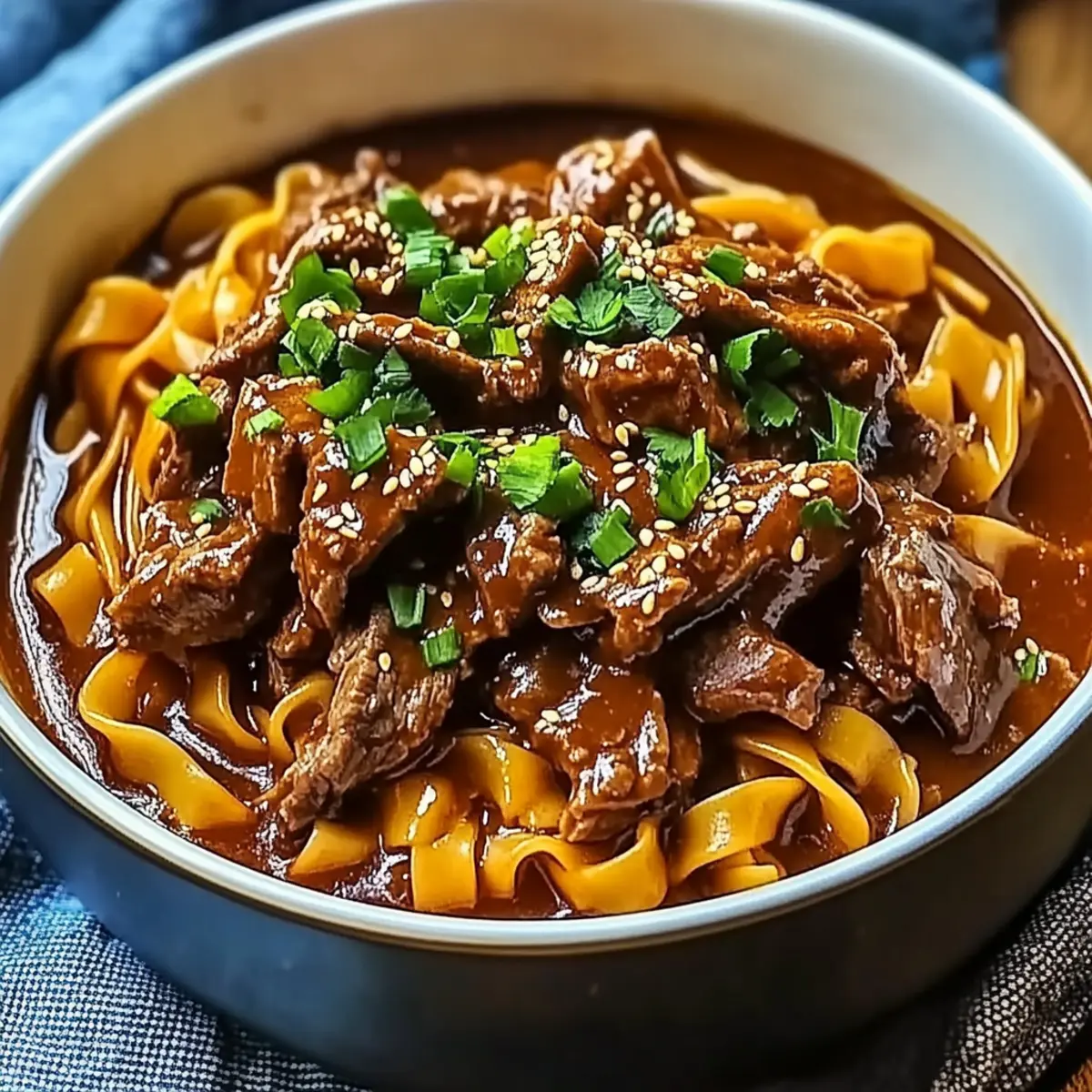
As I stood by the slow cooker, the rich aroma of soy sauce and ginger wafted through the kitchen, instantly transporting me to the heart of Korean comfort food. Today, I’m excited to share my favorite recipe for Korean Beef Noodles. This dish wraps succulent beef and chewy noodles in a savory, fragrant broth that’s perfect for cozy family dinners or when you want to impress guests with minimal effort. It’s not only easy to whip up, but you’ll also love that it’s adaptable to various dietary needs, even gluten-free if you swap out a few ingredients. Trust me, once you get a taste of this heartwarming bowl, you’ll understand why it’s a staple in many households. Are you ready to dive into this comforting culinary adventure?
Why are Korean Beef Noodles a must-try?
Flavor Explosion: This dish is brimming with savory and umami-packed ingredients, creating a deeply satisfying taste that will warm your soul.
Simple Preparation: You can toss everything into your slow cooker and let it do the magic while you relax or tackle other tasks.
Versatile Options: Substitutions like chicken or tofu make it accommodating for different diets, ensuring everyone at the table can enjoy it.
Heartfelt Comfort: As a classic Korean comfort food, these noodles bring a soothing and familiar feel, perfect for family gatherings or casual evenings.
Exciting Leftovers: If you happen to have any leftovers, they store well and taste even better the next day! You can keep them in an airtight container for a quick and delicious meal later. Dive into our recipe and experience how Korean Beef Noodles can elevate your mealtime game!
Korean Beef Noodles Ingredients
For the Beef
• Beef Chuck – Provides richness and tenderness; feel free to substitute with chicken or tofu for a lighter option.
For the Broth
• Beef Broth – The flavorful base of your broth; a lower-sodium version can make it healthier.
• Water – Dilutes the broth for balance; swap for more broth if you’re craving stronger flavors.
• Soy Sauce – Adds deep umami; tamari is a great gluten-free alternative.
• Brown Sugar – Sweetens the dish nicely, and honey or agave makes a good swap.
• Ginger – Gives aromatic spice; use fresh for the best flavor or ground in a pinch.
• Garlic – Enhances flavor with a pungent kick; fresh cloves are ideal, but pre-minced works too.
• Sesame Oil – Adds a delightful nutty aroma; skip if you have nut allergies.
• Black Pepper – To taste – adjust according to your preference.
• Gochujang (Korean chili paste) – Adds heat and flavor complexity; substitute with sriracha for a milder kick.
For the Noodles
• Noodles – Fresh or dried options like udon or ramen work wonderfully; use rice noodles for gluten-free meals.
For the Garnish
• Green Onions – Brings freshness and a lovely crunch; chives are a suitable alternative.
• Sesame Seeds – Optional, but they add great texture and visual appeal.
• Cilantro – Provides a refreshing finish, though it’s optional if you’re not a fan!
Now you’re all set to create a scrumptious bowl of Korean Beef Noodles that will have your loved ones asking for seconds!
Step‑by‑Step Instructions for Korean Beef Noodles
Step 1: Prepare the Beef
Start by seasoning your beef chuck pieces generously with black pepper. This will enhance the overall flavor of your Korean Beef Noodles. Make sure each piece is well-coated. After seasoning, set the beef aside to absorb the spices while you prepare the broth mixture, which will seamlessly blend with the beef later on.
Step 2: Make the Sauce
In a medium-sized bowl, whisk together beef broth, soy sauce, brown sugar, grated ginger, minced garlic, sesame oil, and gochujang until the brown sugar has completely dissolved. This fragrant sauce infuses the beef and noodles with a rich, savory depth. Once combined, set the bowl aside momentarily while you get your slow cooker ready.
Step 3: Slow Cook the Beef
Place the seasoned beef chunks in the slow cooker, then pour the savory sauce mixture over the top, ensuring all pieces are well-covered. Secure the lid and set the slow cooker to low heat for 6 to 8 hours or on high for 3 to 4 hours. You’ll know it’s ready when the beef is fork-tender and infused with the delicious flavors of your Korean Beef Noodles.
Step 4: Cook the Noodles
About 15-20 minutes before your beef is done, bring a large pot of water to a rolling boil. Add the noodles of your choice and cook according to package instructions until they are al dente. Once cooked, drain the noodles well, and set them aside, ready to absorb the beautiful broth in the next step.
Step 5: Combine Noodles and Beef
Once the beef is tender and your kitchen smells heavenly, carefully add the cooked noodles into the slow cooker. Gently toss the noodles to mix them with the beef and sauce, allowing them to soak up all those rich flavors for about 5 minutes. This step is essential in creating your delicious Korean Beef Noodles that are truly comforting.
Step 6: Serve and Garnish
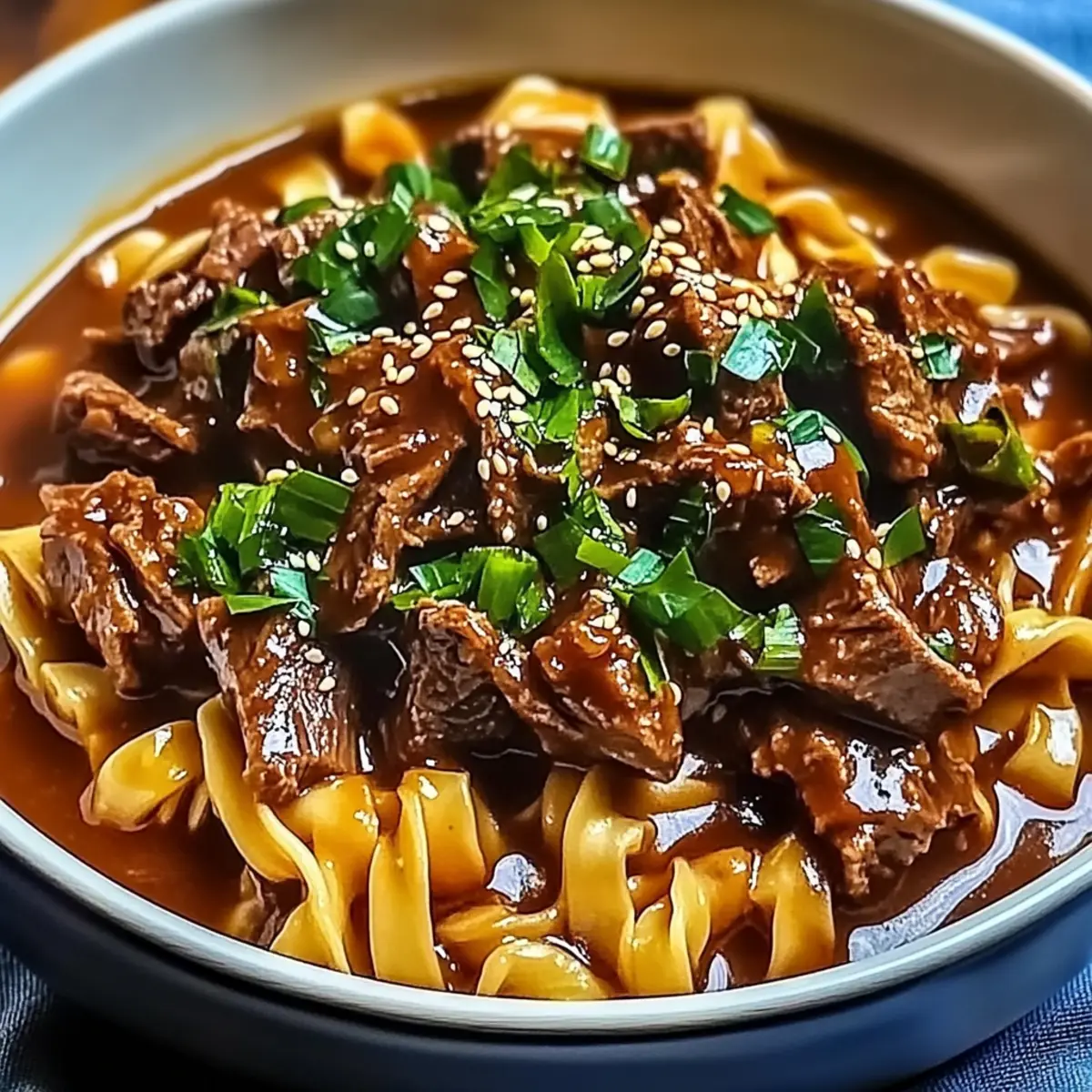
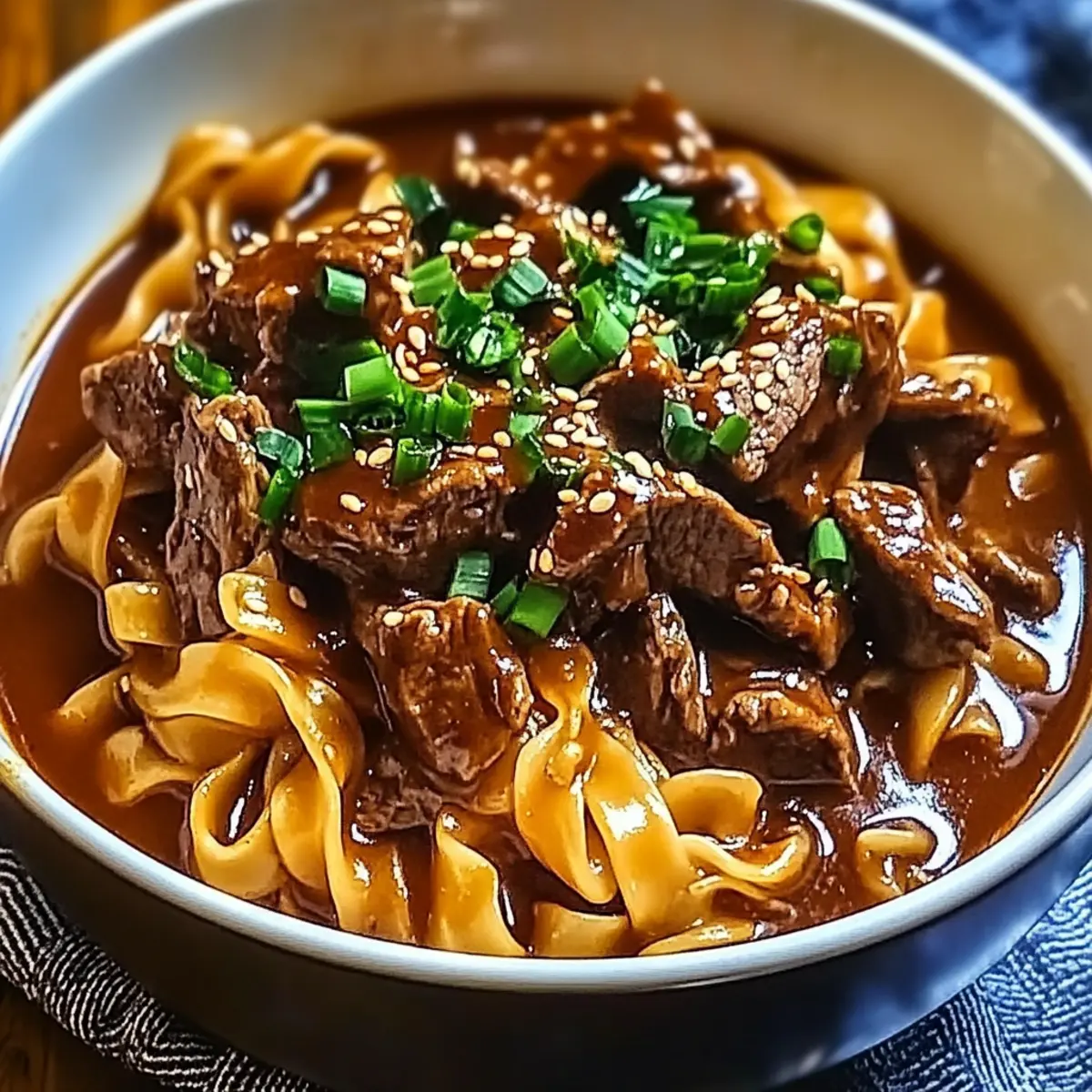
Ladle the hearty Korean Beef Noodles into bowls, ensuring an even distribution of beef and broth. Garnish each serving with sliced green onions, sesame seeds, and fresh cilantro if desired. The vibrant colors of these toppings will enhance the visual appeal and offer a delightful crunch, completing your comforting meal beautifully.
How to Store and Freeze Korean Beef Noodles
Fridge: Store leftovers in an airtight container for up to 4 days. This allows you to enjoy the flavors of your Korean Beef Noodles throughout the week while ensuring they stay fresh.
Freezer: Portion your Korean Beef Noodles into freezer-safe containers. They can be frozen for up to 3 months. Clearly label each container to make meal prep a breeze!
Reheating: When ready to enjoy, thaw in the refrigerator overnight and reheat gently on the stovetop or in the microwave, stirring occasionally for even heating.
Expert Tips for Korean Beef Noodles
Fresh Ingredients Matter: Always use fresh herbs and spices to enhance the flavor of your Korean Beef Noodles; they make a noticeable difference.
Adjust Your Seasoning: Taste the broth during cooking, adding soy sauce or brown sugar as needed to achieve a well-balanced flavor profile.
Let the Beef Rest: After cooking, let the beef sit for a few minutes before serving; this allows the juices to redistribute, ensuring tenderness.
Mind the Noodle Cooking Time: Don’t overcook the noodles; add them to the slow cooker just a few minutes before serving to absorb the delicious broth without getting mushy.
Experiment with Garnishes: Feel free to get creative with toppings! Chopped peanuts, sliced chili peppers, or pickled radishes can add extra layers of flavor to your Korean Beef Noodles.
What to Serve with Korean Beef Noodles
Elevate your meal with complementary sides that enhance the flavors and textures of this hearty dish.
- Kimchi: A traditional Korean side, the tangy crunch of kimchi perfectly contrasts the rich, savory broth of the noodles.
- Fresh Vegetable Salad: A vibrant mix of greens and a light sesame dressing adds a refreshing balance to the hearty noodles. Incorporating crisp cucumbers and radishes can boost crunchiness while balancing flavors.
- Steamed Bok Choy: This tender, slightly sweet vegetable offers a nice texture and subtle flavor that complements the richness of the beef. The greens provide a lovely pop of color on the plate too!
- Garlic Bread Rolls: Soft and fluffy, these rolls can soak up the delicious broth, making each bite even more pleasurable. They add a comforting element and perfect for anyone craving an extra carb fix!
- Spicy Korean Cucumber Salad: The cool, spicy flavor profile of this salad offers a fantastic contrast to the warm, hearty noodles, creating a mouthwatering balance.
- Cabbage Pancakes: Crunchy yet soft, these savory pancakes are a delightful addition that bring a unique texture alongside the noodles. They can be made as bite-sized snacks or larger servings for sharing.
- Chilled Soju or Beer: Pairing your meal with refreshing drinks like soju or a light beer can elevate the whole dining experience, helping to cleanse the palate between bites.
Variations & Substitutions for Korean Beef Noodles
Feel free to experiment with these variations and find your ideal twist that excites your taste buds!
-
Spicy Kick: Add more gochujang or mix in fresh chili peppers to dial up the heat. This can turn the comforting dish into a fiery feast, perfect for heat lovers.
-
Vegetable Boost: Toss in seasonal veggies like bok choy or bell peppers when cooking the beef. Not only do they add great flavor, but they also pack in additional nutrients and colors.
-
Chicken Option: Substitute beef with chicken thighs or breasts for a lighter version. Chicken provides a different flavor profile while still soaking up the savory broth beautifully.
-
Tofu Delight: For a vegetarian experience, swap the beef for firm tofu. Press and cube the tofu before slow cooking to ensure it absorbs all those delicious flavors.
-
Gluten-Free Swap: Use tamari or coconut aminos instead of regular soy sauce to keep this dish gluten-free. You can also opt for rice noodles for a genuinely gluten-free meal.
-
Sweetness Adjustment: Instead of brown sugar, try using honey or agave syrup for a different kind of sweetness, bringing a unique twist to the flavor profile.
-
Fresh Herbs Twist: Experiment with different fresh herbs like basil or parsley instead of cilantro. This not only changes the flavor but also adds a lovely freshness to your dish.
If you’re interested in more beef dishes to try out, you might enjoy these family favorites like Korean Ground Beef, or for something heartier, check out Hearty Beef Barley. Enjoy creating your own version of these Korean Beef Noodles!
Make Ahead Options
These Korean Beef Noodles are perfect for busy home cooks looking to save time! You can prepare the beef and sauce up to 24 hours in advance. Simply season the beef, whisk the sauce ingredients together, and store both in separate airtight containers in the refrigerator. On the day you plan to serve, add the beef to your slow cooker and pour the sauce over it; cook on low for 6-8 hours as directed. Remember to cook the noodles shortly before serving for the best texture, ensuring they remain chewy rather than mushy. With these make-ahead tips, you’ll enjoy a comforting, hearty meal with minimal effort on the day of serving!
Korean Beef Noodles Recipe FAQs
How do I choose the right beef for my Korean Beef Noodles?
For the best results, I recommend using beef chuck, as it becomes incredibly tender when slow-cooked. Look for pieces that have a good marbling of fat, which enriches the flavor. If you prefer a leaner option, you can substitute it with chicken or tofu to cater to different dietary needs.
What’s the best way to store leftovers of Korean Beef Noodles?
Absolutely! Store any leftovers in an airtight container in the refrigerator for up to 4 days. This keeps them fresh and ready for a quick meal. For optimal taste, let the noodles and broth cool completely before sealing. Reheat on the stove or in the microwave until warmed through.
Can I freeze Korean Beef Noodles?
Yes, you can! Divide your Korean Beef Noodles into portion-sized freezer-safe containers, and label them with the date. They can be frozen for up to 3 months. When you’re ready to enjoy, simply thaw them in the refrigerator overnight, then reheat gently on the stove, stirring frequently for even heating.
What should I do if the broth is too salty?
If you find your broth is too salty for your liking, there are a few tricks you can employ! Add a splash of water or a small amount of unsalted broth to dilute it. You can also toss in a peeled potato while cooking, which absorbs some of the saltiness; just remember to remove it before serving!
Can I adjust the spice level in the Korean Beef Noodles?
Very much! If you prefer a milder flavor, you can reduce the amount of gochujang or substitute it with sriracha, which has a gentler heat. Alternatively, add fresh chilies for an extra kick; just remember to adjust to your personal preference for spice!
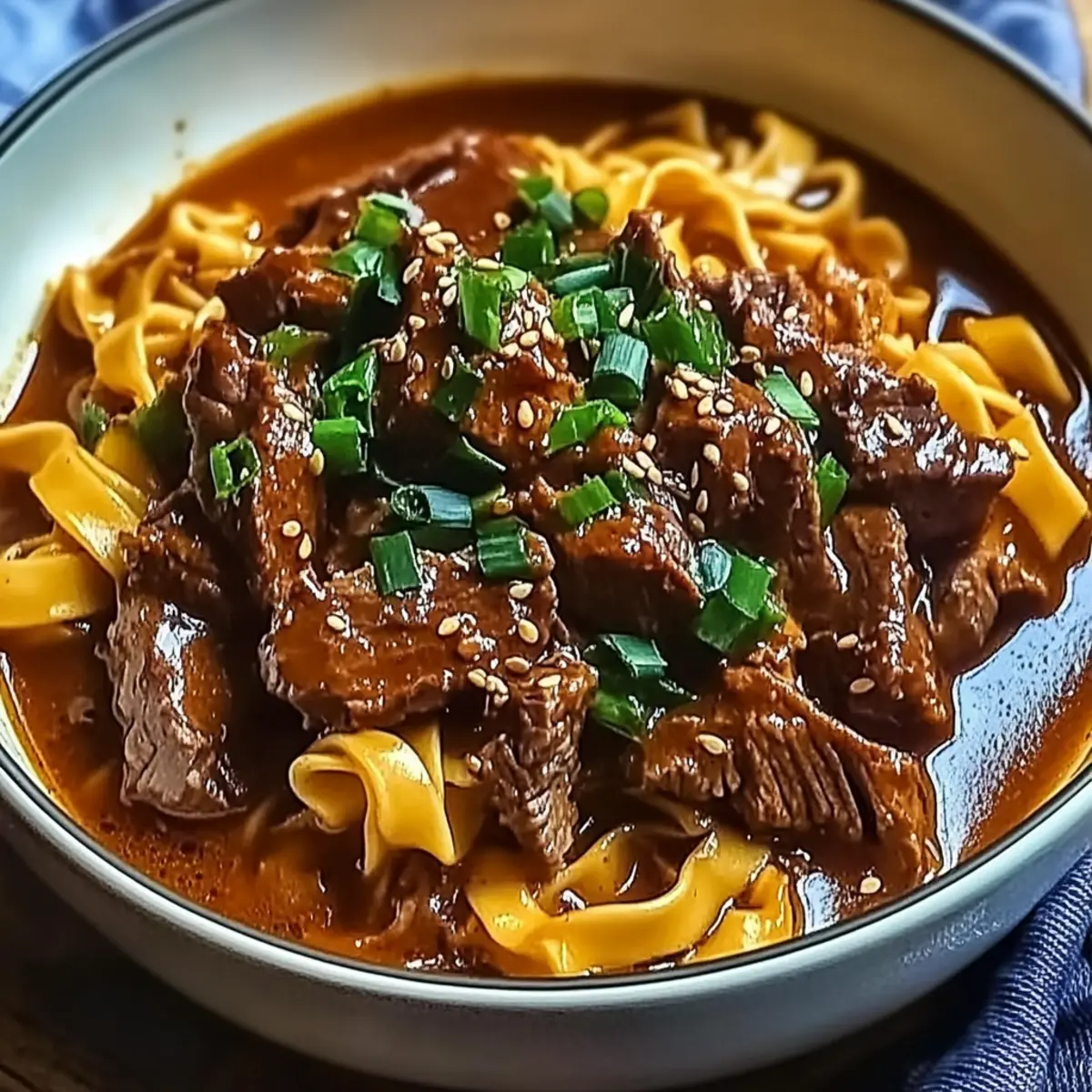
Korean Beef Noodles: Ultimate Comfort in Every Slurp
Ingredients
Equipment
Method
- Season beef chuck pieces generously with black pepper and set aside.
- Whisk together beef broth, soy sauce, brown sugar, ginger, garlic, sesame oil, and gochujang in a bowl.
- Place seasoned beef in slow cooker and pour sauce mixture over it. Cook on low for 6-8 hours or high for 3-4 hours.
- Boil water in a large pot and cook noodles according to package instructions.
- Add cooked noodles into the slow cooker and toss gently with beef and sauce. Let soak for 5 minutes.
- Serve Korean Beef Noodles in bowls and garnish with green onions, sesame seeds, and cilantro.