

The air was filled with the mouthwatering scent of sweet and savory grilling as I strolled past a bustling Korean BBQ joint, making my stomach growl in envy. This nostalgic aroma inspired me to recreate one of my favorite dishes at home: Korean Beef Bulgogi. With its tender, thin slices of beef marinated in a quick and easy marinade, this dish offers the perfect solution for those busy weeknights when you crave something comforting and delicious. Not only does it cook in minutes, but it also brings a taste of Korean BBQ straight to your table, allowing you to impress family and friends effortlessly. Serve your Bulgogi with a fluffy portion of rice or crisp lettuce wraps, and watch everyone gather around, ready to dig in! Curious how to make this delightful dish? Let’s dive into the recipe!
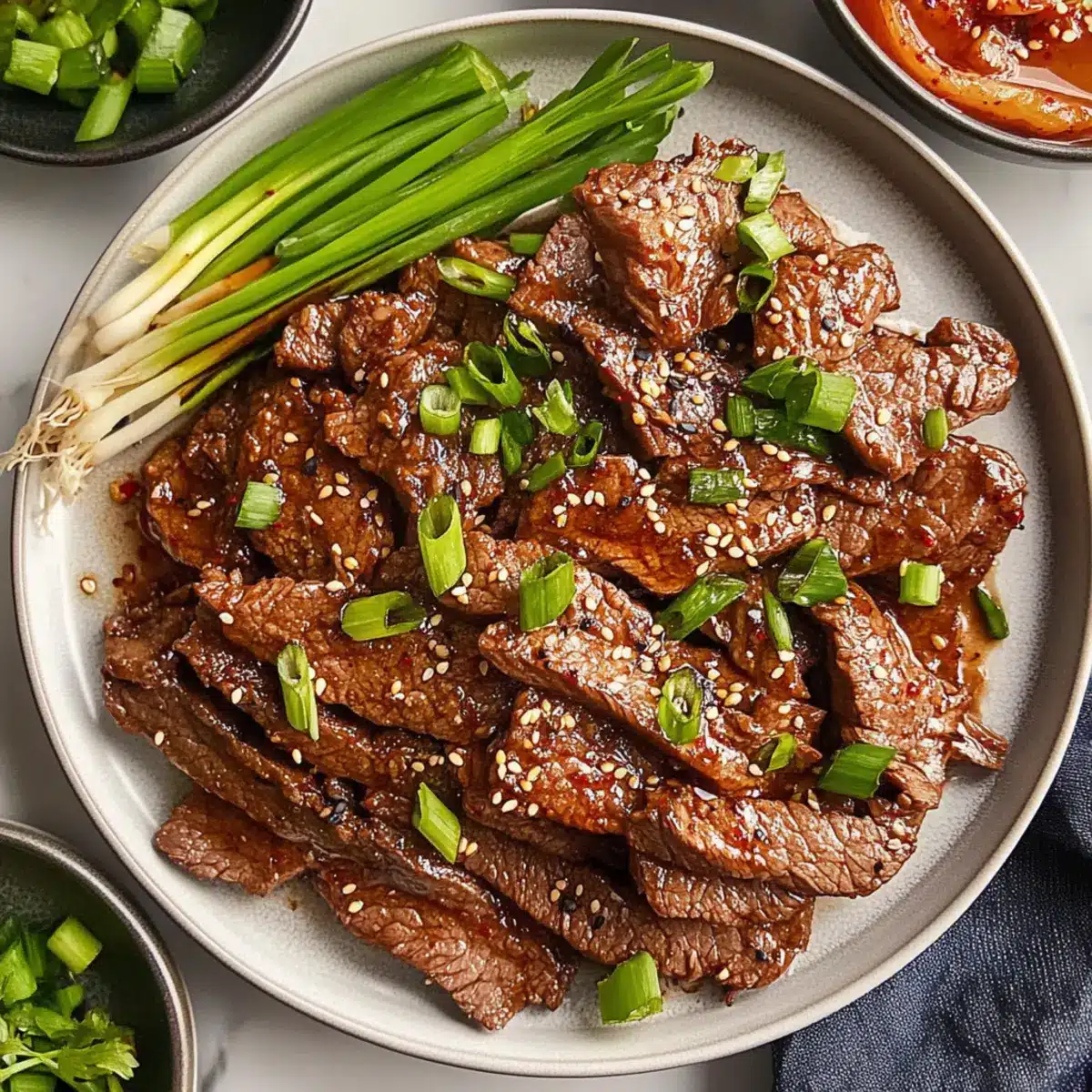
Why is Korean Beef Bulgogi a must-try?
Easy Preparation: This recipe requires minimal effort, making it ideal for busy weeknights. Just marinate and cook!
Flavor Explosion: The balance of sweet pear and savory soy sauce creates a mouthwatering profile that elevates any dinner table.
Culinary Versatility: Perfect on its own, but equally delightful in lettuce wraps or over rice, satisfying different tastes and preferences.
Crowd-Pleasing Dish: Impress family and friends with a taste reminiscent of authentic Korean BBQ—everyone will be asking for seconds!
Meal Prep Friendly: Marinate in advance and store in the freezer for a quick weeknight meal. Looking for more quick recipes? Check out my Korean Ground Beef for another easy option!
Korean Beef Bulgogi Ingredients
For the Marinade
- Boneless Rib Eye Steak – The main protein that brings tenderness and rich flavor; look for pre-sliced options.
- Pear (½ small, peeled and coarsely grated) – Adds subtle sweetness and helps tenderize the meat; you can use a Fuji apple as a substitute.
- Reduced Sodium Soy Sauce (¼ cup) – Delivers umami while keeping sodium levels lower for a healthier meal prep option.
- Brown Sugar (2 tablespoons) – Enhances sweetness and caramelization during cooking, making the flavors pop.
- Toasted Sesame Oil (2 tablespoons) – Provides a nutty flavor profile; avoid raw sesame oil for the best results.
- Garlic (3 cloves, minced) – Imparts aromatic depth that elevates the marinade.
- Freshly Grated Ginger (1 tablespoon) – Adds a zesty warmth that complements the beef.
- Gochujang (1 tablespoon) – Offers a mild heat and depth, which is essential in this traditional Korean recipe.
For Cooking
- Vegetable Oil (2 tablespoons, divided) – Used for cooking; can be substituted with canola or avocado oil.
For Garnish
- Green Onions (2, thinly sliced) – Adds freshness and color to your dish, making it visually appealing.
- Toasted Sesame Seeds (1 teaspoon) – An optional garnish that adds texture and a touch of elegance.
Get ready to embark on a delicious journey with this Korean Beef Bulgogi that’s sure to impress!
Step‑by‑Step Instructions for Korean Beef Bulgogi
Step 1: Prepare the Steak
Start by freezing the boneless ribeye steak for about 30 minutes, which makes it easier to slice. Once firm, unwrap and cut the beef across the grain into ¼-inch thick slices, resulting in tender pieces for your Korean Beef Bulgogi. Lay them aside as you move on to the marinade preparation.
Step 2: Mix Marinade
In a large bowl, blend together the grated pear, reduced sodium soy sauce, brown sugar, toasted sesame oil, minced garlic, freshly grated ginger, and gochujang. Whisk until the mixture is smooth, ensuring the sugar is fully dissolved. This flavorful marinade will infuse the beef with a delightful sweetness and depth, which is essential for your Korean Beef Bulgogi.
Step 3: Marinate Beef
Place the sliced steak into a gallon-size Ziploc bag and pour the prepared marinade over it. Seal the bag, removing any excess air, and massage the marinade into the beef for even coating. Refrigerate for at least 2 hours, or preferably overnight, allowing the flavors to meld and the meat to tenderize beautifully.
Step 4: Cook the Meat
Heat a cast iron grill pan over medium-high heat and add 1 tablespoon of vegetable oil. Once shimmering, add the marinated beef in a single layer, avoiding overcrowding. Cook for 2-3 minutes until charred and cooked through; it should be nicely caramelized. Repeat with the remaining oil and steak until all are browned and juicy, filling your kitchen with the enticing aroma of Korean Beef Bulgogi.
Step 5: Serve
Once all the beef is cooked, transfer it to a serving platter. Garnish with thinly sliced green onions and toasted sesame seeds for an added touch of freshness and color. Serve your Korean Beef Bulgogi hot, accompanied by steamed rice or wrapped in crisp lettuce leaves for a delightful meal experience.
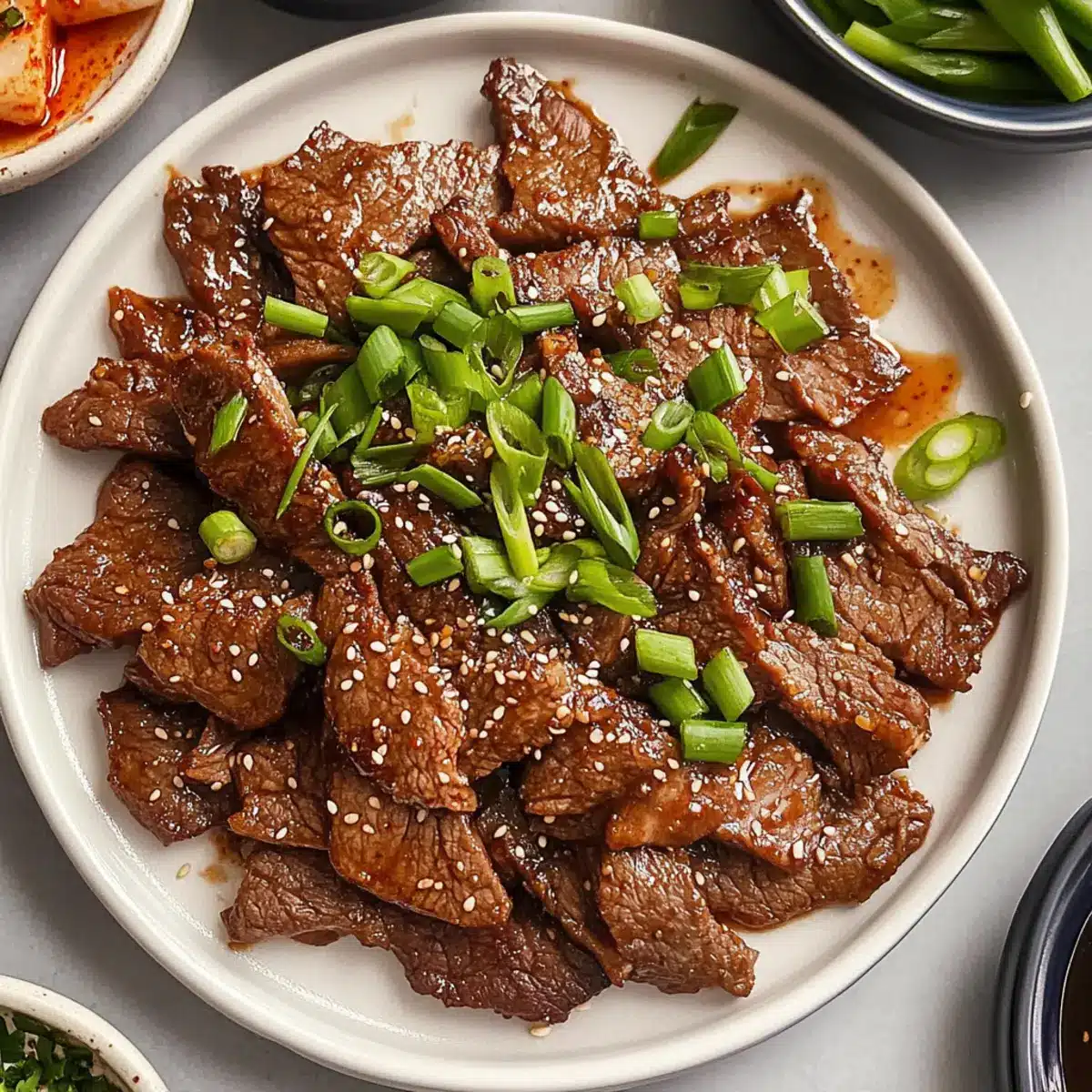
Expert Tips for Korean Beef Bulgogi
- Thin Slices: Ensure your beef is sliced as thinly as possible to enhance tenderness and speed up cooking, making your Korean Beef Bulgogi juicy and flavorful.
- Marination Time: For deeper flavor, marinate the beef overnight if you can; this allows the ingredients to permeate the meat beautifully.
- Avoid Overcrowding: Cook the beef in batches to prevent steaming; this retains the desired char and texture in every piece.
- Check Doneness: Look for a slight char on the edges; this not only adds flavor but ensures the beef is perfectly cooked through.
- Garnish for Freshness: Never skip the green onions and sesame seeds; they add a burst of color and a pop of flavor to your presentation.
Make Ahead Options
Korean Beef Bulgogi is a fantastic choice for meal prep! You can marinate the beef up to 24 hours in advance, which allows the flavors to develop beautifully. To prep ahead, simply mix your marinade, add it to the sliced ribeye in a resealable bag, and refrigerate. For those looking to save even more time, you can freeze the marinated beef for up to 2 months. When you’re ready to cook, just thaw it overnight in the refrigerator. Be sure to cook the meat in batches for that perfect char without steaming. This way, you’ll have a quick, restaurant-quality meal at your fingertips—perfect for any busy weeknight!
Korean Beef Bulgogi: Variations & Substitutions
Feel free to explore these delightful twists on the classic Korean Beef Bulgogi to suit your taste and dietary needs!
- Beef Type: Substitute ribeye with flank or skirt steak for a budget-friendly yet flavorful alternative.
- Sweetness Level: Adjust the sweetness by reducing the brown sugar or using honey for a unique twist.
- Spice It Up: Increase the gochujang for a bolder heat, or add sliced fresh chilies for an extra kick.
- Vegetable Boost: Toss in thinly sliced bell peppers or mushrooms while cooking for extra flavor and texture.
- Gluten-Free: Switch to tamari instead of soy sauce to make this dish gluten-free without sacrificing taste.
- Fruit Flavor: Replace pear with grated apple or even kiwi for a different sweet undertone.
- Herb Infusion: Mix in fresh herbs such as cilantro or mint just before serving to elevate freshness.
- Serving Style: For a traditional experience, wrap the bulgogi in perilla leaves alongside a side of kimchi for a crunchy, spicy pairing.
Also, if you love Korean flavors, check out my Cheesy Beef Burritos for another way to savor beef in a unique dish!
How to Store and Freeze Korean Beef Bulgogi
Fridge: Store leftovers in an airtight container for up to 3 days. Reheat gently in a skillet over medium heat to retain moisture and flavor.
Freezer: For longer storage, freeze marinated Korean Beef Bulgogi in a resealable bag for up to 2 months. Thaw in the fridge overnight before cooking.
Reheating: To reheat, do so in a pan over medium heat, adding a splash of water or broth if needed to keep the beef juicy and delicious.
Room Temperature: Avoid leaving cooked bulgogi at room temperature for more than 2 hours to ensure food safety.
What to Serve with Quick and Easy Korean Beef Bulgogi
The perfect accompaniments can elevate your meal from good to unforgettable, making each bite a flavorful journey.
-
Steamed White Rice: A classic choice that absorbs the savory marinade, providing a neutral base that complements the bulgogi beautifully. It’s the perfect vehicle for savoring every bit of that delightful sauce.
-
Crispy Lettuce Wraps: Add a refreshing crunch by serving the bulgogi in crisp lettuce leaves. This light option enhances the meal with a delightful texture and allows for a fun, hands-on dining experience.
-
Kimchi: This traditional Korean side dish introduces tangy spice that contrasts mesmerizingly with the sweet and savory flavors of the bulgogi. It also provides a probiotic boost for your gut health!
-
Grilled Veggies: Tender grilled bell peppers, zucchini, and mushrooms bring a smoky flavor that pairs wonderfully with the charred beef. Their vibrant colors also brighten up your plate, making it visually appealing.
-
Sesame Noodles: These cold noodles tossed in sesame oil and soy sauce create a delightful contrast to the warm bulgogi. Their nutty flavor complements the dish perfectly.
-
Spicy Pickled Radish: Known as danmuji, this crunchy, tangy radish adds a refreshing bite that cuts through the richness of the meat, making each bite even more satisfying.
-
Soju or Korean Beer: For a perfect adult beverage pairing, try chilled soju or a light Korean beer. Both drinks enhance the savory experience and add a celebratory touch to your meal.
-
Mango Sticky Rice: If you’re inclined toward dessert, this sweet treat adds a luscious finish to your meal, balancing the savory flavors of the bulgogi with tropical sweetness.
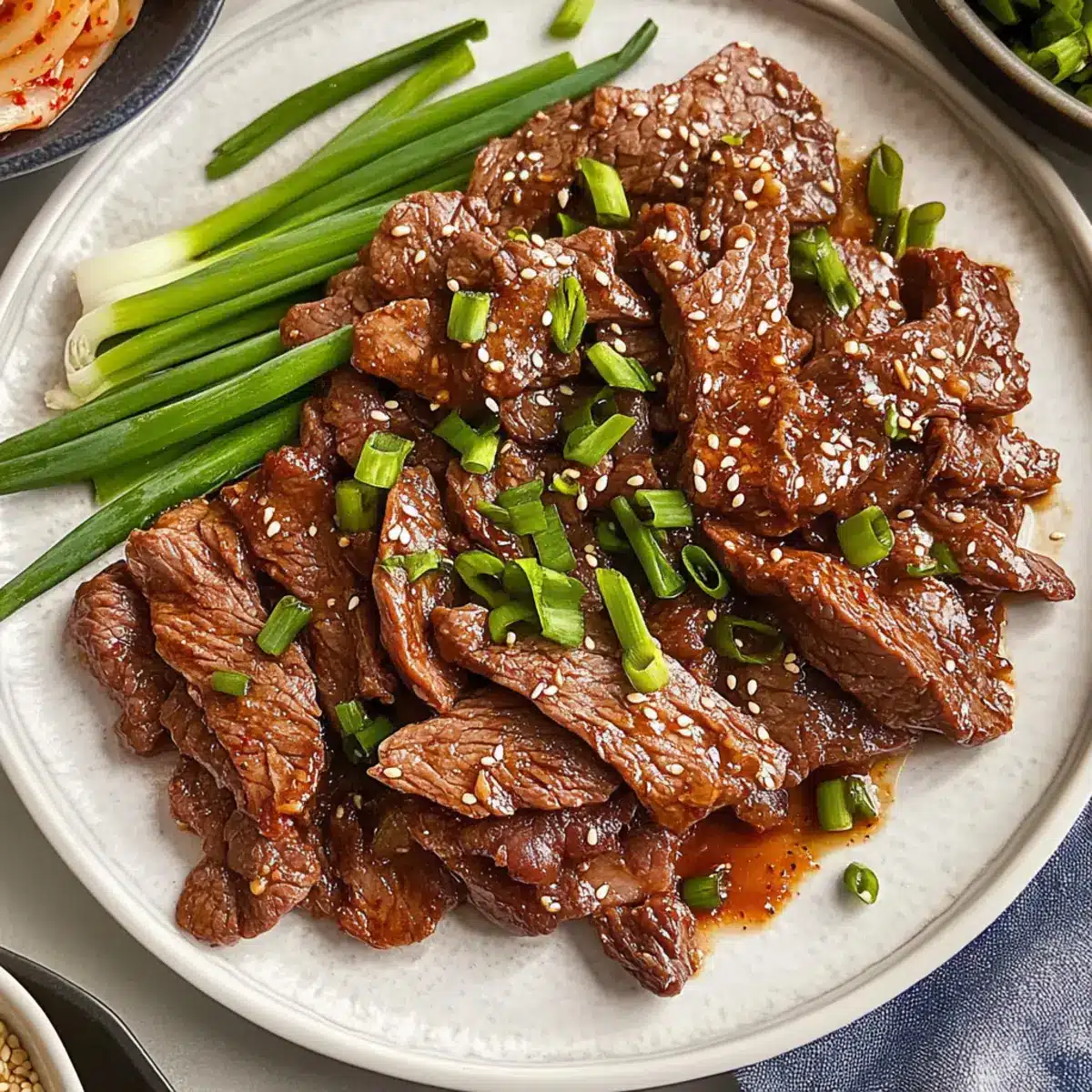
Korean Beef Bulgogi Recipe FAQs
What is the best way to choose ripe pears for the marinade?
When selecting pears, look for ones that yield slightly to pressure but aren’t overly soft. A ripe pear will have a pleasant aroma and smooth skin, without dark spots or blemishes. For this recipe, a ripe pear will add the ideal sweetness and help tenderize the beef. If you can’t find pears, a Fuji apple is a great substitute as it also offers sweetness and juiciness.
How should I store leftover Korean Beef Bulgogi?
Leftovers should be stored in an airtight container in the fridge for up to 3 days. It’s best to reheat them gently over medium heat in a skillet to ensure the beef remains moist and flavorful. If you find that the beef has dried out a bit, adding a splash of broth or water while reheating can help restore its juiciness.
Can I freeze the marinated beef for later use?
Absolutely! To freeze, place the marinated beef in a resealable freezer bag, squeezing out as much air as possible. This will preserve the flavors for up to 2 months. When you’re ready to cook, simply thaw the beef in the refrigerator overnight before cooking it as per the recipe instructions.
What should I do if my beef isn’t getting charred while cooking?
If the beef isn’t achieving that lovely char, it may be due to overcrowding the pan. Ensure the pan is hot before adding the beef, and cook in batches if necessary. Each piece should have enough space to sear instead of steam, which is key to achieving that delicious crust and flavor characteristic of Korean Beef Bulgogi.
Are there any allergy considerations with this recipe?
Yes, it’s important to keep in mind potential allergies. The marinade contains soy sauce, which contains wheat, and gochujang, which can contain gluten and other allergens (like sesame). Always check ingredient labels if you’re cooking for someone with allergies. Additionally, make sure to use reduced sodium soy sauce if salt sensitivity is a concern, or look for gluten-free soy sauce or alternatives if necessary.
How long does it take for the beef to marinate for the best flavor?
For optimal flavor, marinate the beef for at least 2 hours, but I recommend overnight if possible. This allows the flavors from the marinade to deeply penetrate the beef, ensuring every bite is bursting with that delicious, sweet-savory combination. Just imagine indulging in Korean Beef Bulgogi that’s been prepared with care—it’s well worth the wait!
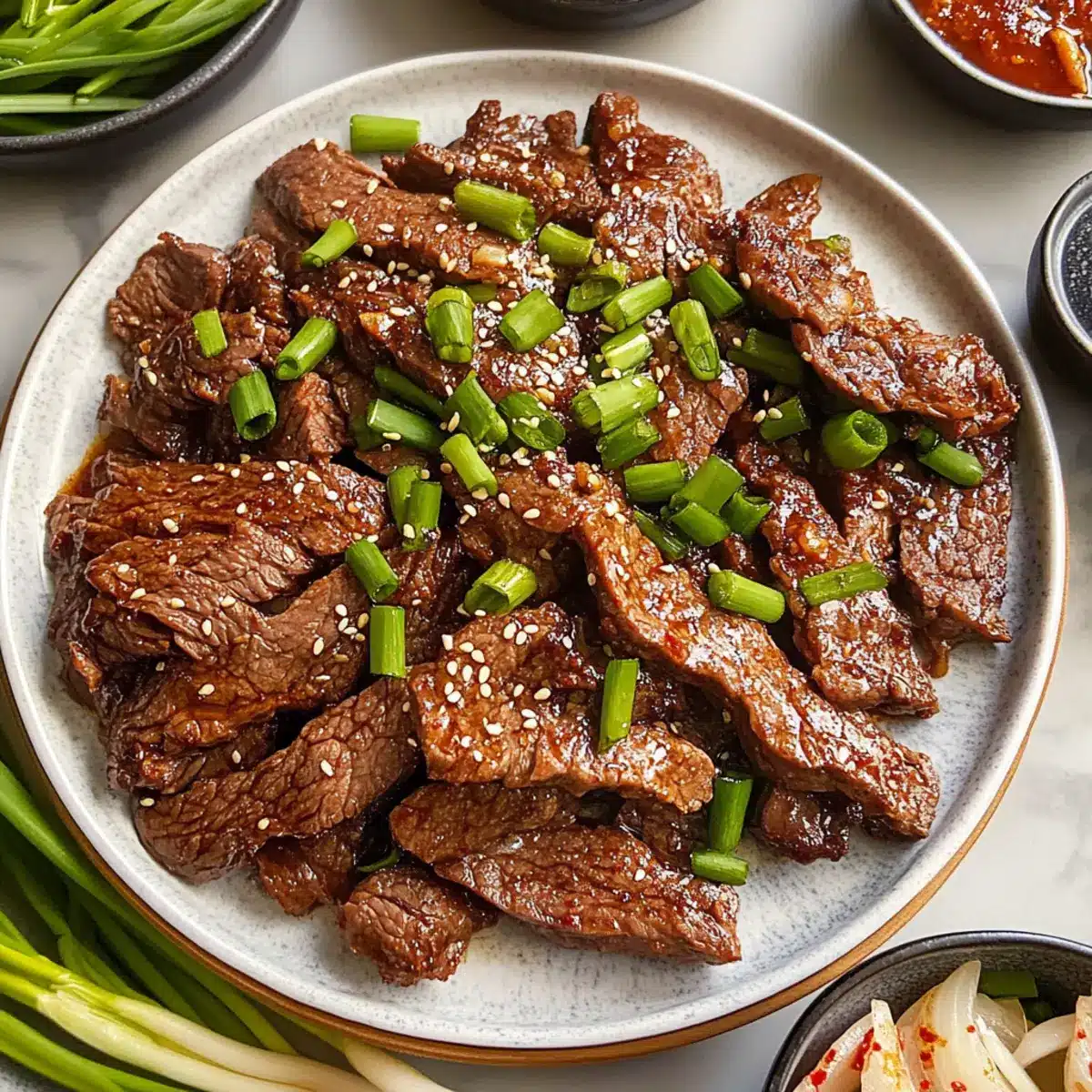
Savory Korean Beef Bulgogi: A Quick Flavor Explosion
Ingredients
Equipment
Method
- Start by freezing the boneless ribeye steak for about 30 minutes for easier slicing. Cut into ¼-inch thick slices.
- In a large bowl, blend together the grated pear, reduced sodium soy sauce, brown sugar, toasted sesame oil, minced garlic, freshly grated ginger, and gochujang. Whisk until smooth.
- Place the sliced steak into a gallon-size Ziploc bag, pour in the marinade, seal the bag, and massage the marinade into the beef. Refrigerate for at least 2 hours or overnight.
- Heat a cast iron grill pan over medium-high heat and add 1 tablespoon of vegetable oil. Add the marinated beef in a single layer and cook for 2-3 minutes until caramelized.
- Transfer the cooked beef to a serving platter and garnish with green onions and sesame seeds. Serve hot with rice or in lettuce wraps.