

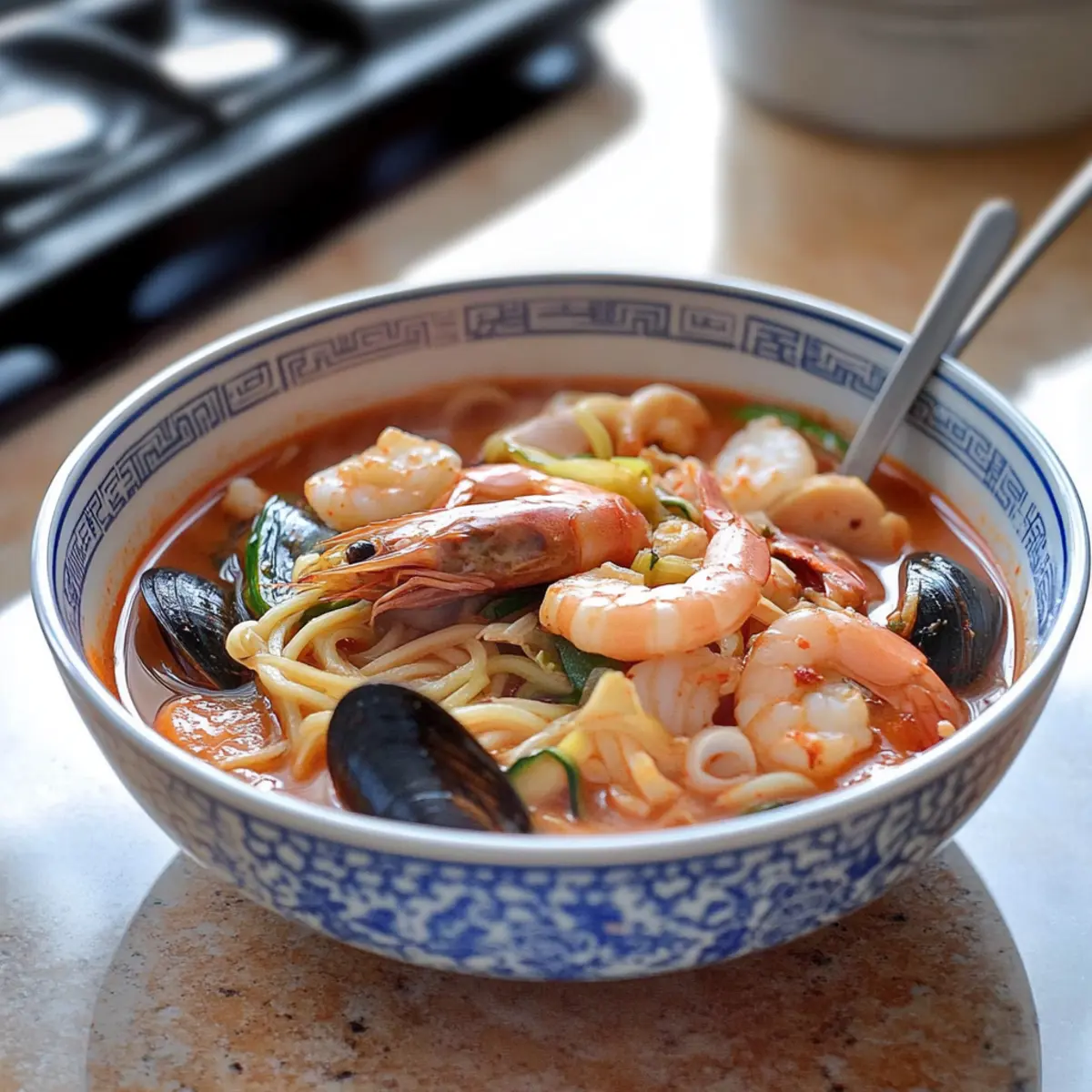
As I stirred the bubbling pot of Jjamppong, the vibrant colors swirled together like a warm hug on a cold day. This delicious Korean seafood noodle soup is more than just a meal; it’s a comforting embrace filled with tender seafood and perfectly cooked noodles, perfect for cozy evenings or impressing friends at dinner parties. What makes this dish unparalleled is not only its rich, spicy broth but also that it’s surprisingly easy to whip up in your own kitchen. You’ll love how quickly it comes together, making it a fantastic weeknight option that still feels special. Ready to dive into the world of Korean cuisine and warm up with a bowl of Jjamppong? Let’s embark on this culinary adventure together!
Why is Jjamppong the Perfect Comfort Food?
Bold flavors: This Jjamppong packs a punch with its rich, savory broth and a blend of seafood that dances on your palate.
Easy to make: With straightforward steps and common ingredients, you don’t need to be a pro chef to recreate this dish at home.
Versatile: Tailor the recipe to your taste by experimenting with different seafood or adjusting the spice level to suit your family’s preferences.
Crowd-pleaser: Perfect for cozy dinners or gatherings, this soup is sure to impress friends and family alike! For a quick meal option, check out these delicious Ground Beef Noodles as well.
Health-conscious: Packed with protein and nutrient-rich vegetables, Jjamppong offers a satisfying meal without the guilt.
Comforting warmth: Whether it’s a rainy day or you’re feeling under the weather, this spicy noodle soup will wrap you in warmth, just like a cozy blanket.
Jjamppong Ingredients
For the Broth
• Oil – Use vegetable or sesame oil for a flavorful sauté base.
• Leek (or Green Onion) – Adds a mild onion flavor; shallots can be a good substitute.
• Garlic Cloves – Essential for depth; always opt for fresh garlic.
• Pork Loin (optional) – Adds savory richness; feel free to skip for a seafood-only delight.
• Korean Chili Flakes (Gochugaru) – Infuses signature spiciness; adjust to your taste level.
• Cayenne Pepper (optional) – For an extra kick; omit if you prefer milder heat.
• Green Cabbage – Contributes sweetness and texture; napa cabbage can work as well.
• Onion – Enhances the broth’s flavor; yellow or white onions work best.
• Zucchini – Provides a tender element; any summer squash is a fair swap.
• Low Sodium Chicken Broth – A rich base; homemade or store-bought is perfectly fine.
• Water – Adjusts the broth’s consistency; use more broth for added flavor.
For the Seasoning
• Oyster Sauce – Brings umami depth and sweetness; soy sauce is a good alternative.
• Korean Soup Soy Sauce (Gukganjang) – Designed for noodle soups, but regular soy sauce is acceptable.
• Freshly Ground Pepper – Season to taste for that final touch.
For the Seafood and Noodles
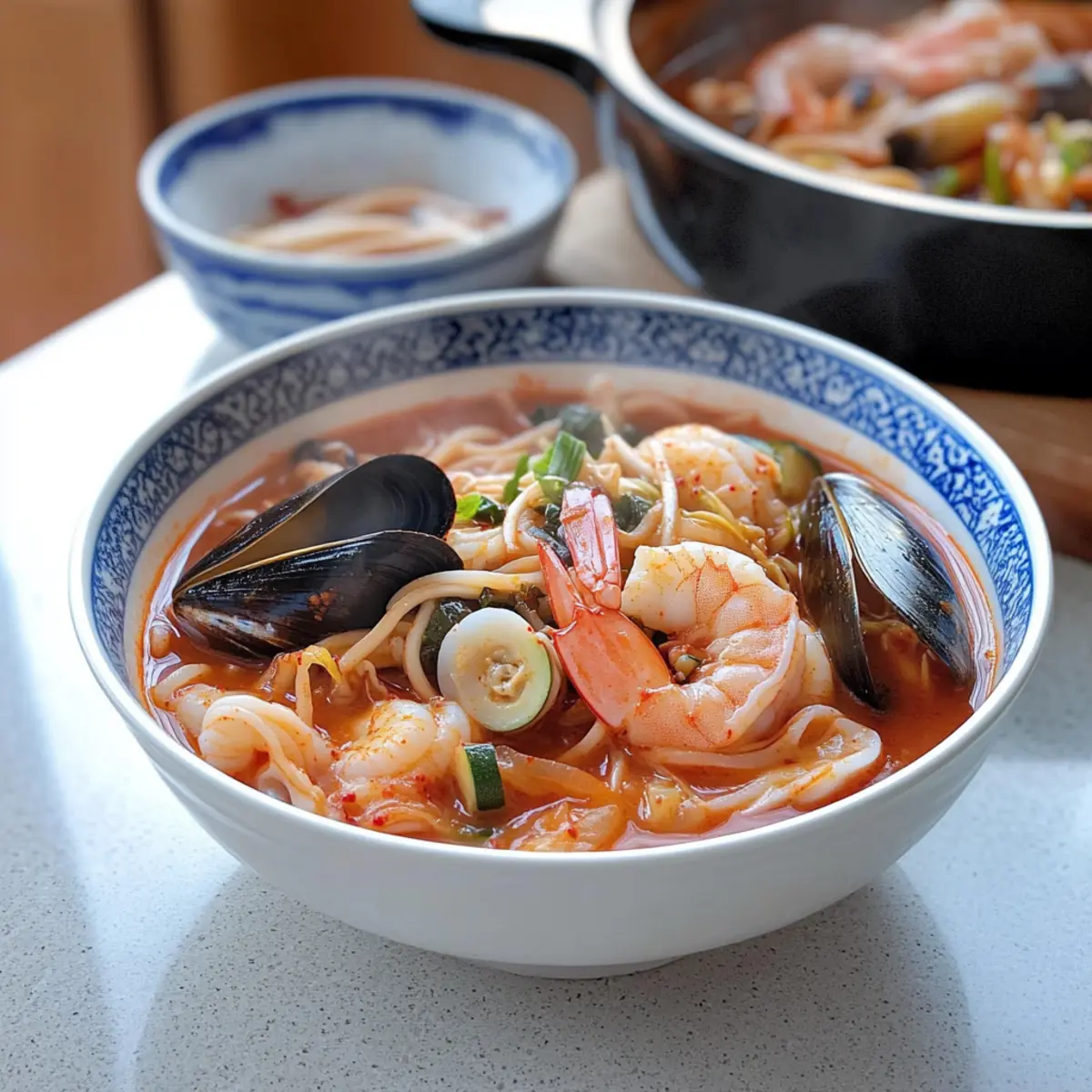
• Seafood (e.g., shrimp, squid, mussels) – Key proteins; a mix ensures the best flavor. You can also incorporate scallops or other fish.
• Wheat Noodles (or Spaghetti) – The traditional base; whole grain or gluten-free options are available.
This comprehensive ingredient list sets the stage for making a delightful Jjamppong (Korean Seafood Noodle Soup) that promises warmth and flavor in every bowl!
Step‑by‑Step Instructions for Jjamppong (Korean Seafood Noodle Soup)
Step 1: Sauté Aromatics
In a large pot or wok, heat 2 tablespoons of vegetable or sesame oil over medium-high heat. Once the oil is shimmering, add 1 chopped leek (or green onion) and 4 minced garlic cloves. Sauté for about 2-3 minutes until fragrant and soft. You want to see them turning lightly golden; this will form the flavorful base for your Jjamppong.
Step 2: Cook the Pork (Optional)
If using, add thinly sliced pork loin to the pot and cook for about 3-4 minutes until it’s browned and no longer pink. Stir occasionally to ensure even cooking. The pork adds a rich layer to the broth, but feel free to skip this step for a purely seafood version.
Step 3: Introduce the Heat
Stir in 2 tablespoons of Korean chili flakes (Gochugaru) and 1 teaspoon of cayenne pepper (if desired) for that signature spice kick. Sauté for an additional 30 seconds, allowing the spices to bloom, but be careful not to let them brown. The aromatic mixture should now be fragrant, with a vibrant color emerging.
Step 4: Add Vegetables
Toss in 1 cup of chopped green cabbage and 1 chopped onion, stirring everything together. Continue to stir-fry for about 2-3 minutes until the vegetables are just wilted and the onion becomes translucent. This step brings out the sweetness and depth in your Jjamppong broth.
Step 5: Incorporate Zucchini
Next, add 1 sliced zucchini and cook for another minute, stirring until the zucchini is slightly tender. This will enhance the soup’s texture, adding a lovely contrast to the seafood. Continue to visualize how the vibrant colors of the veggies transform as they soften.
Step 6: Create the Broth
Pour in 4 cups of low sodium chicken broth and 2 cups of water, bringing the mixture to a rolling boil. Once boiling, reduce the heat to a simmer, allowing the flavors to meld beautifully for about 3-5 minutes. You’ll notice the soup thickening slightly as it simmers, inviting and aromatic.
Step 7: Add Seafood and Season
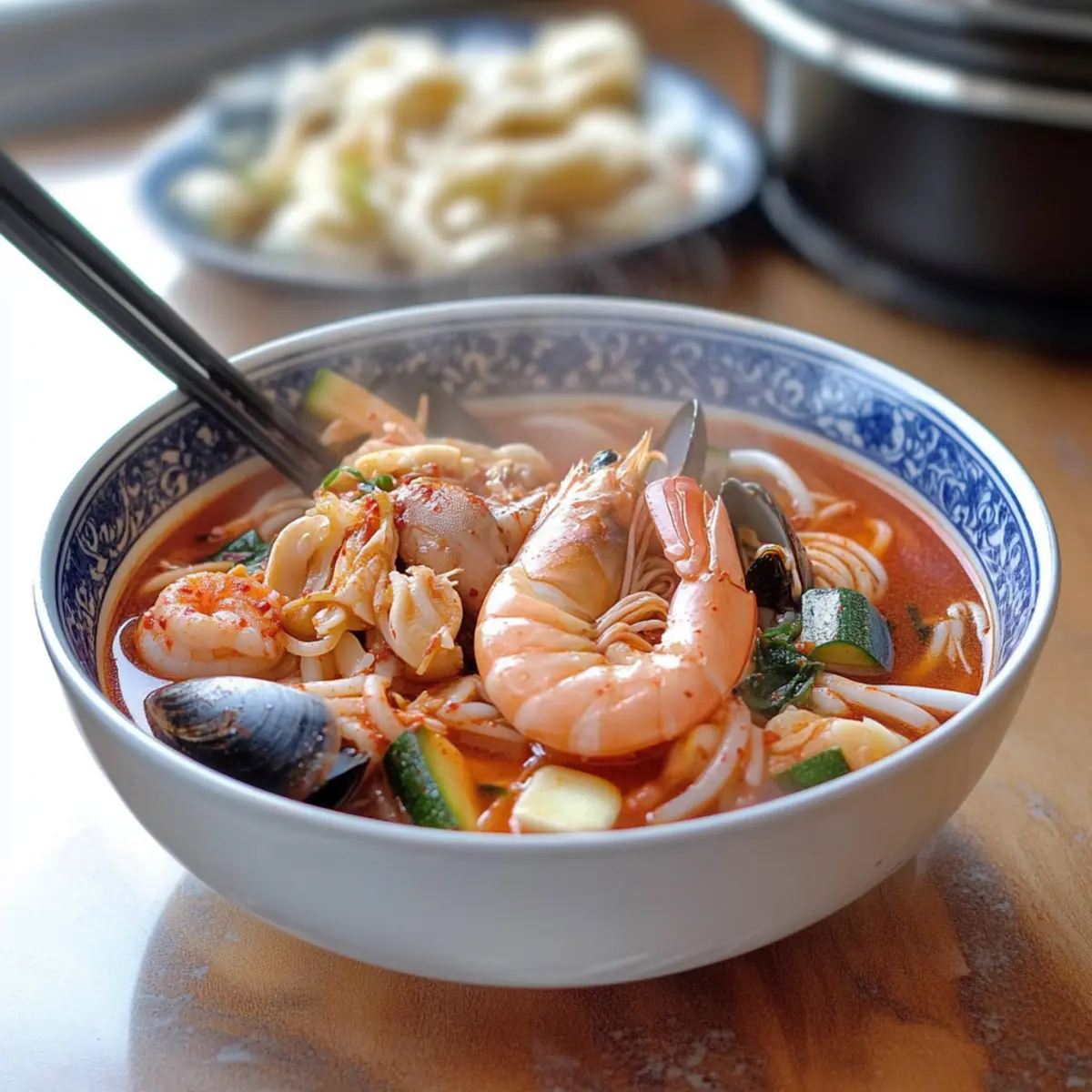
Gently introduce 1 pound of mixed seafood—such as shrimp, squid, and mussels—into the pot. Season with 2 tablespoons of oyster sauce and 2 tablespoons of Korean soup soy sauce. Allow everything to simmer until the seafood is cooked through, about 4-6 minutes, until they turn opaque and tender, adding a savory depth to your Jjamppong.
Step 8: Prepare and Serve Noodles
Meanwhile, cook the wheat noodles (or spaghetti) according to package instructions. Drain and rinse them briefly to prevent sticking. To serve, place the noodles in bowls and ladle the hot Jjamppong soup over the top. This way, the noodles absorb the flavorful broth and you’ll have a delicious, comforting meal ready to enjoy!
Expert Tips for Jjamppong
• Fresh Ingredients: Always use the freshest seafood and vegetables for the best flavor and texture in your Jjamppong.
• Low Heat After Seafood: Once you add the seafood, reduce the heat and let it simmer gently. This prevents overcooking and keeps your seafood tender and juicy.
• Adjust Spice Wisely: Start with a smaller amount of Korean chili flakes and cayenne pepper, then taste and adjust. This way, you can customize the heat level to suit your preference.
• Broth Matters: Using low sodium chicken broth allows you to control the saltiness. Add salt gradually to maintain the dish’s balance.
• Store Smartly: If you have leftovers, store noodles and soup separately to keep the noodles from getting soggy. Reheat them together just before serving for the best experience.
• Mix It Up: Don’t hesitate to experiment with different seafood in your Jjamppong. Clams, scallops, or even fish can add new dimensions to your comforting soup!
How to Store and Freeze Jjamppong
Fridge: Store leftover Jjamppong in an airtight container for up to 3 days. To maintain freshness, keep noodles separate from the soup until just before reheating.
Freezer: You can freeze Jjamppong for up to 2 months. Portion it into freezer-safe bags or containers, but remember to leave space for expansion.
Reheating: When ready to enjoy, thaw overnight in the fridge. Reheat on the stove over low heat, adding a splash of water or broth to restore the soup’s consistency and warmth.
Notes: For best texture, avoid freezing the noodles with the soup. This will keep your Jjamppong delicious and enjoyable every time!
Make Ahead Options
Jjamppong (Korean Seafood Noodle Soup) is an excellent choice for meal prep, allowing you to enjoy a comforting bowl with minimal effort. You can chop and prepare all the vegetables, such as leeks, cabbage, onions, and zucchini, up to 24 hours in advance, storing them in airtight containers in the refrigerator. Moreover, the soup itself can be made 3 days ahead, just don’t add the seafood or noodles until you’re ready to serve to maintain their perfect texture. When ready to finish your dish, simply reheat the broth, add the seafood, and cook until they’re just done, then serve over freshly cooked noodles for a warm, satisfying meal without any hassle!
What to Serve with Spicy Korean Seafood Noodle Soup (Jjamppong)
Looking to create a complete meal that complements the bold flavors of this delightful dish?
- Kimchi: The classic Korean side dish offers a tangy crunch that beautifully contrasts the heat of Jjamppong, enhancing every bite.
- Pickled Vegetables: Bringing in a variety of pickled radishes or cucumbers provides a refreshing brightness and tangy notes alongside your sumptuous soup.
- Steamed Rice: A warm bowl of steamed rice acts as a comforting base, allowing you to soak up the rich broth for extra satisfaction.
- Korean Pancakes (Pajeon): These crispy delights packed with scallions and other veggies create a wonderful texture and heartiness when enjoyed together.
- Sesame Seaweed Salad: This light, nutty salad adds an earthy balance to the meal, while the seaweed offers a unique briny flavor that pairs perfectly with the soup.
- Savoury Tofu Skewers: Marinated and grilled tofu skewers are an excellent, hearty option for any vegetarian diners, adding protein and umami.
- Cold Beer or Soju: Sip a refreshing Korean beer or a shot of soju to cleanse your palate, making each bite of Jjamppong more delightful.
- Sweet Red Bean Dessert: For a lovely finish, this traditional Korean sweet pairs well with the flavors, offering a soft, chewy contrast that’s both comforting and satisfying.
- Green Tea: Pair a calming cup of green tea to cleanse your palate, enhancing this comforting meal without overpowering the vibrant flavors.
Jjamppong Variations & Substitutions
Feel free to let your creativity shine by customizing this delightful dish to suit your palate!
-
Seafood Swap: Switch out shrimp and squid for clams or scallops to discover new flavors. Each seafood brings its own unique taste and texture to the broth, creating a fresh, exciting variation each time.
-
Vegetarian Delight: Replace the seafood with tofu and use vegetable broth for a plant-based version. Firm tofu absorbs the flavors beautifully, making it a hearty option that everyone can enjoy.
-
Spice Power-Up: Amp up the heat by adding fresh green chilies along with the chili flakes. A little extra spice can transform the dish into an even more invigorating experience, ideal for those who love a kick!
-
Gluten-Free Noodles: For a gluten-free option, substitute wheat noodles with rice noodles or zucchini noodles. This adjustment keeps the dish light while retaining all that comforting flavor.
-
Broth Variations: Experiment with adding miso paste in place of oyster sauce for a different umami depth. The subtle earthiness of miso can bring a unique twist to the classic broth.
-
Flavor Boost: Incorporate additional aromatics like ginger or lemongrass when sautéing. These ingredients will infuse the broth with warmth and complexity, inviting you to a fragrant culinary journey.
-
Cabbage Alternatives: Swap green cabbage for bok choy or spinach if you prefer a different texture or flavor profile. Each green brings its own charm to the dish, enhancing the overall eating experience.
-
Noodle Styles: Use udon noodles instead of wheat noodles for a chewier texture. Udon adds a hearty bite, giving your Jjamppong a satisfying twist that pairs wonderfully with the broth.
Feel free to browse different recipes to suit your mood, and don’t forget to check out these delicious Ground Beef Noodles for another comforting dish!
Jjamppong (Korean Seafood Noodle Soup) Recipe FAQs
How do I select ripe ingredients for Jjamppong?
Absolutely! When choosing vegetables, look for firm zucchinis and vibrant green cabbage without dark spots or wilting. For seafood, fresh shrimp should have a mild scent, and the shells should be shiny; avoid any fishy odors. The fresher your ingredients, the more flavorful your Jjamppong will be!
How should I store leftovers of Jjamppong?
You should store leftover Jjamppong in an airtight container in the fridge for up to 3 days. To maintain the best flavor and texture, keep the noodles separate from the soup until you’re ready to reheat. This prevents them from becoming mushy. When ready to serve, just combine them on the stove for a delightful meal!
Can I freeze Jjamppong, and how?
Yes! You can freeze Jjamppong for up to 2 months. Here’s a step-by-step guide:
- Cool Completely: Allow your Jjamppong to cool down to room temperature.
- Portion it Out: Use freezer-safe containers or bags, and portion the soup for easy reheating later.
- Leave Space: Make sure to leave some space at the top of each container for expansion when freezing.
- Seal Well: Remove excess air from bags and seal tightly. Label them with the date and type for your convenience.
What should I do if my Jjamppong ends up too spicy?
Very! If your Jjamppong turns out spicier than desired, here’s a trick: Add a splash of cream or a dollop of sour cream to mellow out the heat. Alternatively, you can incorporate additional broth, which helps balance the spice without diluting the flavor. Remember, it’s all about adjusting to your taste!
Are there any dietary considerations for Jjamppong?
Definitely! If cooking for those with dietary restrictions, ensure that you use gluten-free noodles to accommodate gluten intolerance. For allergies, swap seafood with tofu or veggie options for a vegetarian version, and always check labels on sauces for allergens. Enjoying Jjamppong can be inclusive for all!
Can I use different types of seafood in Jjamppong?
Most certainly! While shrimp, squid, and mussels are traditional, feel free to experiment with other seafood like clams or scallops. Just be sure to adjust cooking times as needed—thinly sliced fish might need only a few minutes to cook through. The more the merrier when it comes to seafood variety in your Jjamppong!
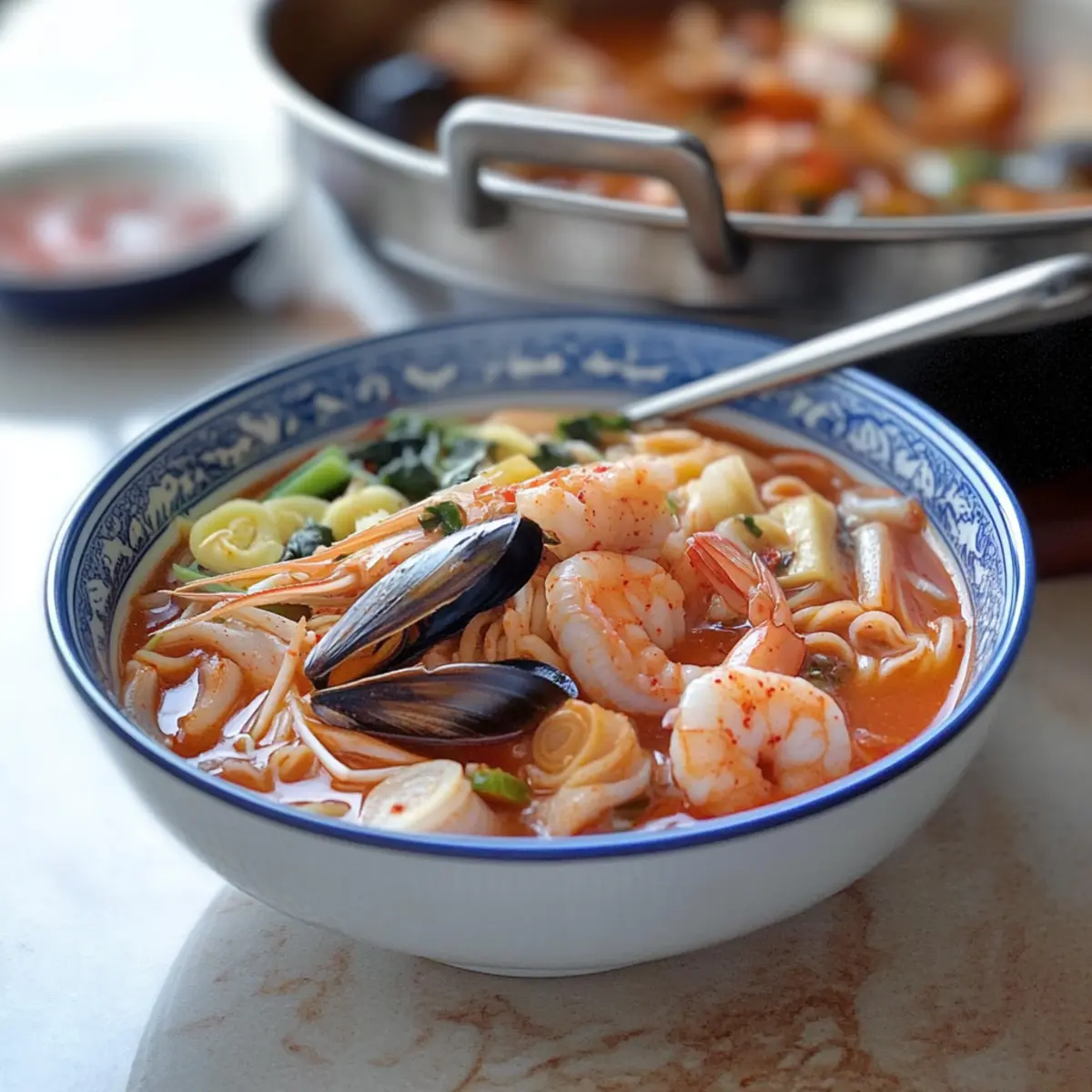
Spicy Jjamppong: Your Comforting Korean Seafood Noodle Soup
Ingredients
Equipment
Method
- In a large pot or wok, heat vegetable or sesame oil over medium-high heat. Add chopped leek and minced garlic and sauté for 2-3 minutes until fragrant.
- If using, add thinly sliced pork loin and cook for 3-4 minutes until browned.
- Stir in Korean chili flakes and cayenne pepper, and sauté for 30 seconds.
- Add chopped green cabbage and onion, stir-fry for 2-3 minutes until vegetables are wilted.
- Add sliced zucchini and cook for another minute until slightly tender.
- Pour in low sodium chicken broth and water, bring to a boil, then reduce heat and simmer for 3-5 minutes.
- Add mixed seafood, oyster sauce, and Korean soup soy sauce, and let simmer for 4-6 minutes until seafood is cooked.
- Cook noodles according to package instructions, drain, and serve with Jjamppong soup.