
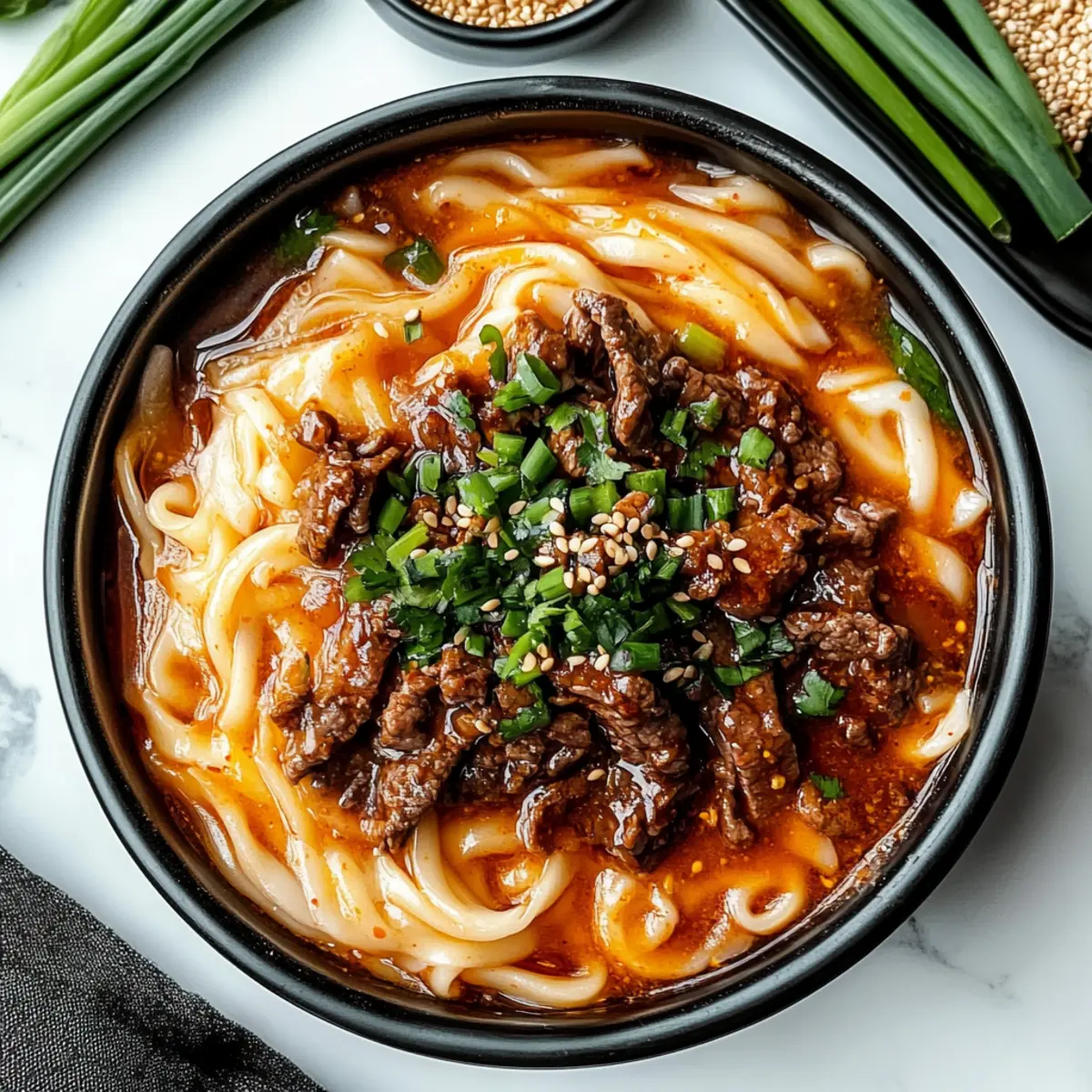
As an unexpected drizzle brews outside my window, I crave a comforting meal that doesn’t compromise on flavor. Enter my Spicy Korean Gochujang Beef Noodles, a dish that transforms a gloomy day into a culinary escape. With the bold, umami punch of gochujang, tender beef, and chewy noodles, each bite offers a delightful combination of spice and satisfaction. What I love most about this recipe is how quickly it comes together—just 30 minutes—and its ability to wow both family and friends, whether it’s a weeknight dinner or a special gathering. You’ll find the flavors dancing on your palate, creating a memorable experience that keeps you coming back for more. Are you ready to ignite your taste buds with this fiery dish? Let’s dive in!
Why Will You Love Gochujang Beef Noodles?
Simplicity at its Core: The recipe comes together quickly, making it ideal for those busy weeknights when you crave something special without the hassle.
Explosive Flavor: The bold kick of gochujang is perfectly balanced with savory beef and fresh veggies, creating a mouthwatering combination that surprises every time.
Versatile Dish: Swap beef for chicken or tofu, or customize the vegetables to your liking—a truly adaptable recipe for every taste!
Comforting Satisfaction: This dish not only fills your belly but also warms your soul, making it a favorite among family and friends.
Quick Cooking Time: In just 30 minutes, you can serve up a satisfying meal that beats any takeout option—no more fast food for you!
Don’t forget to pair it with a side of Hearty Beef Barley or a refreshing Beef Broccoli Stir for an even more delightful experience.
Gochujang Beef Noodles Ingredients
• Unlock the secret to bold and spicy flavors!
For the Beef
- Beef sirloin – Key protein source providing a tender bite. Best for quick cooking.
- Vegetable oil – Needed for sautéing; can substitute with sesame oil for added flavor.
For the Sauce
- Soy sauce – Salty component that enhances umami; low sodium options available.
- Brown sugar – Balances the heat of gochujang; honey can be used as a substitute.
- Gochujang – Korean chili paste adds heat and complexity; tailor the amount to your spice preference.
- Sesame oil – Adds rich, nutty notes; omit if allergic or sensitive to sesame.
- Rice vinegar – Provides acidity and brightness; can be replaced with apple cider vinegar.
For the Veggies
- Garlic – Aromatic base that enhances the overall flavor profile. Fresh is preferable.
- Onion – Adds sweetness and depth; yellow or red onions work well.
- Red bell pepper – Provides color and a slight crunch; can use any bell pepper variety.
For the Noodles
- Cooked noodles – Base of the dish; recommendations include udon or soba noodles, but spaghetti works too.
For Garnishing
- Sesame seeds – Garnish that adds texture and aesthetic appeal.
- Sliced green onions – Fresh garnish providing a mild onion flavor and pop of color.
Now that you have all the ingredients lined up, let’s get cooking and bring those Gochujang Beef Noodles to life!
Step‑by‑Step Instructions for Gochujang Beef Noodles
Step 1: Prep the Ingredients
Start by slicing your beef sirloin into thin strips, ensuring they are even for quick cooking. Mince a couple of cloves of garlic and slice one onion and a red bell pepper. Meanwhile, cook your noodles according to the package instructions, draining them well once they’re al dente. This initial preparation sets the stage for your flavorful Gochujang Beef Noodles.
Step 2: Heat the Oil
In a large skillet, heat 2 tablespoons of vegetable oil over medium-high heat until it’s shimmering. This will ensure a good sear on the beef. Keep an eye on the oil; it should start to shimmer but not smoke. This step is crucial for achieving that perfect tender texture on the beef, so don’t rush it!
Step 3: Cook the Beef
Add the sliced beef into the hot skillet in a single layer. Let it sear undisturbed for about 2-3 minutes, until it’s browned on one side. Flip the beef pieces and cook for another 2 minutes until they are fully cooked through. Once done, remove the beef from the skillet and set it aside on a plate.
Step 4: Sauté the Aromatics
In the same skillet, lower the heat to medium and add your minced garlic and sliced onion. Sauté them for about 2-3 minutes until the onions are translucent and fragrant, stirring often to avoid burning. The aromatic mixture will lay a wonderfully flavorful base for your Gochujang Beef Noodles.
Step 5: Add the Peppers
Once the onions are soft, stir in the sliced red bell pepper and cook for another 2-3 minutes. You’re looking for the peppers to soften slightly while still retaining some crunch. This provides a vibrant color and texture contrast in your dish, making your Gochujang Beef Noodles not just tasty but visually appealing.
Step 6: Mix the Sauce
While the veggies are cooking, combine ¼ cup of soy sauce, 1 tablespoon of brown sugar, 2 tablespoons of gochujang, 1 teaspoon of sesame oil, and 1 tablespoon of rice vinegar in a small bowl. Whisk these together until smooth. This sauce packs a flavor punch that will coat all the ingredients beautifully, enhancing your Gochujang Beef Noodles.
Step 7: Combine Everything
Pour the sauce over the sautéed vegetables in the skillet, stirring well to coat all the ingredients. Add the cooked beef back into the skillet, mixing everything together. Make sure that the beef is well integrated into the savory sauce, allowing the flavors to meld beautifully for a delicious finish.
Step 8: Toss in Noodles
Add the drained noodles to the skillet and gently toss everything together to ensure the noodles are well coated in the sauce. Cook for another 2-3 minutes until everything is heated through, making sure to stir occasionally so that the noodles don’t clump together. Your Gochujang Beef Noodles are almost ready to enjoy!
Step 9: Garnish and Serve
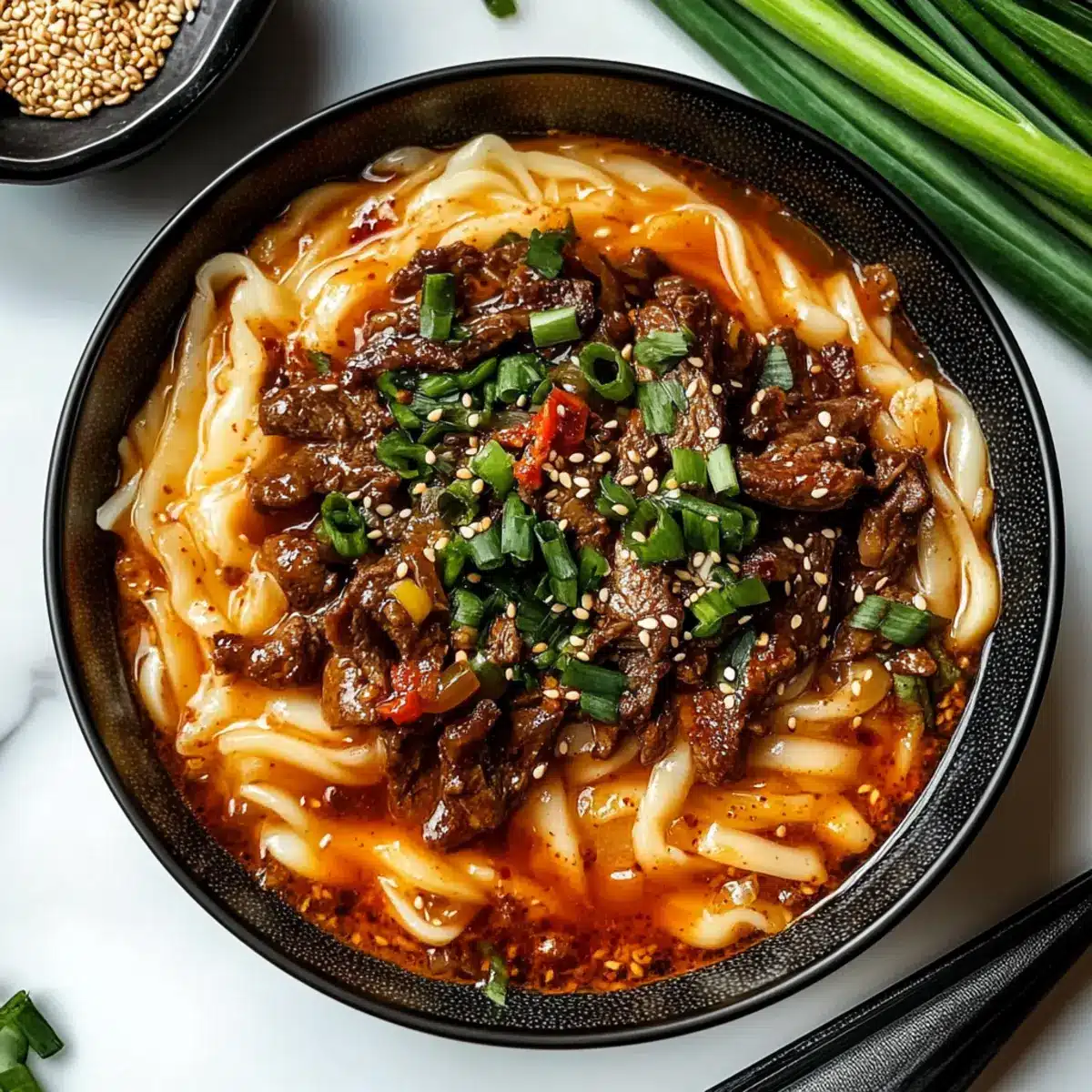
Once heated through, remove the skillet from heat. Garnish your Gochujang Beef Noodles with sesame seeds and sliced green onions for an extra pop of flavor and texture. Serve immediately while hot, either in bowls or on plates, and let the vibrant colors and rich smells elevate your dining experience.
Gochujang Beef Noodles Variations
Customize your Gochujang Beef Noodles for a delicious twist on this already tasty dish!
-
Spicy Kick: Add minced fresh chili or chili flakes to the sauce for an extra heat dimension that spice lovers will appreciate. Elevate the heat level and savor every fiery bite!
-
Protein Swap: Substitute beef with chicken, pork, shrimp, or tofu for a quick protein change. Tofu soaks up the sauce beautifully, making it a delightful vegetarian option.
-
Vegetarian Style: Skip the meat and load up on more veggies like broccoli, carrots, and spinach for a hearty and nutritious meal. This version still packs a flavor punch, ensuring no one misses the meat!
-
Noodle Twists: Instead of traditional noodles, try spiralized zucchini or rice noodles for a gluten-free option. These variations add unique textures while keeping the dish light and fresh.
-
Asian Fusion: Incorporate elements from other cuisines, like using peanut butter in the sauce for a nutty flavor reminiscent of satay. It creates a delightful fusion that sings with every bite!
-
Deconstructed Bibimbap: Serve components separately, layered beautifully in a bowl – rice on the bottom, then vegetables, beef, and sauce on top. Finish with a fried egg for a delightful mix!
-
Herb-Infused: Toss in fresh herbs like cilantro or basil just before serving to add a refreshing pop of flavor. These herbs balance the spicy richness and elevate the dish even further.
-
Add Crunch: Top with crushed peanuts or fried onions for an unexpected crunchy texture that contrasts beautifully with the soft noodles and beef. It makes for a delightful bite!
Explore these variations and feel free to mix and match to craft your perfect bowl of Gochujang Beef Noodles! Don’t hesitate to check out my other recipes like Chunky Beef Cabbage and Cheesy Beef Burritos for even more meal inspiration.
How to Store and Freeze Gochujang Beef Noodles
-
Fridge: Store leftovers in an airtight container for up to 3-4 days. This keeps the flavors fresh while avoiding moisture loss.
-
Freezer: For longer storage, freeze cooled Gochujang Beef Noodles in a freezer-safe dish for up to 2 months. Ensure an airtight seal to prevent freezer burn.
-
Reheating: Thaw overnight in the fridge. Reheat slowly in a skillet over medium heat, adding a splash of water or broth to maintain moisture and avoid sticking. Enjoy the fantastic flavors all over again!
Expert Tips for Gochujang Beef Noodles
-
Rest the Beef: Allow the sliced beef to rest after cooking to retain juices, ensuring each bite remains tender and juicy.
-
High Heat is Key: Sear the beef on high heat for that perfect caramelized texture. Don’t overcrowd the skillet, or it will steam instead of sear.
-
Taste as You Go: Always taste and adjust seasoning during cooking. Sometimes, just a pinch of extra soy sauce can elevate the gochujang beef noodles to the next level.
-
Noodle Drainage: Ensure the noodles are thoroughly drained to prevent excess water from diluting the sauce, keeping it rich and flavorful.
-
Customize Your Veggies: Feel free to mix in other vegetables, like snap peas or carrots, for added variety and nutrition in your Gochujang Beef Noodles.
What to Serve with Spicy Korean Gochujang Beef Noodles
As you prepare to savor the spicy, savory goodness of your Gochujang Beef Noodles, consider these delightful pairings to create a full, memorable meal experience.
-
Kimchi Pancakes: These crispy, slightly spicy pancakes offer a wonderful contrast in texture, pairing beautifully with the flavorful noodles. The fermented flavor enhances the meal’s umami dimension.
-
Cucumber Salad: A refreshing cucumber salad with sesame dressing adds a cool crunch, balancing the spice of the noodles. This side is simple yet vibrant, making every bite pop!
-
Steamed Broccoli: Bright green broccoli provides a nutritious crunch and absorbs the savory sauce. Its mild flavor complements the bold taste of the gochujang, creating a harmonious plate.
-
Miso Soup: A warm bowl of miso soup offers a comforting umami flavor that perfectly complements the richness of the beef noodles. The subtle broth acts as a soothing counterpoint.
-
Sesame Spinach: Lightly sautéed spinach with a hint of sesame oil not only brings color but also nutritious balance. The earthy green tones add a fresh twist to your meal.
-
Cold Soba Noodles: Serve cold soba noodles tossed in a light soy dressing. They bring a different texture and are a great contrast when served alongside the warm Gochujang Beef Noodles.
-
Thai Iced Tea: A sweet and creamy Thai iced tea is the perfect drink to cool your palate after the heat of the dish. It’s both refreshing and decadent!
-
Chocolate Lava Cake: This indulgent dessert, with its melty center, provides a sweet finish that rounds out the spicy flavors beautifully. It’s sure to impress your guests.
Make Ahead Options
These Spicy Korean Gochujang Beef Noodles are perfect for meal prep enthusiasts! You can slice the beef, mince the garlic, and chop the veggies up to 24 hours in advance, storing them in the refrigerator to maintain freshness. Additionally, you can cook the noodles ahead of time and refrigerate them in an airtight container for up to 3 days to save time when you’re ready to whip up dinner. To finish, simply sauté the aromatics, combine everything in the skillet as directed, and toss in the pre-cooked noodles. This way, you’ll enjoy the same bold flavors and textures with minimal effort on busy weeknights!
Gochujang Beef Noodles Recipe FAQs
What should I look for when selecting beef for this recipe?
Absolutely! When choosing beef sirloin, look for a cut that has a bright, red color with minimal fat marbling for tenderness. Avoid any beef that has dark spots or an unusual odor, as these can indicate poor freshness.
How should I store leftovers, and how long do they last?
You can store leftover Gochujang Beef Noodles in an airtight container in the fridge for up to 3-4 days. Make sure they are completely cooled before transferring them to prevent moisture buildup, which can lead to sogginess.
Can I freeze Gochujang Beef Noodles, and if so, how?
Yes, you can freeze Gochujang Beef Noodles! To do so, let them cool completely and transfer them to an airtight freezer-safe container. They will keep well for up to 2 months. When ready to eat, thaw overnight in the fridge and reheat in a skillet over medium heat, adding a splash of water or broth to maintain moisture as the noodles can become dry.
What if my sauce comes out too thick or too spicy?
Very good question! If your sauce is too thick, you can easily thin it out by adding a small amount of water or broth gradually until you reach the desired consistency. If it’s too spicy for your taste, consider balancing it with a bit more brown sugar or a splash of vinegar. This will help mellow the heat while keeping the flavors vibrant.
Are there any dietary considerations I need to keep in mind?
Absolutely! If you or someone you’re serving has allergies or dietary restrictions, make sure to check the labels on all your ingredients. For example, soy sauce contains gluten, so opting for a gluten-free version is a great alternative. Additionally, if anyone has a sesame allergy, omit the sesame oil and seeds altogether without compromising much on flavor. Always adapt to suit your guests’ needs—everyone deserves a delicious meal!
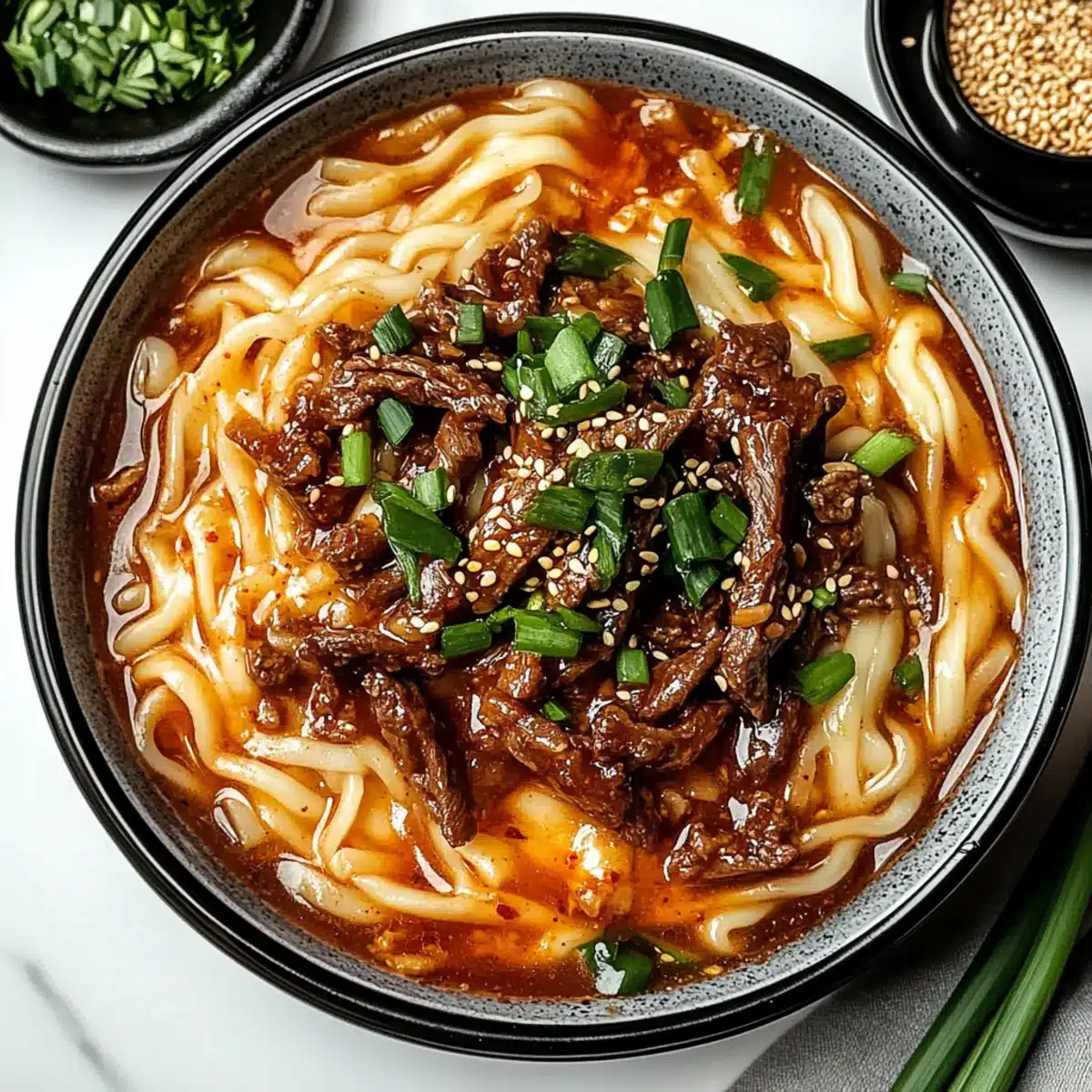
Irresistibly Spicy Gochujang Beef Noodles in 30 Minutes
Ingredients
Equipment
Method
- Slice beef sirloin into thin strips. Mince garlic and slice onion and red bell pepper. Cook noodles according to package instructions.
- Heat vegetable oil in a large skillet over medium-high heat until shimmering.
- Add sliced beef to the skillet. Sear undisturbed for 2-3 minutes, then flip and cook for another 2 minutes. Remove beef and set aside.
- In the same skillet, lower the heat and add garlic and onion. Sauté for 2-3 minutes until onions are translucent.
- Stir in sliced red bell pepper and cook for another 2-3 minutes.
- Combine soy sauce, brown sugar, gochujang, sesame oil, and rice vinegar in a bowl, whisk until smooth.
- Pour the sauce over the sautéed vegetables, then add cooked beef back to the skillet. Mix well.
- Add drained noodles and gently toss to coat with the sauce, cooking for another 2-3 minutes.
- Garnish with sesame seeds and sliced green onions. Serve immediately.