

As I stirred my morning coffee, a delicious aroma wafted through the kitchen, instantly transporting me to a quaint French bistro. French baked eggs, or oeufs cocotte, are my go-to for those brunches that call for a touch of elegance without the fuss. Perfectly set whites cradle runny yolks, making this dish a delightful way to start the day. What I love most is how quick and customizable these baked eggs are—you can simply use what’s available in the fridge! Whether you crave a creamy texture from goat cheese or want to elevate your dish with fresh herbs and sautéed vegetables, these French baked eggs are versatile enough to please anyone’s palate. Ready to whip up a gourmet breakfast that feels as chic as it tastes? Let’s dive into this irresistible recipe!
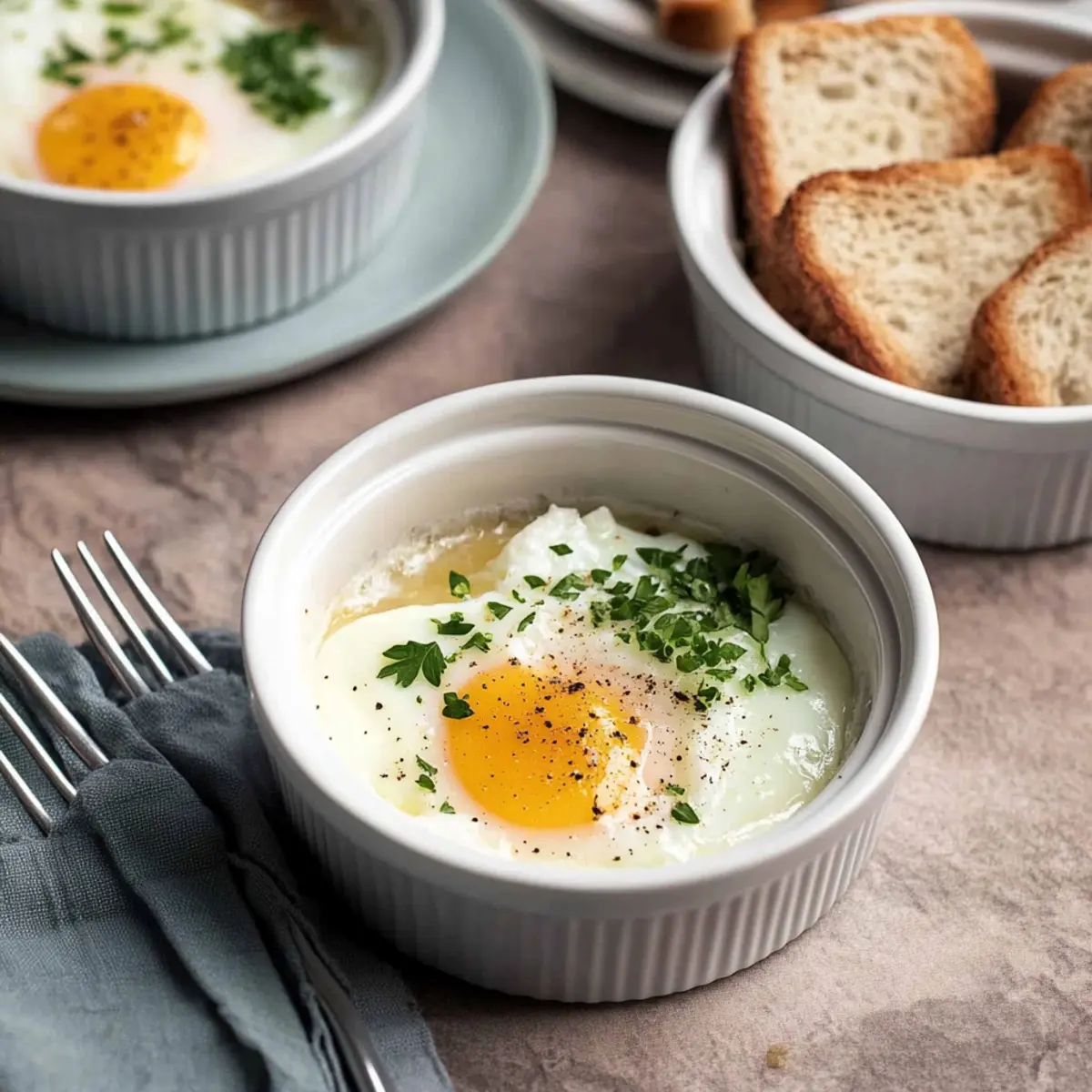
Why are French Baked Eggs a Must-Try?
Simplicity, with just a few ingredients, this elegant dish comes together quickly for an effortless breakfast experience. Customization is key; mix and match your favorite herbs, cheeses, or vegetables for a unique twist every time. Gourmet Appeal makes every bite feel luxurious, perfect for impressing guests or treating yourself on a quiet morning. Versatile and Healthy, these baked eggs are gluten-free, making them suitable for many diets. Plus, crowd-pleaser status ensures that everyone at the table will love them. Serve alongside savory baked meatballs for a brunch spread that’s truly delightful!
French Baked Eggs Ingredients
Unlock the secret to creating delightful French baked eggs with these essential ingredients!
For the Base
- Butter – Provides richness and ensures eggs won’t stick to ramekins; use olive oil for a dairy-free option.
- Crème Fraîche (or Heavy Cream/Yogurt) – Adds creaminess and balances flavors; substitute with sour cream for a tangy twist.
- Large Eggs – The main component; fresh eggs yield the best taste and texture.
For the Toppings
- Fresh Goat Cheese – Offers a creamy texture and tangy flavor; substitute feta or brie for different flavors.
- Fresh Herbs (Chives and Parsley) – Enhance flavor with a fresh note; use any mix of herbs like dill, thyme, or oregano based on preference.
- Sea Salt & Black Pepper – Essential for flavor; adjust to taste based on dietary needs.
Feel free to customize this dish with these ingredients to create your perfect French baked eggs!
Step‑by‑Step Instructions for French Baked Eggs
Step 1: Preheat and Prepare
Begin by preheating your oven to 350°F (175°C). While the oven warms, boil water in a kettle for the water bath that ensures even baking. Prepare four 4-5 ounce ramekins and set them aside, ready for the creamy goodness of French baked eggs.
Step 2: Butter the Ramekins
Generously butter the insides of each ramekin, ensuring they are well-coated to prevent the eggs from sticking. This should take about a minute per ramekin. The shiny butter will not only add flavor but also help the eggs slide out easily post-baking, creating a beautiful presentation.
Step 3: Add the Creamy Base
Distribute the crème fraîche, heavy cream, or yogurt evenly among the buttered ramekins, about 2-3 tablespoons each. This creamy base enhances the flavor and texture of the French baked eggs. The warm, inviting aroma of the dairy should begin to fill your kitchen, setting the tone for your delightful breakfast.
Step 4: Crack the Eggs
Carefully crack one egg into each ramekin, taking care not to break the yolk. Aim for gently dropping the egg into the center of the creamy layer. Visualize the egg nestled within the rich base, as this will create the perfect blend of textures once baked.
Step 5: Add Toppings
Sprinkle the crumbled fresh goat cheese evenly over the eggs, followed by the chopped herbs, sea salt, and black pepper to taste. Each ramekin should have a vibrant assortment of toppings, adding color and flavor. This step personalizes your French baked eggs, preparing them for a gourmet finish.
Step 6: Prepare the Water Bath
Place all the ramekins into a large baking dish, ensuring they fit snugly together. Slowly fill the dish with hot water, allowing it to rise halfway up the sides of the ramekins. This water bath is crucial for achieving the ideal texture in your French baked eggs, ensuring they cook evenly without drying out.
Step 7: Bake to Perfection
Transfer the baking dish to your preheated oven and bake for 14-16 minutes for delightfully runny yolks or 16-18 minutes for creamier, jammy yolks. Keep an eye on the ramekins; they should jiggle slightly when done, with set whites surrounding the still-soft yolks—an absolute visual treat!
Step 8: Serve and Enjoy
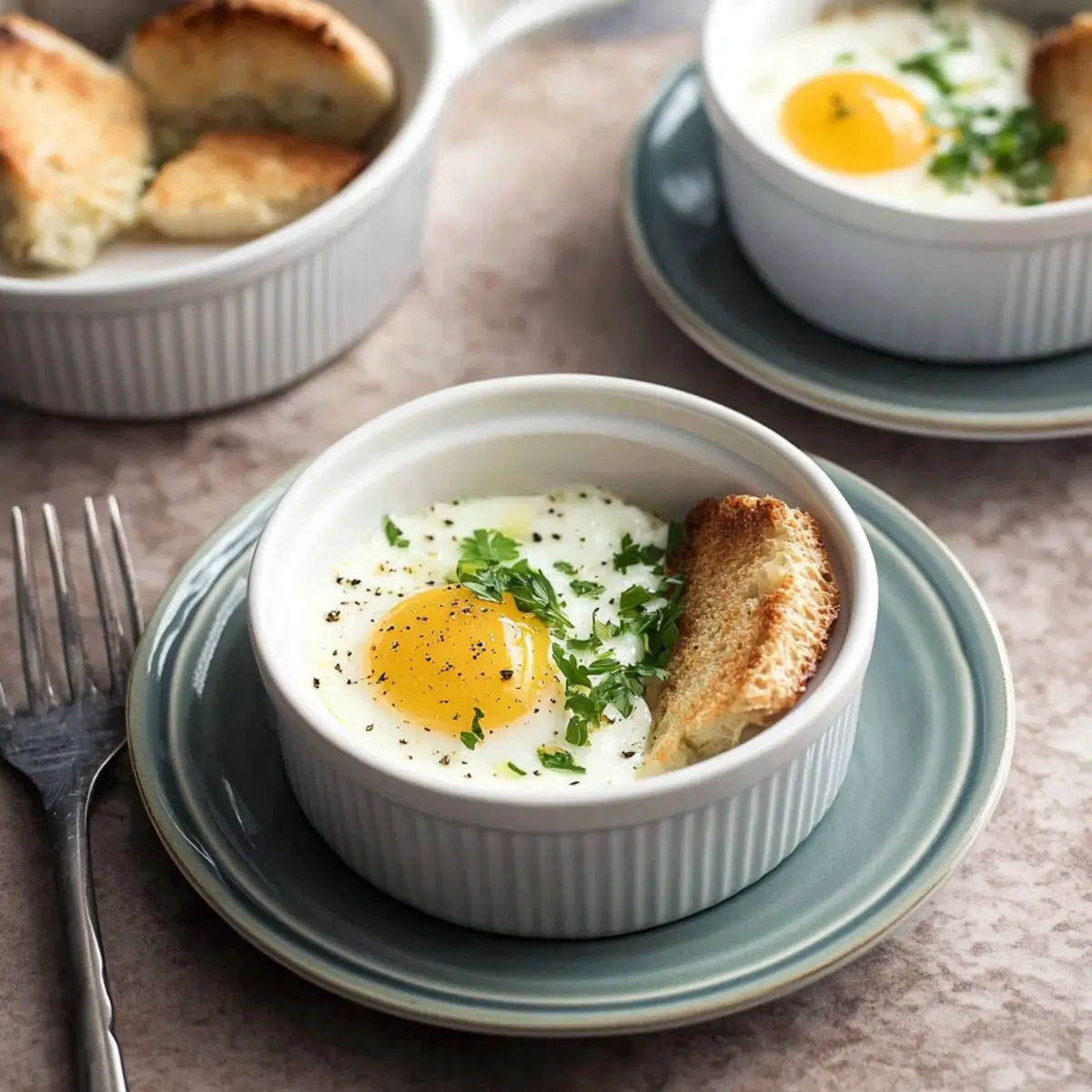
Using oven mitts, carefully remove the ramekins from the oven and the water bath. Allow them to cool for a minute before serving. These French baked eggs are best enjoyed immediately, accompanied by toasted bread for dipping into those luscious, runny yolks.
French Baked Eggs Variations & Substitutions
Feel free to let your creativity shine and customize these French baked eggs to match your taste and pantry!
-
Vegetarian Delight:
Add sautéed vegetables such as spinach, mushrooms, or asparagus for a burst of flavor and nutrition. These vibrant veggies not only boost the dish’s nutrition but also introduce delightful textures that complement the creamy eggs. -
Dairy-Free Option:
Use olive oil in place of butter and coconut cream for a rich, dairy-free experience. This swap maintains the indulgent texture without compromising on flavor, making it accessible for those avoiding dairy. -
Cheese Alternatives:
Experiment with different cheeses like sharp cheddar or tangy feta. Each cheese brings its unique characteristics—cheddar adds a rich umami profile, while feta introduces a briny bite that livens up the dish. -
Herb Medley:
Mix in seasonal herbs like dill, thyme, or oregano for an aromatic twist. Each herb offers its distinct flavor profile, allowing you to tailor the experience from springy fresh to earthy hearty. -
Spice It Up:
For heat lovers, add a pinch of red pepper flakes or a few dashes of hot sauce before baking. A little spice can elevate the overall dish, providing a thrilling contrast to the creamy, soft eggs. -
Flavor Fusion:
Create an Italian-inspired version by adding sun-dried tomatoes and basil. This combination transforms your French baked eggs into a fusion dish brimming with Mediterranean flavors—a delightful surprise for the taste buds! -
Nutty Crunch:
Top with toasted breadcrumbs or crushed nuts before baking for an added crunch. This texture contrast enhances each bite, making your French baked eggs even more enjoyable. -
Savory Boost:
Incorporate cooked and crumbled savory baked meatballs for added protein and heartiness. This combination is perfect for turning brunch into a satisfying meal that leaves everyone happy.
Make Ahead Options
These French baked eggs are perfect for meal prep enthusiasts! You can prepare the ramekins with the creamy base and toppings up to 24 hours in advance, covering them with plastic wrap and refrigerating until you’re ready to bake. This allows you to customize each ramekin with herbs and cheese without the morning rush. When you’re ready to serve, simply preheat your oven and place the ramekins in a water bath, then bake them for 14-18 minutes depending on your preferred yolk consistency. This way, you’ll enjoy delicious French baked eggs with minimal effort, ensuring busy mornings are a breeze!
Expert Tips for French Baked Eggs
-
Perfect Water Bath: Ensure the water bath reaches halfway up the ramekins for even cooking. This prevents the eggs from drying out while baking.
-
Check Doneness: Gently shake the ramekins; firm whites and your desired yolk consistency indicate they’re ready. Timing varies based on your preference for runny or jammy yolks.
-
Use Fresh Ingredients: Opt for fresh eggs and herbs whenever possible. Fresh eggs yield a better taste and texture, enhancing the overall enjoyment of your French baked eggs.
-
Safety First: Use a heat-safe spatula or oven mitts to safely remove the hot ramekins from the oven. This protects you from burns and helps maintain the beautiful presentation.
-
Customize Creatively: Don’t hesitate to mix and match toppings! Adding sautéed veggies or experimenting with different cheeses can elevate your French baked eggs experience.
What to Serve with French Baked Eggs?
Indulge in a delightful breakfast spread to pair with these elegant French baked eggs that will leave your palate singing.
-
Toasted Bread Soldiers: Perfect for dipping into the rich, runny yolks, these crispy pieces add a satisfying crunch that balances the creaminess of the eggs.
-
Fresh Green Salad: A light, refreshing salad with mixed greens, cherry tomatoes, and a zesty vinaigrette introduces a bright contrast to the richness of the dish.
-
Sautéed Spinach: Earthy and mildly flavored, this wilted spinach adds nutritional value and pairs well with goat cheese for a harmonious taste.
-
Herb-Infused Potato Wedges: Roasted potatoes seasoned with fresh herbs provide a comforting companion that enhances the hearty essence of the baked eggs.
-
Crispy Bacon or Ham: The savory, salty goodness of bacon or ham elevates the dish, bringing protein-packed satisfaction alongside your gourmet breakfast experience.
-
Chilled Sparkling Water with Lemon: Refreshing and effervescent, this drink cleanses the palate, perfectly complementing the buttery nature of French baked eggs.
How to Store and Freeze French Baked Eggs
Fridge: Keep leftovers in an airtight container for up to 3 days. Reheat gently in the microwave or oven until warmed through to maintain texture.
Freezer: While not recommended, you can freeze assembled ramekins (without baking) for up to 1 month. Thaw overnight in the fridge before baking.
Make-Ahead: For convenience, prepare the ramekins ahead of time and store in the fridge without baking. Simply bake when ready to enjoy fresh French baked eggs.
Reheating: If reheating baked eggs, do so in the oven at 350°F for about 10-15 minutes until heated through. Enjoy the rich flavors just as you did the first time!
French Baked Eggs Recipe FAQs
What type of eggs are best for French baked eggs?
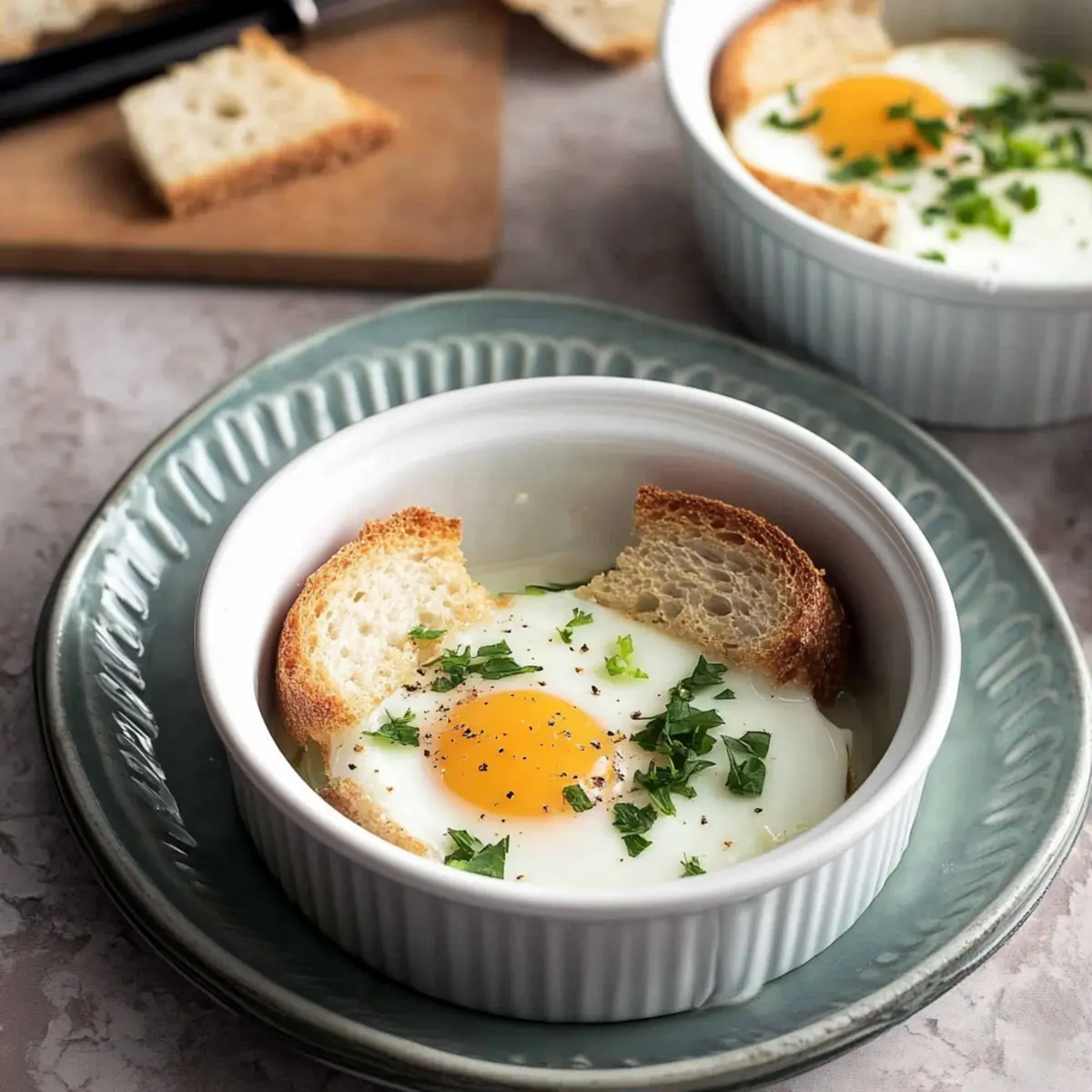
Using fresh, large eggs is essential for achieving the best taste and texture in your French baked eggs. The freshness of the eggs impacts the flavor, and the yolks should ideally be bright orange, indicating rich flavor and quality. You can also explore using free-range or organic eggs for even more flavor and a healthier option.
How do I store leftover French baked eggs?
Store any leftover French baked eggs in an airtight container in the refrigerator for up to 3 days. When reheating, you can gently warm them in the microwave or bake them in the oven at 350°F for about 10-15 minutes to maintain their creamy texture.
Can I freeze French baked eggs?
Yes, but it’s best to freeze them unbaked. Assemble the ramekins without baking, cover them tightly, and store them in the freezer for up to 1 month. When you’re ready to enjoy them, simply thaw them overnight in the refrigerator before baking them as per the recipe instructions.
What if my yolks are too runny or overcooked?
If you find the yolks too runny, it’s all about monitoring your baking time. Start checking around the 14-minute mark. For firmer yolks, add another 1-2 minutes to the baking time. Always keep an eye on the whites; they should look firm and set when you gently shake the ramekins.
Are French baked eggs suitable for a gluten-free diet?
Absolutely! French baked eggs are naturally gluten-free, making them a great option for gluten-intolerant individuals. Just ensure any accompanying bread or sides are also gluten-free to enjoy a completely gluten-free breakfast!
Can I add vegetables to my French baked eggs?
Very! Adding sautéed vegetables like spinach, mushrooms, or asparagus is highly recommended for extra nutrition and flavor. Cook or soften the veggies first, then add them to the ramekins with the crème fraîche and before cracking the eggs for a delightful twist on this classic dish.
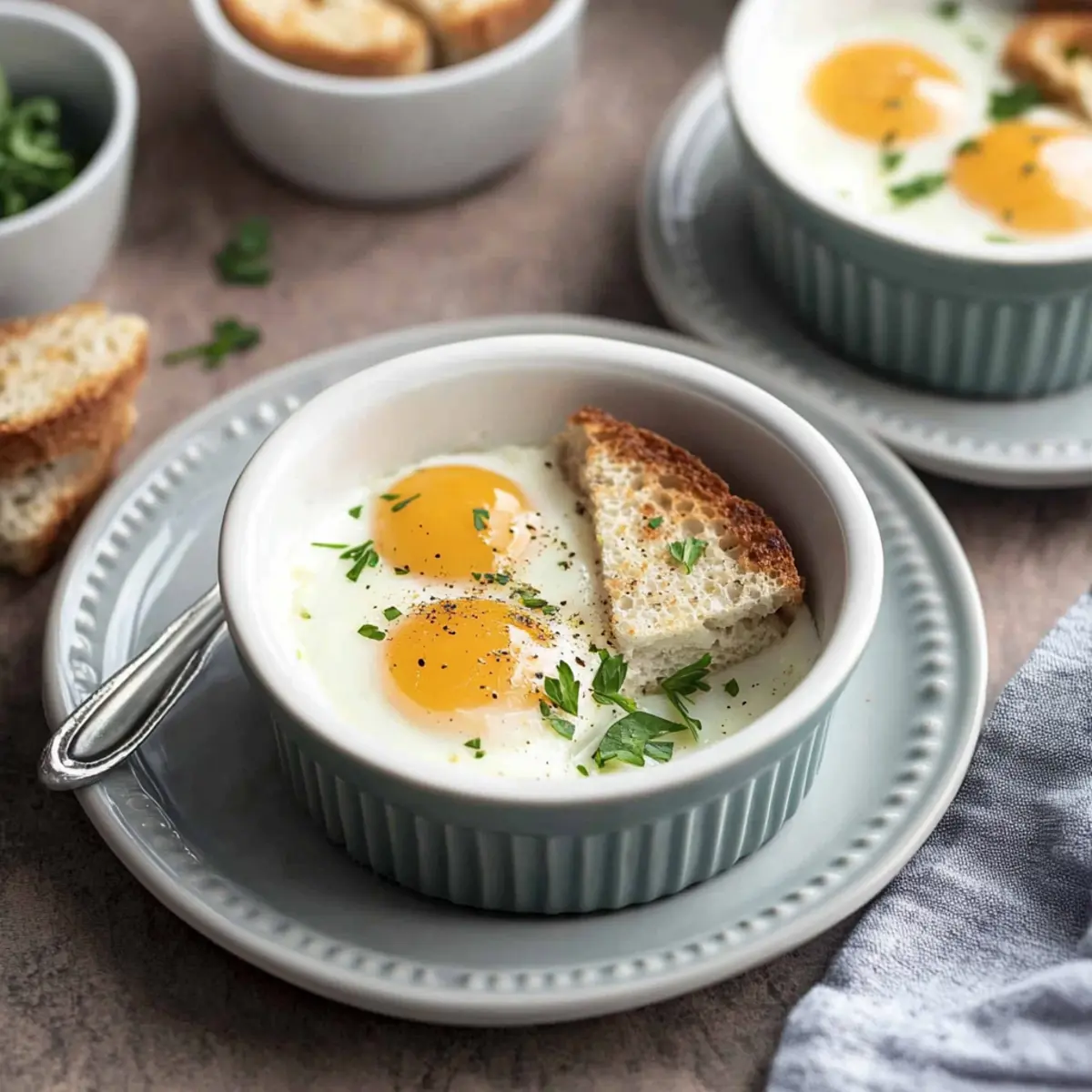
Savor the Morning Bliss with French Baked Eggs Today
Ingredients
Equipment
Method
- Preheat your oven to 350°F (175°C). Boil water in a kettle for the water bath and prepare ramekins.
- Generously butter the insides of each ramekin and set aside.
- Evenly distribute the crème fraîche, heavy cream, or yogurt among the buttered ramekins.
- Carefully crack one egg into each ramekin.
- Sprinkle fresh goat cheese, chopped herbs, sea salt, and black pepper over the eggs.
- Place the ramekins in a baking dish and fill with hot water halfway up the sides of the ramekins.
- Bake for 14-16 minutes for runny yolks or 16-18 minutes for creamier yolks.
- Carefully remove ramekins from the oven, let cool, and serve immediately with toasted bread.