

As I stood in the kitchen, the aroma of sizzling onions danced around me, instantly transporting me to a bustling street in Tokyo. Today, I’m excited to share my delightful version of Gyudon (Japanese Beef & Rice Bowls), a dish that brings the rich flavors of Japan straight to your home. With tender slices of beef simmered in a sweet soy and mirin sauce, served over fluffy rice, it’s the perfect solution for anyone craving a comforting meal without the wait. Plus, this recipe is quick to whip up, making it a fantastic choice for busy weeknights or lazy weekends. Are you ready to dive into this inviting bowl of warmth and savor the true essence of Japanese home cooking?
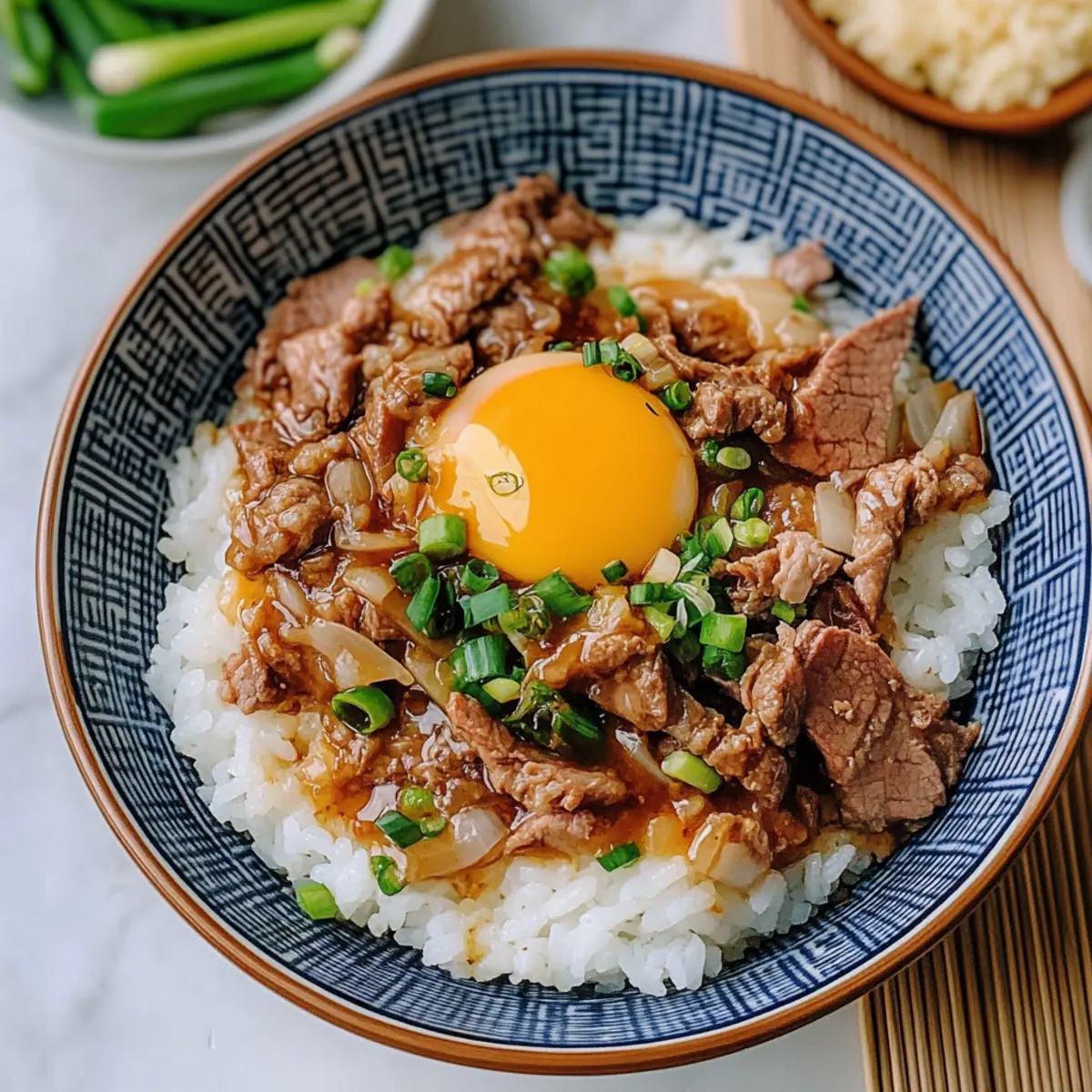
Why is Gyudon a Must-Try?
Authenticity: Gyudon delivers an authentic taste of Japan right at your dining table, allowing you to indulge in rich Asian flavors without stepping out.
Quick & Easy: This recipe is perfect for those busy nights. With a prep and cooking time of just 30 minutes, you can enjoy a homemade meal in no time!
Comforting Warmth: The combination of fluffy rice and tender beef simmered in a savory sauce creates a heartwarming experience that is sure to satisfy.
Versatile: Feel free to customize your Gyudon with different proteins or added veggies like sautéed mushrooms or peppers, giving you endless possibilities for personalization.
Crowd-Pleasing: Whether you’re cooking for yourself or hosting friends, this dish is sure to impress everyone around the table, much like the enticing flavors found in a comforting Hearty Beef Barley soup!
Gyudon Ingredients
• Get ready to savor this classic!
For the Beef Mixture
- Neutral Oil – Perfect for sautéing your onions and beef; vegetable or canola oil works beautifully.
- Onions – Use 2 medium onions, very thinly sliced, to add sweetness and depth to the dish.
- Beef – Use 1 pound of very thinly sliced fatty beef (chuck or ribeye) as the protein star of this Gyudon.
- Sugar – 2 teaspoons helps balance the savory flavors from soy sauce and mirin.
- Mirin – 2 tablespoons provide a sweet, aromatic essence unique to this dish.
- Soy Sauce – Essential for umami flavor; use 2 tablespoons for that signature taste.
- Dashi Stock – 1 cup serves as the flavorful broth base; feel free to substitute with beef or chicken stock.
For Serving
- Eggs – Use 4 eggs, cooked sunny-side up, to add the perfect creamy richness to your bowls.
- Rice – The heart of this dish; use 4 cups of cooked short-grain or medium-grain white rice for an ideal base.
- Scallion – 1 chopped scallion adds a touch of freshness as a garnish.
- Toasted Sesame Seeds – Optional, but 2 teaspoons can bring an extra layer of flavor and texture to each bite!
Step‑by‑Step Instructions for Gyudon (Japanese Beef & Rice Bowls)
Step 1: Sauté the Onions
Start by heating 2 tablespoons of neutral oil in a large skillet over medium-high heat. Once the oil is shimmering, add 2 very thinly sliced medium onions. Sauté them for about 10 minutes, stirring occasionally, until they soften and become lightly golden. This step adds a sweet depth to your Gyudon.
Step 2: Cook the Beef
Next, stir in 1 pound of thinly sliced fatty beef (like chuck or ribeye) along with 2 teaspoons of sugar. Cook for roughly 5–7 minutes, using a spatula to break apart the beef as it browns. You’ll know it’s ready when the beef changes color and is no longer pink, creating a flavorful base for your dish.
Step 3: Create the Sauce
Pour in 2 tablespoons of mirin, 2 tablespoons of soy sauce, and 1 cup of dashi stock into the skillet. Stir the mixture well and bring it to a gentle simmer over medium heat. Let it cook for 10–15 minutes, allowing the sauce to reduce slightly and thicken, enveloping the beef in rich flavors. Adjust with more soy sauce as needed, tasting for perfect balance.
Step 4: Fry the Eggs
While the beef simmers, take a separate skillet and heat a bit of oil over medium heat. Crack 4 eggs into the pan, cooking them sunny-side up for about 3–4 minutes until the whites are set and the yolks remain runny. These eggs will add a wonderful creaminess to your Gyudon once plated.
Step 5: Assemble the Gyudon
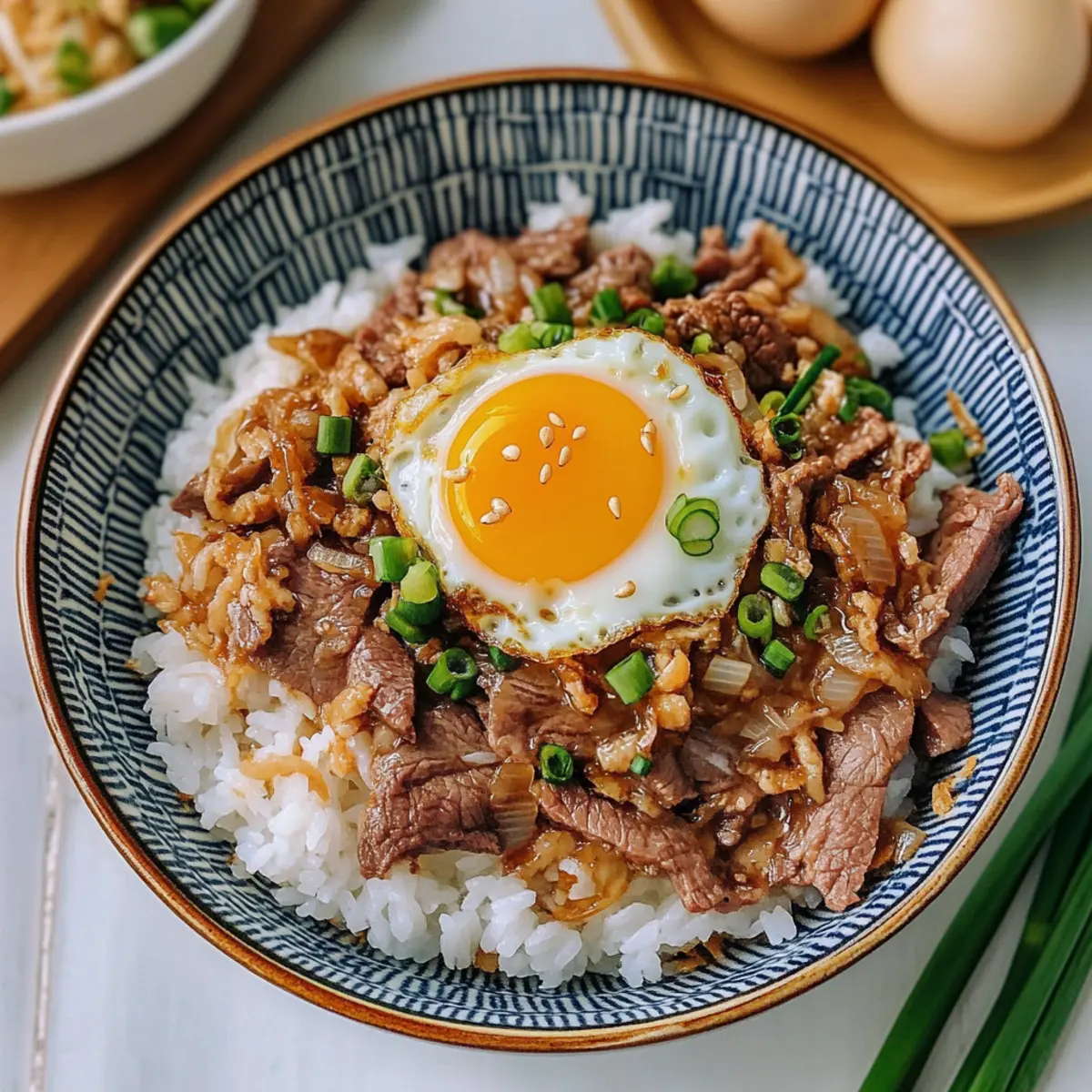
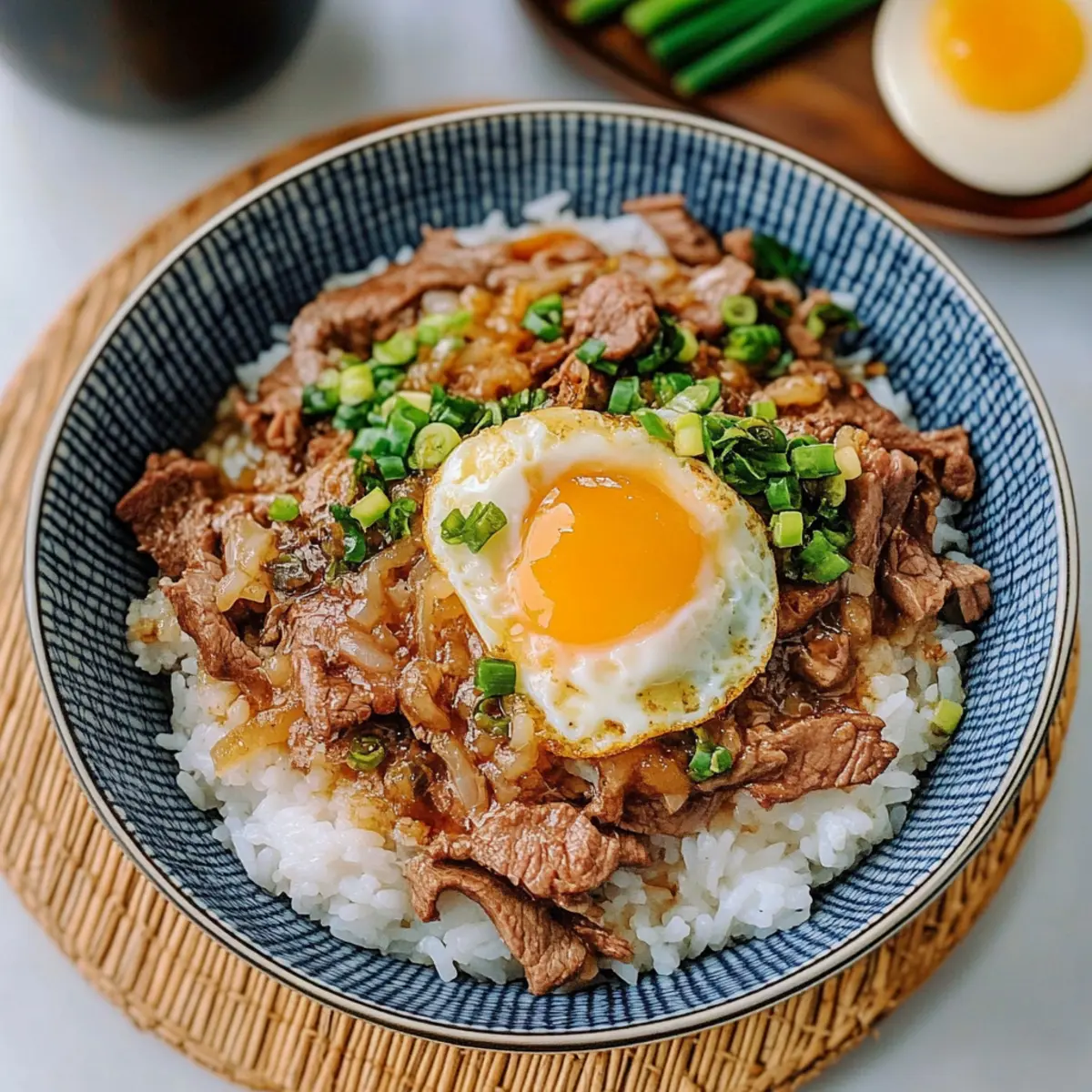
Divide 4 cups of freshly cooked short-grain or medium-grain white rice among 4 bowls. Generously top each bowl with the beef mixture, ensuring every spoonful is soaked in that delicious sauce. Place a sunny-side-up egg over the beef, creating a beautiful presentation that embodies the essence of Gyudon.
Step 6: Add Final Touches
To finish, garnish your Gyudon with chopped scallions and sprinkle with toasted sesame seeds if desired. These add a delightful crunch and a burst of freshness, elevating your homemade Gyudon to a restaurant-quality dish. Serve immediately and enjoy the comforting warmth in every bite!
What to Serve with Gyudon (Japanese Beef & Rice Bowls)
Enjoying a warm, savory bowl of Gyudon is a delightful experience, and pairing it with the right sides can enhance your meal even more.
-
Miso Soup: A warm, comforting soup that complements the rich flavors of Gyudon, offering a lighter texture and umami depth to balance your meal.
-
Pickled Ginger: Adds a refreshing zing to each bite, cleansing your palate and elevating the overall flavor of the Gyudon.
-
Steamed Edamame: These fresh, tender soybeans bring a slightly nutty taste and a pop of color to your plate, introducing a delightful crunch in contrast to the soft beef and rice.
-
Japanese Cucumber Salad: A crisp, refreshing salad tossed in a light soy-vinegar dressing brings bright notes that beautifully cut through the rich dish.
-
Chilled Sake: This traditional Japanese rice wine is a perfect pairing, enhancing your dining experience with its smooth flavor, making each sip a delightful complement to the meal.
-
Green Tea: Offering earthy notes and a hint of bitterness, green tea is ideal for cleansing the palate and enhancing the flavors of your Gyudon as you savor every bite.
Gyudon Variations & Substitutions
Feel free to explore these delightful twists to personalize your Gyudon experience!
-
Chicken or Pork: Swap out beef for thinly sliced chicken or pork for a different protein profile.
-
Veggie Boost: Add sautéed mushrooms, bell peppers, or carrots for a nutritional lift, infusing your dish with vibrant colors and flavors.
-
Spicy Gyudon: Incorporate a teaspoon of chili paste or sliced fresh chili to add a fiery kick that perfectly complements the savory sauce.
-
Sushi Rice: Use flavored sushi rice instead of plain rice for an extra layer of taste and a fun texture twist.
-
Egg Variation: Try a soft-boiled or poached egg instead of sunny-side up for a different texture and a fabulous presentation.
-
Quinoa Base: For a whole-grain alternative, serve your Gyudon over fluffy quinoa instead of rice. It adds a nutty flavor and boosts the nutritional content.
-
Herbaceous Garnish: Experiment with fresh herbs like cilantro or Thai basil as a unique garnish for added freshness and brightness.
-
Savory Broth Alternative: If you’re looking for a richer broth, consider adding a splash of sake or using a homemade beef broth, enhancing the umami depth like in a comforting Hearty Beef Barley soup!
Each of these variations can create a delightful experience, putting your personal touch on this classic dish!
Make Ahead Options
These Gyudon (Japanese Beef & Rice Bowls) are perfect for meal prep enthusiasts! You can sauté the onions and beef mixture up to 24 hours in advance, letting the flavors meld beautifully. Simply cook the beef and onions as described, then allow the mixture to cool before transferring it to an airtight container in the refrigerator. Cooked rice can also be prepared ahead and stored for 3 days in the fridge. When you’re ready to serve, reheat the beef mixture gently in a skillet and prepare fresh sunny-side-up eggs to top your bowls. This way you’ll enjoy restaurant-quality results with minimal effort!
Expert Tips for Gyudon
-
Thinly Sliced Beef: Ensure your beef is sliced as thin as possible for quick cooking and tenderness. A sharp knife or slicer can help achieve this.
-
Watch Your Eggs: When frying the eggs sunny-side-up, keep a close eye on them to maintain runny yolks. Turn off the heat as soon as the whites are set.
-
Balance the Flavor: Taste the sauce as it simmers; you can add more soy sauce if you desire a richer umami quality in your Gyudon.
-
Rice Quality Matters: Use short-grain or medium-grain rice for the perfect texture; it will keep the rice slightly sticky, which helps it hold the flavorful beef and sauce.
-
Garnish for Freshness: Don’t skip the scallions and toasted sesame seeds; they add a refreshing crunch and depth of flavor, elevating your dish!
Storage Tips for Gyudon
-
Fridge: Store leftovers in an airtight container in the refrigerator for up to 3 days. Reheat gently on the stovetop or in the microwave, adding a splash of water if needed to prevent drying out.
-
Freezer: For longer storage, freeze Gyudon in an airtight container for up to 2 months. When ready to enjoy, thaw overnight in the refrigerator and reheat thoroughly before serving.
-
Reheating: To maintain the best texture, reheat low and slow on the stovetop, covering the pan to retain moisture and flavor in the beef and sauce.
-
Assembly: For best results, it’s recommended to store the rice separately, then combine with the beef mixture when ready to eat to keep the rice fluffy. Enjoy your delicious Gyudon with minimal fuss!
Gyudon (Japanese Beef & Rice Bowls) Recipe FAQs
How do I choose ripe onions for Gyudon?
Select onions that are firm and heavy for their size, with smooth, dry skins. Avoid any that have blemishes or dark spots. When you slice them, look for a nice balance between firmness and sweetness, as they’ll add depth to your dish!
What is the best way to store leftover Gyudon?
Leftovers can be kept in an airtight container in the refrigerator for up to 3 days. When reheating, do so gently on the stovetop or in the microwave; I recommend adding a splash of water to prevent the beef from drying out, keeping that delicious flavor intact!
Can I freeze Gyudon?
Absolutely! To freeze Gyudon, allow the beef mixture to cool completely. Then, transfer it to an airtight container, ensuring all air is removed. It can be frozen for up to 2 months. When you’re ready to enjoy it, thaw overnight in the refrigerator and reheat on low heat for a comforting meal.
What if my sauce is too salty?
If your Gyudon sauce turns out too salty, don’t worry! You can balance it by adding a little more dashi stock or a pinch of sugar. Start with a teaspoon of sugar and stir until dissolved. This should help to mellow the saltiness without compromising the dish’s flavor.
Are there any dietary considerations for Gyudon?
While Gyudon is a delightful dish, it’s important to note that it contains soy sauce, which has wheat and is not suitable for those with gluten allergies. You can substitute with a gluten-free soy sauce to cater to dietary restrictions. Additionally, keep in mind that it’s best to avoid sharing food with pets, especially cooked proteins, to maintain their health.
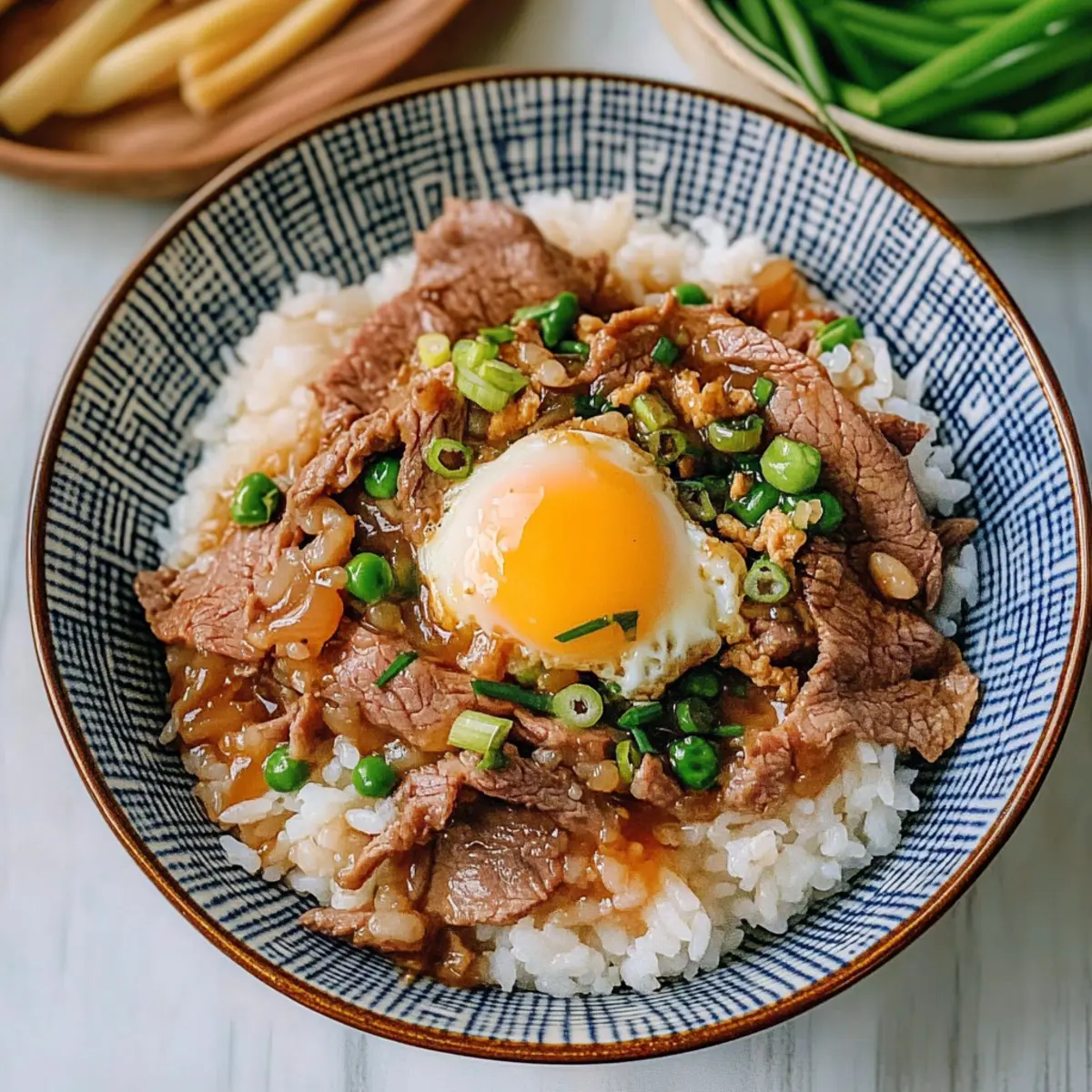
Savory Gyudon: Irresistible Japanese Beef & Rice Delight
Ingredients
Equipment
Method
- Heat 2 tablespoons of neutral oil in a large skillet over medium-high heat, then add 2 very thinly sliced onions and sauté for about 10 minutes until golden.
- Stir in 1 pound of thinly sliced beef with 2 teaspoons of sugar and cook for 5-7 minutes until the beef is no longer pink.
- Pour in 2 tablespoons of mirin, 2 tablespoons of soy sauce, and 1 cup of dashi stock, simmer for 10-15 minutes until the sauce thickens.
- In a separate skillet, cook 4 sunny-side-up eggs for about 3-4 minutes.
- Divide 4 cups of rice among bowls, top with the beef mixture and a sunny-side-up egg.
- Garnish with chopped scallions and toasted sesame seeds before serving.