
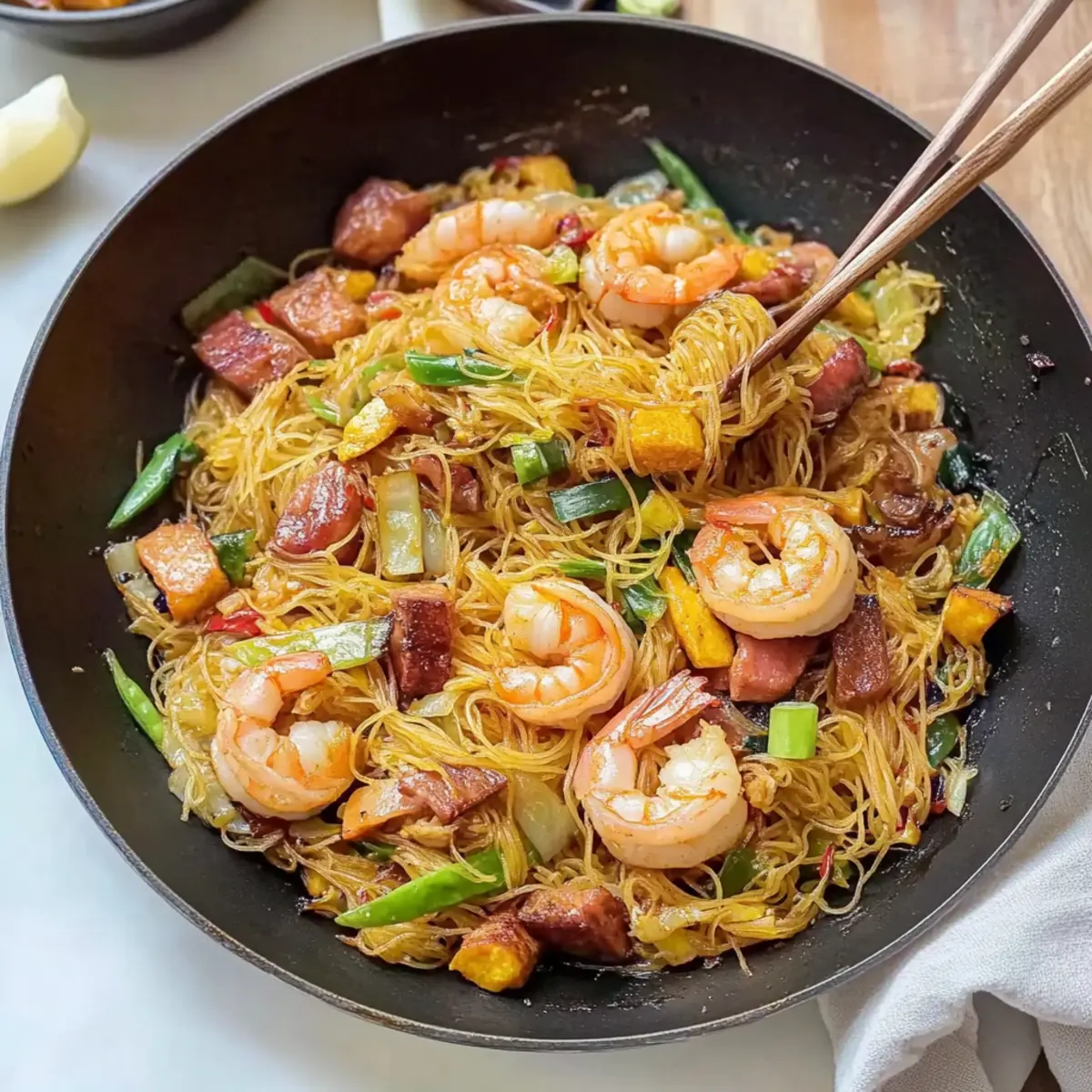
As I was exploring vibrant street markets during my last trip, the amazing aroma of sizzling Singapore Rice Noodles caught my attention like a culinary siren’s call. This dish is a delightful blend of textures and flavors, showcasing thin rice noodles tossed with succulent shrimp, sweet char siu pork, and an abundance of crisp vegetables, all brought together by a hint of fragrant curry. The beauty of this recipe lies not only in its exotic taste but also in its quick prep, making it the perfect choice for any weeknight dinner. Plus, it’s easily customizable—whether you’re opting for gluten-free noodles or switching out the proteins, you can make it uniquely yours. Ready to unleash your inner chef with Singapore Rice Noodles? Let’s dive into this lively recipe that promises a fun and flavorful dining experience!
Why Are Singapore Rice Noodles So Loved?
Quick and Easy: This recipe delivers an incredible dish in just 30 minutes, perfect for busy weeknights.
Flavor Explosion: A delightful blend of spices and ingredients creates a vibrant taste sensation that will leave your taste buds dancing.
Customizable Options: You can easily adapt it to suit your dietary needs, like making it gluten-free or swapping proteins.
One-Skillet Wonder: Enjoy a hassle-free clean-up while savoring all the delicious flavors without the fuss.
Crowd-Pleasing Dish: Perfect for impressing family or friends, this dish is sure to be the star of your dinner table—just like my Ground Beef Noodles or comforting Chicken Rice Casserole.
Singapore Rice Noodle Ingredients
• Dive into these essential ingredients that ensure your Singapore Rice Noodles shine with flavor and texture!
For the Sauce
- Soy Sauce – Adds savory umami flavor; substitute with gluten-free soy sauce or tamari for a gluten-free version.
- Fish Sauce – Enhances the savory depth; can be omitted for a vegetarian version but is recommended for authentic taste.
- Shaoxing Wine – Contributes a distinct aroma; substitute with dry sherry, sake, or dry white wine if unavailable.
- Curry Powder – Provides the signature flavor profile; adjust amount based on spice preference.
- Toasted Sesame Oil – Adds richness and depth; use regular sesame oil if toasted is not available.
- White Pepper (Ground) – Offers a subtle heat; black pepper can be used, though flavor will differ slightly.
- Sugar – Balances flavors; can be reduced or substituted with a sweetener of choice.
- Garlic (Minced) – Provides aromatic base flavor; fresh garlic recommended.
For the Noodles and Veggies
- Dried Rice Stick Noodles – The main component for structure and chewiness; other noodles like vermicelli can be substituted.
- Cooking Oil – For frying; use vegetable or canola oil for a high smoke point.
- Eggs – Adds protein and richness; can be omitted for a vegan version.
- Onion (Sliced) – Contributes sweetness and crunch; shallots can be used as a substitute.
- Carrot (Julienned) – Adds color and crunch; other vegetables like bell peppers could be substituted.
- Bok Choy – Provides a fresh, crispy texture; substitute with Swiss chard or spinach.
For the Protein
- Shrimp (Peeled and Deveined) – Adds protein and seafood flavor; can be substituted with chicken or tofu for a different protein source.
- Char Siu (Chinese Roast Pork, Sliced) – Sweet and smoky flavor; diced cooked ham can be an alternative.
- Scallions (Thinly Sliced) – Offers fresh, onion flavor; can be omitted or replaced with chives.
- Mung Bean Sprouts – Adds crunch and freshness; other sprouts can be used or omitted.
These thoughtfully chosen ingredients will make your Singapore Rice Noodles not just a meal, but an unforgettable culinary experience!
Step‑by‑Step Instructions for Singapore Rice Noodles
Step 1: Prepare the Sauce
In a small bowl, whisk together soy sauce, fish sauce, Shaoxing wine, curry powder, toasted sesame oil, white pepper, sugar, and minced garlic. This savory mixture will bring depth to your Singapore Rice Noodles. Set it aside, allowing the flavors to meld while you prepare the other ingredients.
Step 2: Cook the Noodles
Boil water in a kettle, then pour it over the dried rice stick noodles in a heat-safe bowl. Let the noodles soak for about 5 minutes, or until they are tender but firm. Once they reach the desired consistency, drain and rinse them under cold water to stop the cooking process.
Step 3: Scramble the Eggs
Heat 1 tablespoon of cooking oil in a large nonstick skillet or wok over medium heat. Pour in the beaten eggs and scramble them gently, stirring continuously for about 2 minutes until they are fully cooked and set. Once done, transfer the eggs to a plate and set aside to add later.
Step 4: Stir-fry the Vegetables
In the same skillet, add another tablespoon of cooking oil. Toss in sliced bok choy, julienned carrots, and onions, cooking for around 5 minutes until the vegetables are tender and slightly caramelized. Their vibrant colors will create an inviting base for your Singapore Rice Noodles.
Step 5: Cook the Shrimp and Pork
If needed, drizzle a little more oil into the skillet before adding the peeled and deveined shrimp. Cook for about 2 minutes until the shrimp turn pink and opaque. Next, add the sliced char siu pork, continuing to stir-fry for another 2 minutes until heated through. Season with a pinch of salt.
Step 6: Combine Ingredients
Add the cooked eggs back into the skillet with the shrimp and vegetables. Drizzle another tablespoon of oil into the skillet, then toss in the soaked rice noodles. Stir-fry everything for about 3 minutes, allowing the noodles to absorb flavors and begin to brown slightly for added texture.
Step 7: Mix in the Sauce and Serve
Pour the aromatic sauce mixture over the noodles, stirring well to coat all ingredients evenly. Return the shrimp and vegetable mixture to the skillet, tossing everything together. Serve your colorful and flavorful Singapore Rice Noodles hot, garnished with extra scallions or bean sprouts if desired.
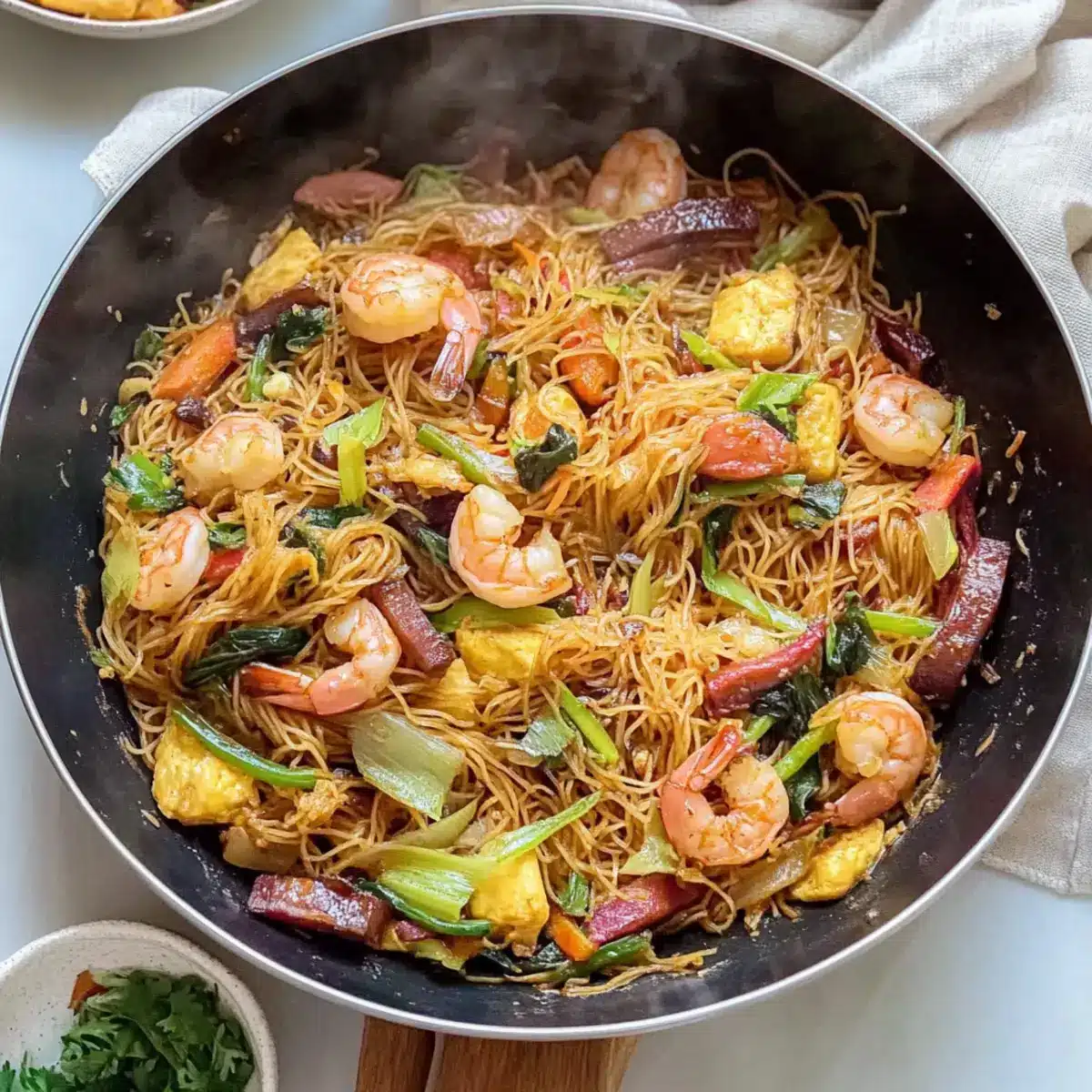
Singapore Rice Noodles: Flavor Variations
Feel free to get creative and customize your Singapore Rice Noodles to suit your taste buds and any dietary needs!
- Gluten-Free: Substitute regular soy sauce with gluten-free soy sauce or tamari for a gluten-free dish.
- Vegan Delight: Omit the shrimp and char siu and use tofu along with a splash of vegetable broth for added umami.
- Extra Spicy: Add sliced fresh chili peppers during stir-fry to elevate the heat and give your dish a sassy kick.
- Texture Twist: Toss in crunchy nuts like cashews or peanuts to introduce a delightful crunch alongside the noodles.
- Veggie Boost: Enhance nutrition by including a blend of veggies like snow peas, bell peppers, or snap peas for extra color and nutrients.
- Flavor Schwartz: Experiment with different types of curry powder, like red or green curry, to personalize the flavor profile.
- Protein Swap: Switch shrimp for chicken, beef, or even a plant-based protein like seitan to match your preferences.
- Savory Egg Alternative: Replace scrambled eggs with silken tofu for a lighter texture or omit altogether for a fully plant-based option.
For a comforting twist, consider pairing this dish with a hearty bowl of Chicken Wild Rice or indulge in a family-favorite like Chicken Rice Casserole. The possibilities are endless!
Make Ahead Options
These Singapore Rice Noodles are perfect for busy cooks looking to streamline their meal prep! You can prepare the sauce (soy sauce, fish sauce, Shaoxing wine, curry powder, sesame oil, white pepper, sugar, and minced garlic) up to 3 days in advance and store it in the refrigerator in an airtight container to maintain its delightful flavors. The dried rice stick noodles can also be soaked 24 hours ahead; just drain and refrigerate them to keep them fresh. When you’re ready to serve, simply reheat the prepared sauce, scramble the eggs, stir-fry the vegetables, and mix in the shrimp and noodles. This way, your Singapore Rice Noodles will remain just as delicious with minimal effort!
Expert Tips for Singapore Rice Noodles
-
Rinse Noodles Thoroughly: Rinsing your noodles with cold water not only stops the cooking process but also prevents them from becoming sticky—a common mistake!
-
Perfect Egg Scramble: For the fluffiest eggs, make sure your skillet is preheated well before adding the beaten eggs, allowing them to set quickly without overcooking.
-
Adjust Spice Levels: If you prefer more heat, toss in some sliced chili peppers during the stir-frying stage for a spicy kick that complements the Singapore Rice Noodles beautifully!
-
Use a Hot Wok: A well-heated wok is essential for achieving that wonderful char and texture. Avoid overcrowding the pan to allow each ingredient to sear nicely.
-
Customizable Ingredients: Don’t hesitate to swap proteins or veggies; whether opting for chicken, tofu, or your favorite greens, tailor your dish to suit your palate.
-
Serve Immediately: Enjoy your Singapore Rice Noodles fresh and hot off the stove for the best flavor and texture; they don’t hold up as well when stored.
What to Serve with Delicious Singapore Rice Noodles?
A joyful meal begins with bursting flavors and delightful pairings that can elevate your dining experience to a whole new level.
-
Crispy Spring Rolls: These crunchy bites are the perfect finger food, bringing additional crunch and flavor that harmonizes beautifully with the noodles.
-
Garlic Bok Choy: A light and fresh vegetable side that mirrors the greens in your dish, adding even more healthful goodness while still being luscious in texture.
-
Chili Garlic Sauce: A flavorful condiment that adds an exciting kick, allowing each bite of your Singapore Rice Noodles to ignite your taste buds. Don’t be shy to drizzle it on top!
-
Mango Salad: With its bright, tropical notes and a sweet-tart dressing, this salad beautifully offsets the savory richness of the noodles, creating a refreshing balance.
-
Coconut Rice: A subtly sweet and fragrant choice, this side dish enhances the dish’s overall tropical vibe while providing a creamy contrast to the noodles’ savory elements.
-
Lemon Iced Tea: A refreshing drink that provides a zesty counterpart to the flavor-packed noodles; its citrusy notes offer a perfect palate cleanser throughout the meal.
-
Egg Tarts: For dessert, these creamy and slightly sweet tarts are a classic Singaporean treat, rounding out the meal with a delightful finish that echoes the flavors of the noodles in a sweet way.
How to Store and Freeze Singapore Rice Noodles
Fridge: Store any leftover Singapore Rice Noodles in an airtight container in the refrigerator for up to 3 days. Reheat in a skillet over medium heat for the best texture.
Freezer: If you want to keep them longer, freeze the noodles in an airtight container or freezer bag for up to 2 months. Thaw overnight in the fridge before reheating.
Reheating: For the best results, reheat in a non-stick skillet to maintain that delightful chewiness. Add a splash of water or broth to steam and revive the noodles.
Avoid Clumping: When storing, be sure to separate the noodles slightly before refrigerating or freezing to prevent clumping together during storage.
Singapore Rice Noodles Recipe FAQs
How do I choose ripe vegetables for my Singapore Rice Noodles?
Absolutely! When selecting vegetables like bok choy and carrots, look for vibrant colors and firm texture. For bok choy, ensure the leaves are crisp without any dark spots, indicating freshness. Carrots should be firm and bright orange; avoid soft or shriveled ones.
What is the best way to store leftovers of Singapore Rice Noodles?
To keep your delicious Singapore Rice Noodles fresh, store any leftovers in an airtight container in the refrigerator for up to 3 days. When reheating, use a skillet over medium heat to maintain the original texture. Adding a splash of water can help revive the noodles.
Can I freeze Singapore Rice Noodles?
Very much so! You can freeze Singapore Rice Noodles by placing them in an airtight container or a freezer-safe bag for up to 2 months. When you’re ready to use them, thaw the noodles in the refrigerator overnight, then reheat in a skillet with a bit of broth to keep them moist and chewy.
What should I do if my noodles clump together after cooking?
If your noodles clump, here’s what you can do: after boiling, rinse them thoroughly in cold water to halt cooking. If they still stick, try tossing them with a drop of cooking oil before adding to the skillet. This little step helps to keep them separate and fluffy.
Are there any dietary considerations for pets with this dish?
Of course! If you have pets, it’s important to note that while a small amount of plain, cooked, unseasoned rice is generally safe for dogs and cats, the shrimp and soy sauce can be harmful. If they manage to snag a bite of your Singapore Rice Noodles, it’s best to consult your veterinarian, especially if they have dietary sensitivities.
Can I adjust the recipe to make it gluten-free?
Absolutely! To make your Singapore Rice Noodles gluten-free, substitute regular soy sauce with gluten-free soy sauce or tamari. Ensure that your chosen noodles are labeled gluten-free as well. Happy cooking!
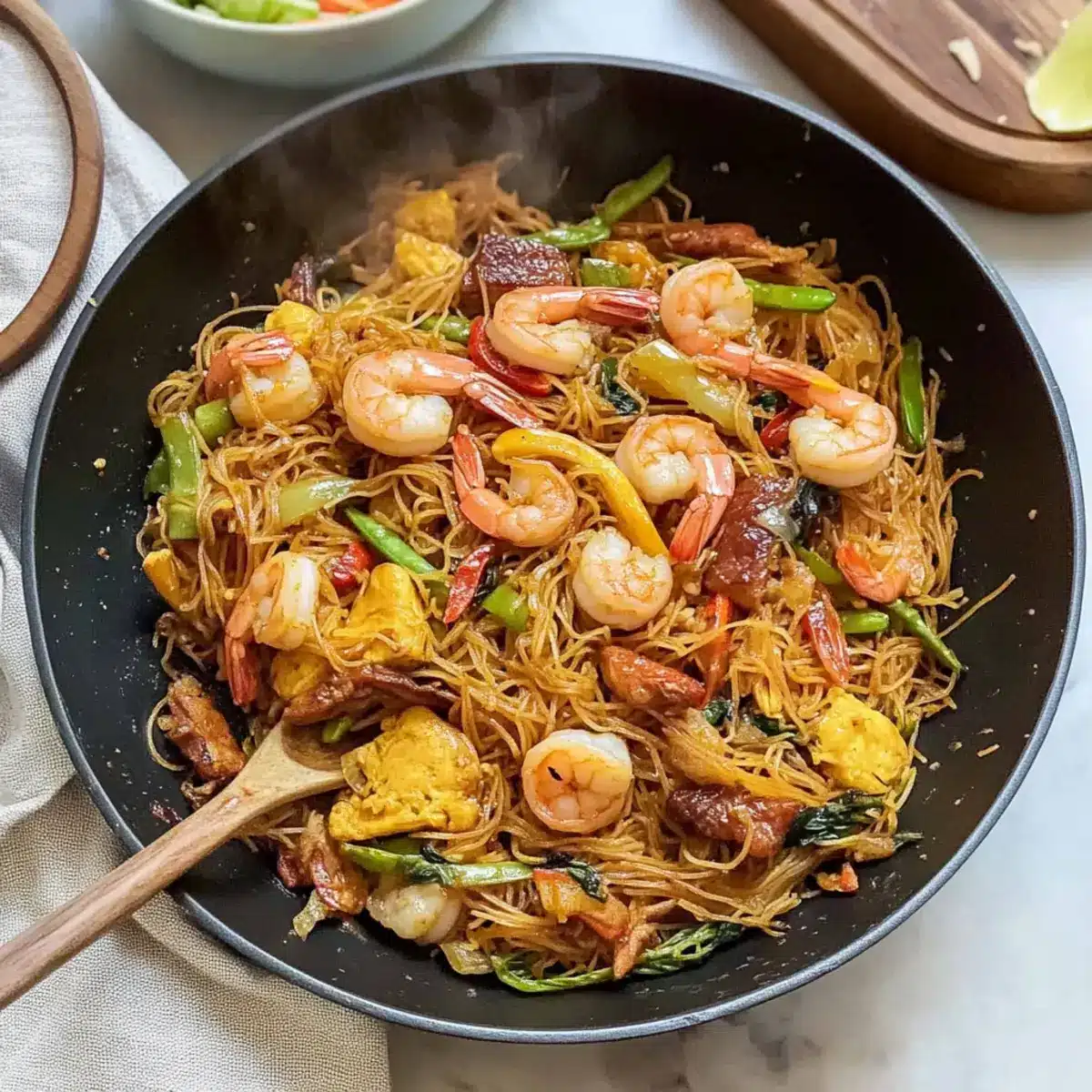
Savor Singapore Rice Noodles: A Quick, Flavor-Packed Delight
Ingredients
Equipment
Method
- In a small bowl, whisk together soy sauce, fish sauce, Shaoxing wine, curry powder, toasted sesame oil, white pepper, sugar, and minced garlic. Set aside.
- Boil water and pour it over the dried rice stick noodles in a heat-safe bowl. Let soak for about 5 minutes, then drain and rinse under cold water.
- Heat 1 tablespoon of cooking oil in a skillet over medium heat. Add beaten eggs and scramble for 2 minutes until fully cooked, then set aside.
- In the same skillet, add another tablespoon of oil, and stir-fry bok choy, carrots, and onions for about 5 minutes until tender.
- Drizzle more oil if needed and add shrimp. Cook for about 2 minutes until pink. Then add char siu, stirring for another 2 minutes.
- Add the scrambled eggs back into the skillet, then add the soaked noodles. Stir-fry everything for about 3 minutes.
- Pour the sauce mixture over noodles and stir well to coat evenly. Serve hot, garnished with scallions or bean sprouts if desired.